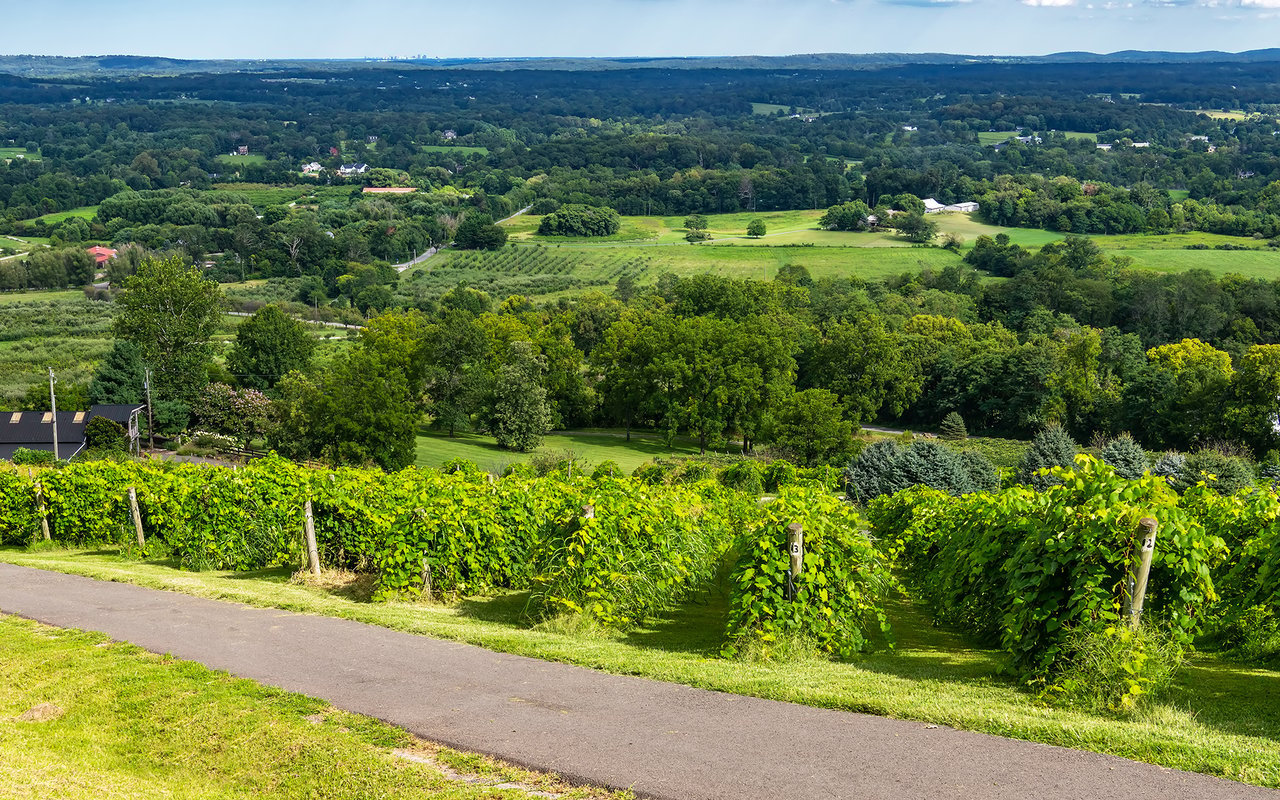
Imagine two 40-acre parcels sitting side by side along the same scenic road outside Middleburg. Both carry identical rural zoning, and both are offered at nearly the same price per acre. Yet, one parcel sells within three weeks, while the other sits through multiple price reductions. Zoning doesn't account for the difference, nor does the county tax assessment. The deciding factor is usually recorded in a document that never appears on a standard listing sheet: the deed of easement.
Buyers exploring the Middleburg market often review median listing prices and per-acre averages, treating rural acreage as a uniform asset. In practice, it is anything but. Two properties with matching price tags can offer vastly different rights regarding where—or if—you can build a primary residence, a barn, or a secondary dwelling. A recorded conservation easement can impose restrictions far beyond standard county zoning regulations.
The Farm Next to Salamander Resort
A notable local illustration sits just outside town at Wolver Hill Farm, a historic estate near Salamander Resort. Northern Virginia Magazine reports that the property was acquired in 2020 for $8.5 million and subsequently placed into a permanent conservation easement. It sits on nearly 500 acres on the outskirts of Middleburg.
Placing land under a conservation easement fundamentally alters its legal status in perpetuity. Regional preservation efforts have placed more than 22,000 acres under easement across the area—over a third of which lies within Loudoun County.
What an Easement Actually Restricts, and What It Doesn't
A conservation easement is a legally binding, recorded agreement between a property owner and a qualified entity—typically a land trust or government agency—that permanently restricts future development.
Crucially, an easement does not deprive the owner of title, private enjoyment, or operational control. Owners retain the right to farm, ride horses, hunt, sell, or pass the estate to heirs. As Loudoun County's official guidance notes, the landowner maintains full property ownership while conveying specific development rights to a land trust.
What an easement primarily limits is further subdivision and new construction.
Why the Building Envelope Matters More Than the Acreage Count
A leading regional design-build firm highlighted this dynamic in a recent zoning guide for hunt country estates. The firm noted instances where buyers purchased 100-acre parcels intending to construct a main house, equestrian barn, and guest house, only to discover that the recorded easement restricted all new construction to a pre-designated half-acre envelope. In counties like Fauquier—where rural zoning such as RA (25-acre minimum) or RC (50-acre minimum) governs general density—a recorded easement overrides local zoning entirely. With approximately one-quarter of Fauquier's rural land under easement, this restriction applies to a substantial portion of available acreage.
Middleburg itself is located in Loudoun County, where primary rural zoning designations are AR-1 and AR-2. While density rules differ from Fauquier, the overarching legal principle remains identical: county zoning outlines general parameters, but the recorded easement dictates the specific rights for that parcel. With Loudoun County reporting over 85,000 acres under conservation easement, evaluating easement status should be a standard due diligence step for any prospective buyer of local countryside land.
County | Base Rural Zoning | Typical Minimum for New Subdivision | Does Zoning Alone Guarantee Buildable Acreage? |
|---|---|---|---|
Loudoun | AR-1 / AR-2 | Varies by district | No. An existing easement can still confine the building envelope regardless of the zoning district. |
Fauquier | RA (25-acre minimum) / RC (50-acre minimum) | 25 or 50 acres | No. Roughly a quarter of rural acreage carries an easement that can override the zoning entirely. |
The lesson from that comparison isn't that one county is more restrictive than the other on paper. It's that the county line tells you almost nothing about any individual parcel. The deed does.
Who Actually Holds the Easement, and Why That's Who You Call
When evaluating encumbered acreage, buyers interact with the holding organization rather than county planning staff. Key regional holders include the Land Trust of Virginia (headquartered in Middleburg, protecting over 10,000 acres in Loudoun alone), the Piedmont Environmental Council (which has helped preserve over 430,000 acres region-wide), and the Virginia Outdoors Foundation. Additionally, Loudoun County's Conservation Easement Assistance Program offers matching grants up to $25,000 to assist landowners with legal and transaction costs for new easements.
While the recorded deed outlines baseline restrictions, a buyer's land-use attorney will coordinate directly with the easement holder prior to closing to verify building envelopes, allowable uses, and ongoing stewardship compliance. As Loudoun County guidelines emphasize, county staff cannot interpret private deed terms, making qualified legal counsel essential.
What to Confirm Before You Fall in Love with the View
Active market snapshots across the greater Middleburg area demonstrate wide price variations based on land utility: unencumbered raw acreage, working agricultural land, and developed estates often trade at markedly different valuation metrics. Adding an easement into the equation means a $2 million property could represent flexible building potential or a highly circumscribed footprint.
Before writing an offer on countryside acreage near Middleburg, a buyer's attorney and title search should confirm:
- Whether a conservation easement is active on the title, and identify the holding entity.
- The designated building envelope parameters, including structure counts, square footage limits, and precise location boundaries.
- Remaining division or subdivision rights, if any exist under the easement agreement.
- Restrictions governing commercial, agricultural, timber, or equestrian activities planned for the land.
- Annual inspection requirements, monitoring protocols, and ongoing stewardship obligations.
These critical factors are never reflected in simple price-per-acre metrics, making thorough title and deed verification essential before removing contingencies.
In the Middleburg countryside, total acreage and usable building area are not always synonymous. Understanding the deed prior to making an offer ensures you purchase the property freedom you envision, rather than unexpected legal limits.
Our Land, Farm & Estate team regularly evaluates deed restrictions and conservation easements across Middleburg and surrounding counties. If you are comparing countryside acreage, Corcoran McEnearney invites you to schedule a confidential market consultation.
This article is general information, not legal, tax or financial advice. Consult a qualified professional about your situation.