Home Inspiration May 9, 2024

Should I build an in-ground pool for my home in Virginia?

Thinking about adding a pool to your property here in the DMV? It’s a big decision that can bring years of enjoyment, but it’s also a large investment. Consider these factors when deciding whether or not a pool is right for you.

Lifestyle

Consider your lifestyle and how a pool fits into it. Do you envision spending sunny afternoons lounging by the poolside and hosting pool parties for friends and family? Or is your schedule too hectic to make regular use of a pool? Do you have the bandwidth to keep the pool clean and maintained throughout the year or do you have the resources to outsource those tasks? Assessing how a pool aligns with your lifestyle can help you determine its value to you.

Budget

Pools can be a significant investment, not only in terms of installation but also with ongoing maintenance and upkeep. Before diving in, carefully evaluate your budget to ensure you can afford not only the initial cost but also the long-term expenses associated with pool ownership. Be honest with yourself about your willingness and ability to manage this pool on your property.

Space

Assess the available space on your property and determine if it can accommodate a pool. Consider factors such as setbacks, zoning regulations, and the layout of your yard. Additionally, think about how a pool will impact the usability of your outdoor space and whether you’re willing to sacrifice lawn area or other amenities. Do you have big trees that will constantly drop leaves in the pool? If you cannot answer these questions on your own, schedule a free consultation with a local pool expert.

Long-Term Plans

Think about your long-term plans for your property. Are you committed to staying in your current home for the foreseeable future, or do you anticipate relocating in the coming years? Will having a pool significantly increase your home price if you sell in the ten years? Discussing this with your local real estate agent may give you insight into how a pool impacts your property value now and in the future.

Safety

Last but certainly not least, safety is a top priority when considering a pool. Evaluate your risks. Will you have children, pets, or frequent visitors who may be at risk around a pool? Installing safety features such as fences, alarms, and pool covers can help mitigate potential hazards, but it’s essential to be diligent about supervision and precautionary measures. You’ll want to plan for such structures and expenses in your project budget.

Ultimately, the decision to add a pool to your property is a personal one that depends on your circumstances, preferences, and priorities. I know it can be a beautiful addition to any yard. Even I get swept away by all the landscaping possibilities! But carefully weigh these factors and consider the implications of pool ownership so you can make the best choice for you and your family.


Pragya Mishra is the Founder and Principal of Artscapes, LLC, a Northern Virginia-based landscape architecture firm that specializes in designing outdoor transformations that bring you joy. With 22 years of professional experience, she works closely with each client and her network of top-tier contractors to make each project vision a reality. Follow Artscapes on Instagram @artscapes_living and see examples of past projects on her website, www.artscapesliving.com.


Take a look at our website for all of our listings available throughout Washington, D.C., Maryland, and Virginia.


Don’t miss a post! Get the latest local guides and neighborhood news straight to your inbox!


Real Estate May 7, 2024

Why FSBOs Don’t Deliver For Sellers

No matter how hot the market is, homes listed with a Realtor® garner higher prices and faster closings than those sold directly by owners.

In a hot seller’s market like what the DC-Metro region has experienced for several years, it might seem like all owners have to do to sell a property is to stick a sign in the yard and wait for buyers to stream in. But, according to NAR’s research, For Sale By Owner (FSBO) transactions accounted for just 7% of home sales in 2023, a historic low that tied with 2021 for the fewest number of FSBO listings. 

Even more striking is that the typical FSBO property sold for a median of just $310,000 compared to the median of $405,000 for properties sold with the assistance of an agent – almost $100,000 and 30% less.

To paraphrase “Field of Dreams,” it would appear that selling a home is a lot more challenging than simply intoning, “If you list it, they will come.”

What these FSBO owners discovered is that a buyer liking a home is just one of many steps on the path to closing a deal, and without a professional Realtor® who understands not only the real estate transaction process but also the local market dynamics that shape how deals come together, it can be a long, lonely, and costly process. 

Not All FSBOs Are the Same, Except When They Are

There are some circumstances where a FSBO can make sense, for example in rural areas which make up 14% of FSBO sales compared with 3% in urban areas. Or, if the seller and buyer know each other like a neighbor or family member; 54% of eventual FSBO sellers knew their buyer. 

But by and large, FSBO sellers found it difficult to reach the widest selection of qualified buyers and then manage the work that came once a buyer was interested. FSBO sellers must manage multiple methods to market their home through “word-of-mouth” to friends, relatives, and neighbors making up the majority (20%) of how properties are promoted and a yard sign running a close second (19%). Only 5% of FSBO properties were promoted on a Multiple Listing Service (MLS), meaning a huge number of buyers and their agents would likely never even know that FSBO property existed because site aggregators like Realtor.com, Zillow, or Homes.com pull listing data from MLS feeds.

For FSBO sellers lucky enough to land a buyer who found their needle-in-a-haystack property and then would agree to work with an unrepresented seller, that’s when the real work kicks in. NAR’s report showed that some of the most difficult tasks for FSBO sellers were:

  • Getting the pricing right (15%)
  • Understanding and completing/performing paperwork (7%)
  • Selling within the planned length of time (7%)
  • Helping buyers obtain financing (5%)
  • Preparing/fixing up home for sale (4%)
  • Attracting potential buyers (4%)

Why a Realtor® Matters

With so much stacked against FSBO sellers, why attempt to go it alone? The obvious answer for most FSBO sellers is that they want to save money by not paying a Realtor® fee. However, 75% of all sellers paid a fee to a Buyers’ Agent regardless of whether they used a listing agent to sell their home. So if a FSBO seller is likely paying commission fees while also receiving a lower sales price and carrying costs, the value of hiring a listing agent becomes a lot more clear. 

One of the best tools an agent will share with their seller is a smart pricing strategy. Realtors® live and breathe local statistics and use them to tell a story, one that helps sellers understand where their home sits in comparison with other homes in the market. An agent’s pricing knowledge can be the difference between a property that goes under contract in a week and one that “tests the market” and sits unsold for a month or longer, costing the seller money in the long run.

The guidance a Realtor® provides can also ensure that oversights don’t become lawsuits. Agents use contracts, addenda and other sales paperwork that has been vetted by local Realtor® associations, allowing for clear understanding of terms and conditions. Realtors® are governed by NAR’s Code of Ethics and uphold the highest standards of conduct in working with clients, customers, and colleagues, ensuring that everyone is treated fairly and in the clients’ best interest. 

But the most important role a Realtor® can play for their seller clients is to be a Trusted Advisor who understands the value of a home, both in market dollars and as a significant personal investment. Selling a home is a huge undertaking, both in the logistical and emotional sense, and it’s not easy to navigate a process with so many moving pieces. It’s also why many Realtors® refer to what they do as a “calling,” a deep satisfaction in helping others achieve their real estate goals and pride in building stronger communities with each new sale. It’s what they’re trained to do, it’s what they love to do.

Learn the lesson from many regretful FSBO sellers: to earn more money and have fewer headaches, consult a McEnearney Associates | Middleburg Real Estate | Atoka Properties Realtor® and let their expertise guide you to your next real estate adventure.


Take a look at our website for all of our listings available throughout Washington, D.C., Maryland, and Virginia.


Don’t miss a post! Get the latest local guides and neighborhood news straight to your inbox!


Gift Guide May 2, 2024

2024 Mother’s Day Gift Guide


This week we would like to share gift ideas provided by our partners at the Scout Guide that we know any mother would love! 

From indulgent self-care items for the mamas who always prioritize nurturing others, to beautiful baubles as inspiring as their wearer, this 2024 Mother’s Day gift guide is brimming with unique small-business finds. Show your adoration for the incredible mom’s in your life by shopping our Scouted selects below and exploring more amazing options through The Scout Guide Directory.

Turquoise And Amethyst Round Pendant from Kelsey Leigh Fine Jewelry & Gifts in Austin, Texas in The Scout Guide Mother's Day Gift Guide

Turquoise and Amethyst Round Pendant

Kelsey Leigh Fine Jewelry & Gifts in Austin, Texas

Deepa Gurnani Arina Clutch from Bridgette's in Tyler, Texas

Deepa Gurnani Arina Clutch

Bridgette’s in Tyler, Texas

Forte Forte Ruched-Detail Skirt from Willamina in Tulsa, Oklahoma

Forte Forte Ruched-Detail Skirt

Willamina in Tulsa, Oklahoma

Mercedes Castillo Adria Sandal Kat + Noelle in Dallas, Texas in The Scout Guide Dallas

Mercedes Castillo Adria Sandal

Kat + Noelle in Dallas, Texas

Montana Sapphire and Enamel Earrings from Alara Jewelry in Bozeman, Montana in The Scout Guide 2024 Mother's Day Gift Guide

Montana Sapphire and Enamel Earrings

Alara Jewelry in Bozeman, Montana

Ryan Studio Lily Flower Spa Blue Pillows from Quintessentials in Raleigh, North Carolina Montana Sapphire and Enamel Earrings from Alara Jewelry in Bozeman, Montana in The Scout Guide 2024 Mother's Day Gift Guide

Ryan Studio Lily Flower Spa Blue Pillows

Quintessentials in Raleigh, North Carolina

Stoneware Domed Dish from Furnish in Chattanooga, Tennessee

Stoneware Domed Dish With Glaze

Furnish in Chattanooga, Tennessee

Marco Bicego Jaipur Gemstone Ring from Simmons Fine Jewelry in Meridian, Idaho in Montana Sapphire and Enamel Earrings from Alara Jewelry in Bozeman, Montana in The Scout Guide 2024 Mother's Day Gift Guide

Marco Bicego Jaipur Gemstone Ring

Simmons Fine Jewelry in Meridian, Idaho

Gucci Sunglasses from Scarpa in Charlottesville, Virginia

Gucci Sunglasses

Scarpa in Charlottesville, Virginia

Frances Valentine Hannah Lunchbox from KEEP in Fort Myers, Florida Montana Sapphire and Enamel Earrings from Alara Jewelry in Bozeman, Montana in The Scout Guide 2024 Mother's Day Gift Guide

Frances Valentine Hannah Lunchbox

KEEP in Fort Myers, Florida

Osea Malibu Undaria Algae Oil from Heyday in Ann Arbor, Michigan

Osea Malibu Undaria Algae Oil

Heyday in Ann Arbor, Michigan

Framed butterfly lithograph from The Paradise Antiques in Middleburg, Virginia Montana Sapphire and Enamel Earrings from Alara Jewelry in Bozeman, Montana in The Scout Guide 2024 Mother's Day Gift Guide

Framed Lithograph c1800s

The Paradise Antiques in Middleburg, Virginia

Turquoise acrylic pitcher from Frank in Winter Park, Florida

Turquoise With Green Handle Acrylic Pitcher

Frank. in Winter Park, Florida

Davis Classics diamond bracelet from Davis Jewelers in Louisville, Kentucky Montana Sapphire and Enamel Earrings from Alara Jewelry in Bozeman, Montana in The Scout Guide 2024 Mother's Day Gift Guide

Davis Classics Bracelet

Davis Jewelers in Louisville, Kentucky

Brochu Walker Newport Midi Dress Calico from Primm’s in Winston-Salem, North Carolina

Brochu Walker Newport Midi Dress Calico

Primm’s in Winston-Salem, North Carolina

Ayond Eau De Parfum from Jones + Co. in Boulder, Colorado Montana Sapphire and Enamel Earrings from Alara Jewelry in Bozeman, Montana in The Scout Guide 2024 Mother's Day Gift Guide

Ayond Eau De Parfum

Jones + Co. in Boulder, Colorado

Hammered Hoop Earrings from Kaminer Haislip in Charleston, South Carolina

Hammered Hoop Earrings

Kaminer Haislip in Charleston, South Carolina

Brie Baker With Lid + Spreader from Brick & Linen in Wayzata, Minnesota Montana Sapphire and Enamel Earrings from Alara Jewelry in Bozeman, Montana in The Scout Guide 2024 Mother's Day Gift Guide

Brie Baker With Lid + Spreader

Brick & Linen in Wayzata, Minnesota

Loeffler Randall Malia Curved-Heel Sandal from Nines Apparel in Midland, Texas

Loeffler Randall Malia Curved-Heel Sandal

Nines Apparel in Midland, Texas

robe from lila + Hayes in tsg fort worth

Sassy Women’s Pima Cotton Spa Wrap

Lila + Hayes in Fort Worth, Texas

“Overflowing Love” original art from Juliann Lancon Art in Naples, Florida from Naples, Florida

“Overflowing Love”

Juliann Lancon Art in Naples, Florida

14k Yellow Gold Bezel Set Solitaire Emerald Necklace from David Adams Fine Jewelry in Fayetteville, Arkansas

14k Yellow Gold Bezel Set Solitaire Emerald Necklace

David Adams Fine Jewelry in Fayetteville, Arkansas

Hamilton Kaftan from Sue Sartor in New Orleans, Louisiana

Hamilton Kaftan

Sue Sartor in New Orleans, Louisiana

Pleated Stoneware Dish from Confia Collective in Denver, Colorado

Pleated Stoneware Dish

Confia Collective in Denver, Colorado

Elongated U-Link Bracelet from La Enovesé Designs in Wellington, Florida Montana Sapphire and Enamel Earrings from Alara Jewelry in Bozeman, Montana in The Scout Guide 2024 Mother's Day Gift Guide

La Enovesé Designs in Wellington, Florida


Take a look at our website for all of our listings available throughout Washington, D.C., Maryland, and Virginia.


Don’t miss a post! Get the latest local guides and neighborhood news straight to your inbox!


Featured April 25, 2024

Follow Along with These 8 DMV Creatives

While not explicitly known for its creative scene, the DMV area is home to many talented designers, artists, shop owners, and more, all of whom enjoy chronicling their local adventures on Instagram. If you’re looking for some new creatives to follow, you’ll definitely want to get to know the eight individuals profiled below. Here, we asked them about their favorite DMV spots, top places to bring visitors, go-to meals, and more. 


Spencer Beck

Based in Ashburn’s One Loudoun neighborhood, artist Spencer Beck has called the DMV home for the past 10 years. Follow him to keep tabs on his artwork, DMV adventures, vintage home finds, and more. Beck adds, “I also love sharing the gorgeous and wildly overpriced things that my husband refuses to buy for me!” 

What do you do for a living? 

I am an artist, making line drawings, acrylic paintings, collages, and an apparel line with my designs. My originals are in private collections all over the world, and my work can be found in local shops in Downtown Leesburg like Muz & Rose and wldwst

What are some of your go-to DMV spots? 

I love going to Café Riggs in Penn Quarter for their French 75, and my husband and I go to Eddie Merlot’s in One Loudoun for happy hour almost every week! I am also often found sipping a matcha latte with lavender and oat milk at Goosecup in Leesburg.” 

What’s an underrated DMV spot that you think deserves a little more attention, and why? 

My husband and I love to spend our weekends browsing local antique stores, and our most frequented stops are Pear Tree Cottage in Vienna and Elliott’s in Frederick. Both shops are fabulously curated by their exceptional owners, and we never leave without a new treasure for our home.

What’s your go-to spot to bring visitors? 

The National Gallery of Art is always a go-to for out-of-town guests. Having access to world-class art in the Smithsonian—and admission being free—is such a fun thing to share with visitors. Being able to stop and meander for hours or just dash through to visit Van Gogh’s Self-Portrait is always a treat. 

What’s your favorite meal in the DMV? 

I’m a big brunch guy, and the cornflake-crusted French toast with fried chicken from Matt & Tony’s in Alexandria is my favorite brunch around! A close second: the thick-cut bacon from Saint Anselm in Union Market!


Mariella Cruzado

Interior designer Mariella Cruzado, based in the Shaw neighborhood of DC, is the founder of Splendor Styling and has called DC home since 2008. “My brand celebrates luxury living and aims to promote enjoying life to the fullest,” she says. Follow her to get inspired to celebrate the everyday. 

What do you do for a living? 

I run my own interior design studio serving DC, MD, and VA.

What are some of your go-to DMV spots? 

Rock Creek Park, the Georgetown waterfront, the National Mall, and the Kennedy Center.

What’s an underrated DMV spot that you think deserves a little more attention, and why? Definitely West Potomac Park. It’s a nice escape inside the city in front of the water. There are gorgeous willow trees that provide you with shade, and depending on the time of the day it can be a quiet spot to enjoy reading a book or a light picnic at sunset. 


What’s your go-to spot to bring visitors? 

I’ll take them to the bar at the W Hotel/Hotel Washington overlooking the White House, have a nice picnic at West Potomac Park, go to any rooftop at the Wharf, or eat at Kafe Leopold in Georgetown, Causa/Amazonia in Blagden Alley, Wild Days rooftop at the Eaton Hotel, or the Lady Bird rooftop.

What’s your favorite meal in the DMV? 

Rumi’s Kitchen in Shaw.


Matthew Dandy 

A Northern Virginia native, photographer Matthew Dandy later lived in Baltimore for a decade before settling in Alexandria. “I currently live in Del Ray,” he says. “Special thanks to Hannah Lynn from The Lynn Group and McEnearney!” Follow him to keep tabs on beautiful interiors and architecture in the DMV (and to catch occasional cameos from his dog, Poe!).

What do you do for a living? 

I am a photographer, specializing in architecture and interior design photography along with hotels and travel.

What are some of your go-to DMV spots? 

King Street in Old Town, especially Founders Park for a picnic, Torpedo Factory for art, and Red Barn Mercantile or Shop Made in VA for unique gifts. 

What’s an underrated DMV spot that you think deserves a little more attention, and why? 

Planet Word Museum. It’s not as well known as the museums on the Mall, but is a totally unique experience and well worth the entrance fee. 

What’s your go-to spot to bring visitors? 

The Alexandria Waterfront or Mt Vernon Ave in Del Ray. Or we’ll take a quick Metro ride into DC for a museum trip.

What’s your favorite meal in the DMV? 

Way too many to pick from, and the variety is amazing. Recently I’ve been really into Padaek and Spice Kraft


Imani Keal 

Dupont resident and content creator Imani Keal, who first moved to DC 10 years ago to attend Howard University, is committed to celebrating life at home. Follow her for DIY inspo and more. “I live by the motto, “Rent or own, love your home,’ so if you’re looking for design advice that’s budget and renter-friendly, I’m your gal,” she says.

What do you do for a living? 

I’m a full-time content creator and interior decorator. Through my blog, Instagram, and TikTok, I create content showing people how to make the most out of their rentals.

What are some of your go-to DMV spots? 

What’s an underrated DMV spot that you think deserves a little more attention, and why? 

In a city like DC where everything is expensive, I really love Jimmy T’s for breakfast because it’s cheap, delicious, and quick. No reservations, just walk in and enjoy. Perfect for a Sunday morning. 

What’s your go-to spot to bring visitors? 

It depends on the visitor! If it’s parents or someone I want to impress, I’d take them somewhere nice, but approachable, like Reveler’s Hour for family-style pasta and grilled chicken. If it’s a friend who loves cocktails and late-night fried chicken, I’m going to the Service Bar. And Old Ebbitt Grill is always on my list because I love shrimp cocktails and its easy-going service. 

What’s your favorite meal in the DMV? 

My current favorite meal in DC is at Your Only Friend. I get the Hot Nug, which is a sandwich with a fast-food-style chicken nugget, Nashville hot sauce, and chicken-style Duke’s Mayo. I also get the Irish Cream Soda cocktail. I never knew cream soda and Irish whiskey could be such a delicious combo.  


Heather Bien 

Heather Bien first moved to DC in 2008 and is currently living in the Capitol Hill neighborhood, where she and her husband are in the process of restoring a historic townhouse that had served as a group house for 20 years. Follow her to check in on the renovation process and learn more about weekend getaways in the DC area (and maintains a rental home on the Rappahannock River), vintage finds, and classic style. 

What do you do for a living? 

I’m a freelance writer, marketer, and content creator. I write for lifestyle publications, work with agencies and small businesses on email, website copy, and marketing materials, and I also create content on my blog and Instagram.

What are some of your go-to DMV spots? 

I love to grab a coffee at Wine & Butter before strolling around Lincoln Park. Beuchert’s is a favorite date night spot of mine. I love popping over to Union Market for SHELTER and Salt & Sundry for gorgeous things for both me and my home. Of course, if I have a free afternoon, you can guarantee I’m escaping the city to go poke around the antique shops in Middleburg or Frederick. And, for a super casual, divey night, I always go back for the mozzarella sticks at Tune Inn, a bar that’s been on the Hill since the 1930s.

What’s an underrated DMV spot that you think deserves a little more attention, and why? This is a tough one because I feel like almost everywhere has been discovered! So rather than a restaurant or spot, I’d say it’s the creative scene that deserves more attention! There are so many people doing incredible things, whether they’re creative business owners, marketers, artists, or content creators, and it’s time people realize this isn’t just a one-industry town! 

What’s your go-to spot to bring visitors? 

I always bring visitors to the weekend market at Eastern Market. It’s a lively farmers market meets flea market vibe that shows the most vibrant, diverse side of DC. Picking up an almond croissant from the French baker who sets up outside is a must!

What’s your favorite meal in the DMV? 

Oh gosh, this is impossible to narrow down! A classic is the Welsh Rarebit from Martin’s Tavern, one of the most iconic Georgetown institutions. You also can’t beat the food journey that is Compass Rose. A recent favorite is Kyojin, which I covered when it opened last year, and I just snagged a reservation to go back later this month.


Molly Acorn

Molly Acorn, the owner of Mantel House DC, was raised in the Maryland suburbs and left the area before later returning to raise her children on Capitol Hill. Follow her on Instagram for interior design and architecture inspiration, as well as plenty of antique and custom marble mantels! 

What do you do for a living?

I’m the owner of Mantel House DC, which sells, sources, restores, and customizes antique marble fireplace mantels. 

What are some of your go-to DMV spots? 

My favorite local spots for food and shopping include Le Diplomate, District Doughnut, Toki Underground, Sushi Taro, Ella Rue, and Secondi.

What’s an underrated DMV spot that you think deserves a little more attention, and why? 

The Barbie Pond on Avenue Q for a local, free exhibit that is sure to make you smile.

What’s your go-to spot to bring visitors? 

Union Station, the National Mall, the Library of Congress, the Botanical Gardens, Eastern Market, and Yards Park.

What’s your favorite meal in the DMV? 

Le Diplomate: It has a great brunch, the best burger, and outstanding service.


Libby Rasmussen 

Having lived in DC for 13 years, Libby Rasmussen now calls the Mt. Pleasant neighborhood home. Follow her on Instagram, where she enjoys sharing new restaurants, small businesses and artists, and a bit of design inspiration. “My page is a reflection of my passions and interests, where I delight in sharing glimpses of my life and the things that bring me joy,” she says. 

What do you do for a living? 

I have a social media and marketing company, Living Colorfully Media, and a DC-based home décor and vintage store, LIBBY & MY

What are some of your go-to DMV spots? 

What’s an underrated DMV spot that you think deserves a little more attention, and why? 

Eden Center in Falls Church. It’s a cultural hub with vibrant Vietnamese heritage, cuisine, and community spirit. It needs to be preserved as a cherished national and historical landmark, safeguarding it against potential future development. For those interested in supporting this cause, I highly recommend following the Viet Place Collective (VPC) at @avietplace for opportunities to engage and contribute!

What’s your go-to spot to bring visitors? 

My neighborhood, Mt. Pleasant to show them a different side of DC, Rock Creek Park, and Hillwood Estate in the spring.

What’s your favorite meal in the DMV? 

Naem Khao with a Kua Mee soup at Thip Khao, Omakase at Sushi Nakazawa, and the Crunchy Boi Sub (with extra mayo) at Compliments Only


Jess Harrell

Jess Harrell grew up in Frederick but has lived in Northern Virginia “except for one epic year in my 20s living in DC with my best friends” since she left home to attend George Mason University. Having resided in Fairfax, Vienna, and Falls Church, the interior designer is now living with her husband and kids in Purcellville. Follow her for a dose of humor and lots of “colorful and personality-packed interior design.” 

What do you do for a living?

I’m an interior designer with a background in psychology. I work with people who want their homes to celebrate who they are, speak their language, and make them feel alive inside. I take a very personal approach and dig deep to learn my clients’ personalities, quirks, and what’s meaningful to them. When your home truly feels like you, it becomes a place where you don’t just live—you thrive. Interior design is really just self-care to me. 

What are some of your go-to DMV spots? 

The Lucketts Store (and their spring and fall Markets) is my favorite place to shop for vintage and antiques. Mom’s Apple Pie in Leesburg is my go-to for a special dessert. My husband and kids always want their Boston Cream Pie for their birthday cakes. The Riggs Hotel is my favorite spot for a night in DC. It’s in the old Riggs National Bank building, and the original architectural features give it so much character. The restaurant bar is the real star, though. It’s chic and sophisticated, and the furniture is super loungeable. It’s very hard to leave! I always try to stop at The Italian Store if I’m in the Arlington area. I crave their subs!

What are some of your go-to DMV spots? 

I’m slightly biased since I grew up there, but downtown Frederick is very underrated. It’s grown a lot since I was a kid, but it’s still just as charming. You could spend a whole day there checking out all the cute shops, eating good food, and walking along Carroll Creek Park. 

What’s your go-to spot to bring visitors? 

I love taking visitors to hike up to Bear’s Den Overlook. The view of the Shenandoah Valley is incredible. If they weren’t impressed with that view, I’d take them to Dirt Farm or Bear Chase for beer and wine with a view of the Loudoun Valley. Rumor has it that you can see the Washington Monument with binoculars, but I’ve never tried.

What’s your favorite meal in the DMV? 

Dinner at Rose’s Luxury in Southeast DC was hands down the best meal of my life. The pork and lychee salad is unbelievable. And I’ll always remember the Brooklyn-style cheesecake at Caruso’s Grocery (also in SE). So, so good.


Sarah Lyon Headshot


Sarah Lyon is a New York City-based freelance writer, originally from Bethesda, MD. She contributes to a number of national design and lifestyle publications like Architectural Digest, Apartment Therapy, MyDomaine, the Washington Post, and more. Sarah also works with designers to help them style spaces for photo shoots. Find more shelfies on her Instagram page, @sarahlyon9 


Don’t miss a post! Get the latest local guides and neighborhood news straight to your inbox!


Real Estate April 23, 2024

What Your Realtor® Wants You To Know About Fair Housing (Part 2)

Each April, Realtors® commemorate the passage of the Fair Housing Act of 1968 which provides protections against housing discrimination and segregation. Here’s Part 2 of a two-part overview of what consumers should understand about their rights and obligations under the law.

In its 2023 Fair Housing Report, the National Fair Housing Alliance reported that in 2022 there were more than 33,000 housing discrimination complaints, the highest number of complaints filed and an increase of nearly 6 percent over 2021. However, some estimate that could be only 1 percent of actual fair housing violations that occur.

Last week we looked at the history of the Fair Housing Act and those who are protected under federal, state, and local regulations, including race, color, religion, sex, national origin, familial status, and disability. This week we highlight some protected classes that housing providers may not know are covered under the Fair Housing Act, including some cases discussed at an education session for our Agents earlier in the month, led by Keith Barrett of Vesta Settlements

Barrett noted that housing providers have to make individual decisions based on complex issues, creating questions about what qualifies as a protected class and complicating attempts to make those accommodations. Here are a few examples of emerging issues that Barrett cited as areas that housing providers should consider.

Service Animals and Assistance/Emotional Support Animals

  • As defined under The Act, an assistance animal is an animal that works, provides assistance, or performs tasks for the benefit of a person with a disability, or that provides emotional support that alleviates one or more identified effects of a person’s disability. An assistance animal is not a pet and housing providers cannot refuse to make reasonable accommodations in “rules, policies, practices, or services when such accommodations may be necessary to afford a person with a disability the equal opportunity to use and enjoy a dwelling.” In short, rules such as a “No Pets” policy do not apply here. 
  • Service animals are categorized as animals trained to do a specific task for their owner (such as a guide dog) and are allowed in public accommodations because of the owner’s need for the animal at all times. Assistance animals need not be trained to perform a service and the emotional and/or physical benefits from the animal living in the home are what qualify the animal as an assistance animal. A letter from a medical doctor or therapist is all that is needed to classify the animal as an assistance or emotional support animal.
  • Specific guidelines can be found here for DC, Maryland, Virginia, and West Virginia.
  • Barrett shared two cases that involved violations of reasonable accommodation for service and support animals. In 2016’s Arnal v. Aspen View Condo Association, et al., the condo owner plaintiff alleged that his Colorado condominium association improperly denied a reasonable accommodation to its “no dogs” policy to allow his tenant to keep a service dog that assisted with her epilepsy, and that the association retaliated against him for allowing his tenant to keep the dog by issuing fines. In 2019’s Calvillo, et al. v Baywood Equities, L.P., et al., the plaintiffs alleged that the managers of California’s Baywood Apartments complex discriminated against the tenants on the basis of disability when they denied a request for an emotional support animal while also making intimidating statements. The defendants were judged to pay $32,500 to the plaintiffs, while also requiring the defendants to implement new policies, training, and reporting practices.

Source of Funds

  • Under state Fair Housing laws in DC, Maryland, and Virginia, buyers or renters who receive assistance or subsidies for housing payments cannot be denied accommodations. This includes housing vouchers (sometimes referred to as Section 8 funds).
  • Housing providers can still require a minimum income threshold to qualify to rent, but when calculating the minimum requirements the fund amount should not be added to a person’s income but rather deducted from the rent being charged. 
  • For example a prospective tenant wants to rent a property of $1,000, has an income of $800, and a housing choice voucher of $750. The landlord requires an income threshold of three times the rental amount to qualify to rent the property, or $3,000 (3 x $1,000). The correct calculation is to take the $750 amount and subtract it from the $1,000 rent, resulting in a $250 difference. Taking $250 x 3 = $750 as the minimum income threshold to qualify and the tenant meets that requirement with their income of $800.

Hoarding

  • Hoarding is the excessive accumulation of items along with the inability to discard them even if they appear useless. It was qualified as a disability in 2013 when it was added to the Diagnostic and Statistical Manual (DSM) psychiatric diagnosis, offering protection under the Fair Housing Act. 
  • Housing providers must offer reasonable accommodation even if the resident doesn’t ask for an accommodation, admit to having a disability, or agree that the unit needs cleaning.
  • Housing providers should instead set goals, create a plan with a defined timeline, and schedule follow-ups with the resident.

Former/Recovering Addict

  • Addiction to alcohol and the illegal use of drugs are treated differently under the ADA. Alcohol addiction is generally considered a disability whether the use of alcohol is in the present or in the past. For people with an addiction to opioids and other drugs, the ADA only protects a person in recovery who is no longer engaging in the current illegal use of drugs.
  • If a person is prescribed medication to treat a substance use disorder, the ADA and/or the Fair Housing Act may require housing programs to admit the individual. The ADA also requires that state-funded housing provide “reasonable modifications” to individuals with disabilities, including those in recovery.

It’s important to note that Realtors® are bound by professional ethics and have a higher standard of service to the public than their clients regarding Fair Housing requirements and will advise their clients on federal, state, and local laws regarding housing. If a Realtor® finds that a client or customer is violating Fair Housing laws they can decline to work with the housing provider and report them to appropriate authorities. Those who believe they have been impacted by or wish to report housing discrimination can file a complaint to the US Department of Housing and Urban Development (HUD), the National Fair Housing Alliance, and local governing authorities (DC, MD, VA, WV).

Barrett’s final advice for anyone involved in providing housing or a dwelling to the public: “Treat everyone fairly and consistently.”

For guidance on Fair Housing Rights and Requirements, consult a McEnearney Associates | Middleburg Real Estate | Atoka Properties Realtor® to help navigate your individual housing situations. We’re here to help!


Don’t miss a post! Get the latest local guides and neighborhood news straight to your inbox!


Real Estate April 18, 2024

What Your Realtor® Wants You To Know About Fair Housing (Part 1)

Each April, Realtors® commemorate the passage of the Fair Housing Act of 1968 which provides protections against housing discrimination and segregation. Here’s Part 1 of a two-part overview of what consumers should understand about their rights and obligations under the law.

Have you ever felt discriminated against or “othered” when trying to buy a home, rent an apartment, or even stay at a hotel? If so, you may have been a victim of a violation of the Fair Housing Act. But what qualifies as a violation and how can housing providers ensure that they are not making decisions to restrict housing of a potential resident or customer based on a protected class?

Keith Barrett, Attorney and Founder of Vesta Settlements, recently held an overview for our McEnearney | Middleburg Real Estate | Atoka Properties Associates about Fair Housing, specifically ways in which discrimination is still prevalent in real estate and dwelling transactions and how agents should conduct their business to avoid violations and educate their clients about the law.

“Every single person is protected by the Fair Housing Act even though its genesis came from protecting against racial discrimination,” Barrett shared. 

Background on The Act

The Fair Housing Act was enacted in 1968 and amended in 1988 to “prohibit discrimination by direct providers of housing, such as landlords and real estate companies as well as other entities, such as municipalities, banks or other lending institutions, and homeowners insurance companies whose discriminatory practices make housing unavailable to persons of specific protected classes including: race, color, religion, sex, national origin, familial status and disability.” The Civil Rights Act of 1866 can also provide relief although its scope is limited to racial discrimination.

The Fair Housing Act covers most housing and in very limited circumstances the Act exempts “owner-occupied buildings with no more than four units, single-family houses sold or rented by the owner without the use of an agent, and housing operated by religious organizations and private clubs that limit occupancy to members.” In addition to homes, rental units, and land to be used for development, dwellings covered by Fair Housing may include nursing homes, hotels, dormitories, temporary migrant housing, and homeless shelters.

Federal laws provide the minimum level of protection while state and local governments can add further protections. 

  • DC’s Fair Housing protections include age, personal appearance, sexual orientation, gender identity or expression, family responsibilities, political affiliation, matriculation, source of income, place of residence or business, status as a victim of an intra-family offense, sealed eviction record, and homeless status.
  • Maryland’s additional protected classes are marital status, sexual orientation, gender identity, and source of income.
  • Virginia adds additional protections for elderliness (55+), source of funds, sexual orientation, gender identity, and military status. 
  • West Virginia’s additional protections include ancestry, age (40+), and blindness.  
  • Local jurisdictions within the DC-Metro area can include even more protections.

How The Act Combats Discrimination

“Overt discrimination is alive and well in the United States,” observed Barrett, citing several examples of cases of Fair Housing violations across a broad range of protected classes. 

Barrett noted that following the law’s enactment most claims were about race, but currently, 53% of claims made were on the basis of disability, primarily in rentals. Many Fair Housing violations come from not making reasonable accommodations for persons with disabilities, which can cover a wide range of physical, mental, and psychological conditions and may not often be outwardly visible.

At every level, Realtors® work with their clients and communities to educate housing providers and empower consumers to understand their roles and responsibilities in adhering to Fair Housing guidelines. Read more about those initiatives at the National Associations of Realtors® (NAR).

In Part 2 next week, we’ll look at several Fair Housing categories and real-life scenarios that both housing providers and those seeking housing should be aware of to ensure equal treatment of all. For guidance on Fair Housing Rights and Requirements, consult a McEnearney Associates | Middleburg Real Estate | Atoka Properties Realtor® to help navigate your housing situations. We’re here to help!


Don’t miss a post! Get the latest local guides and neighborhood news straight to your inbox!


Real Estate April 11, 2024

Where Have All The Listings Gone? And Are They Coming Back?!?

It is no secret that there is a national shortage of homes for sale on the market, and with a few exceptions, that dearth of inventory is especially acute in the metro Washington, DC* area.

This has been coming for a long time. The average inventory at the end of February over the decade from 2005 – 2015 was right at 10,000 homes. At the end of February 2019 – just before the onset of the COVID pandemic – there were 7,600 available homes, and at the end of February 2024, there were less than 4,000. When you realize that the population of our area has grown 39% (1.5 million people) since 2000, that’s a staggering drop. Put simply, there’s 60% less inventory today with 40% more people.

But why is this happening? There are lots of reasons, and most are long-lasting.

Demographics – and the Silver Tsunami that’s more like a ripple

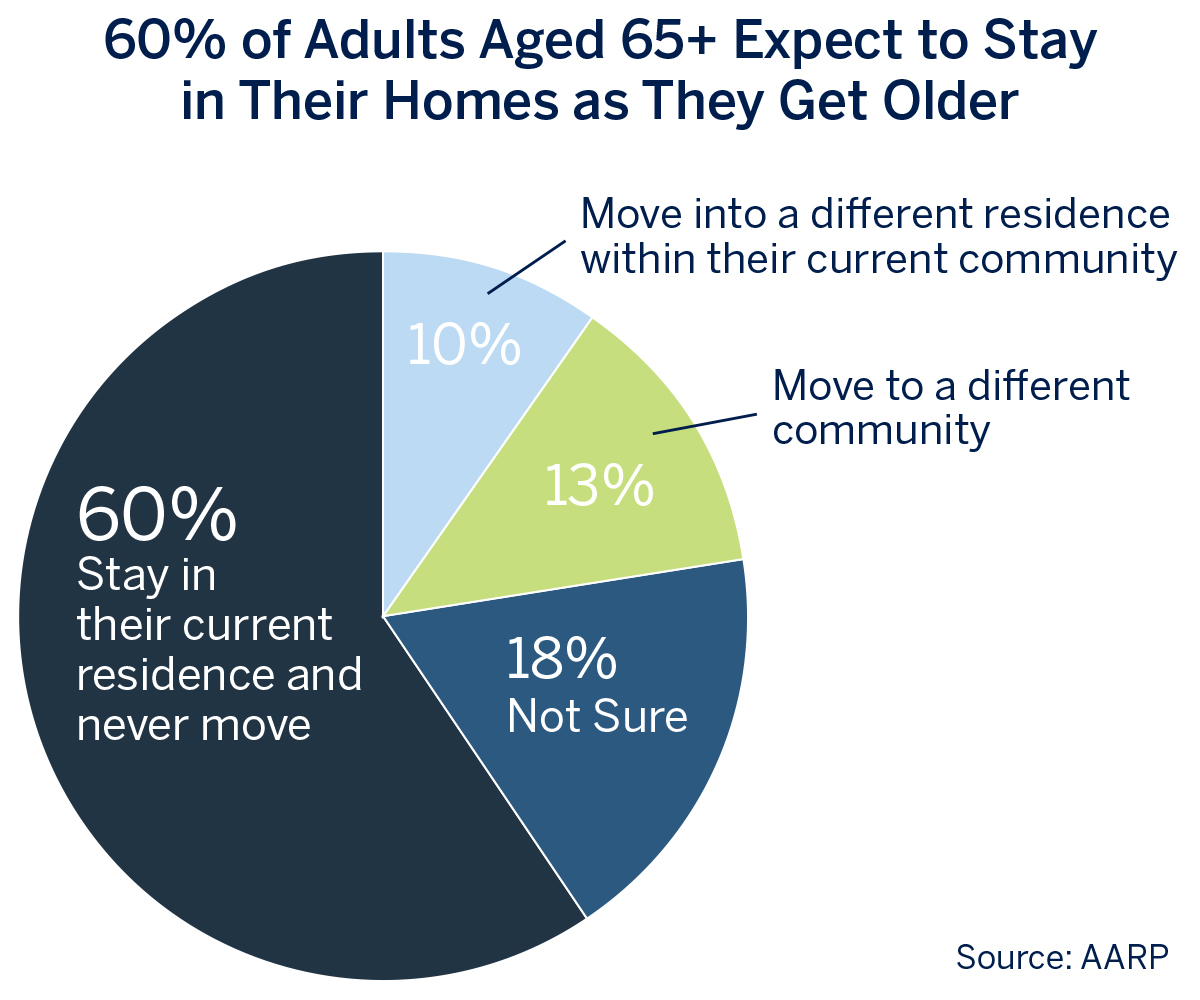
People are staying in their homes much longer. The National Association of Realtors tracks “seller tenure,” the median length of time a seller has been in their home before they sell. For a generation that stayed steady at 7 years – and it’s now more than 12. And while the Silver Tsunami, the big jump in population of aging Baby Boomers is real, the impact thus far on real estate has been a ripple at best. A recent study by AARP indicates that 60% of adults aged 65 or older have no plans to move from their current home – ever. That’s a lot of inventory that isn’t going to come on the market anytime soon.

Interest Rates and Tax Policy

We’ve never seen a time of such rapid increases in mortgage interest rates following record- low rates. Roughly half of all homeowners have a current mortgage at a rate of 4% or less – and many have a sub-3% mortgage. Consider this basic example: a homeowner with a $500,000 mortgage at 3% has a monthly principal and interest payment of $2,108.02. If that same homeowner sells and buys something with a mortgage that is just 10% more – $550,000 – their new monthly  payment at the current rate of 7% would be $3,659.16. That’s a 74% increase in the payment for just a 10% bigger loan, and many sellers understandably won’t make that switch. On top of that, those sellers – like aging Baby Boomers – who have owned their home for a long time might face a tax hit if their capital gain exceeds $500,000. All of that has locked a lot of would-be inventory off the market.

High Cost of Land – and the High Cost of Regulation

Our region has battled this for a long time, and it really restricts affordable new home construction. As intensely developed as the close-in areas of metro DC are, much of the new construction is in the outlying suburbs, and that may not be where people want to live. There have been studies that indicate as much as 25% of the cost of new construction is involved with planning and compliance with federal, local, and state regulations. That contributes to driving home prices higher, another hill to climb for current homeowners who might consider moving.

There’s Inventory – and There’s Inventory That People May Not Want

There isn’t enough inventory – except for condos and co-ops in Washington, DC. It’s another indication that there isn’t just one real estate market, and buyers really do care about what they buy even when they don’t have many choices. Through most of the last 20 years, the inventory of condos and co-ops on the market in DC constituted about 7% of all available homes. Now, it’s 25%. Much of that inventory is in older buildings with few amenities, and that’s not what today’s buyers are typically looking for. Time isn’t going to make those units better. So even in a time of scarce inventory, market dynamics still matter, and a buyers’ market can exist when almost everything else tilts in favor of sellers. Those condos and co-ops will still sell, but they will be on the market longer and won’t command the higher prices that other property types do.

What Happens From Here?

Markets adjust over time. There is pent-up demand from people who would really like to sell their home, and we will see the typical increase in inventory this spring. But that rebound will be muted until interest rates come down substantially, and that’s going to take a while. And the demographic pressures really aren’t going to change. Be prepared for an extended time of inventory that is insufficient to meet the demand – and that means continuing higher home prices.

We also hear theories that the upcoming elections will have a major impact on the region’s housing – watch for our next MarketWatch where we will dispel that myth.

*Data derived from BrightMLS for Northern Virginia (Fairfax and Arlington Counties and Alexandria, Fairfax and Falls Church Cities), Loudoun County, Prince William County (including Manassas City and Park), Washington, DC, Montgomery County and Prince George’s County.


Don’t miss a post! Get the latest local guides and neighborhood news straight to your inbox!


Home Inspiration April 9, 2024

How to Cultivate a Successful Kitchen Garden

This week we would like to share an article from our partners at The Scout Guide on How to Cultivate a Successful Kitchen Garden.


Kitchen gardens were gaining in popularity pre-pandemic, and the arrival of social distancing guidelines only accelerated their appeal. Beautiful and functional, the produce-yielding plots provide both delicious backyard crops and an enjoyable and satisfying pastime, and experts expect that modern “victory gardens” will continue to pop up well into the future. “I believe it’s more than a passing fad or momentary trend,” says Lisa Mierop of the Montclair, New Jersey-based landscape firm Mierop Design. “It’s unrealistic to think you will feed your family from a suburban kitchen garden, but it is a gesture towards an emotional and spiritual need to reconnect to nature and a collective recognition that things must change.” Here, Mierop and two other landscape and garden experts share tips for first-time home farmers, from advice on selecting the ideal location to essential equipment and more.


HOW TO CHOOSE THE RIGHT SITE


Keep an eye to the sky. There are many elements that come into play when choosing the location of your garden plot, but none are as important as the amount of sunlight you will get. “Since photosynthesis is required for the growth of a plant, the sunlight is essentially a source of food,” says Diane Panetta, owner of Growing Wild Greenhouse in Boise, Idaho. An average of four to six hours of sunlight is necessary to produce flowering and fruiting plants. Keep in mind that as the season progresses, the sun often changes position in the sky, so you want to choose a location that gets enough sunlight through the entire growing season.

Think inside (and outside) the box. Keeping optimal sunlight in mind, Allen Martinson of Martinson’s Garden Works in Ridgeland, Mississippi, says that any location, as long as it’s level, should work. He also stresses that there are no rules that say your garden has to be in your backyard—you can have a successful (and aesthetically pleasing) garden in your side yard, front, or even in the space between the sidewalk and street—as long as it’s level and you don’t have drainage issues.

Also, keep in mind that you’re not limited to the ground in terms of your garden location; raised beds and even pots can be very productive options. Panetta advises that planting in pots or other containers is a particularly good option for small spaces or areas where your sunlight is limited. “When I lived in a mountain town with a very short growing season, I drilled a few holes in an old wheelbarrow and planted my tomatoes. I was able to wheel them in and out of the barn when nights were supposed to drop colder than they appreciated,” she says.

Decide what you want to grow before committing to a location. According to Panetta, many plants work well together, while others compete for space. Larger plants, like tomatoes, squash, cucumbers, and melons may start out small, but will definitely crowd others if planted too closely. The space required is dependent on the plants you’d like to grow.

Consider irrigation—and your time. Many people assume they will water by hand, but in reality, this is a time-consuming and arduous task when factored over the full length of the growing season (Panetta notes that during the high heat of the summer, garden beds need water at least once a day). Some people have scheduled irrigation systems installed to ensure adequate watering, which is Martisons’s preferred method. Another option to consider is a soaker hose, which is a less expensive/complex system, but distributes water evenly, can be laid out to reach all plants, and ensures roots get water but leaves and flowers stay dry inhibiting disease and rot.

Figure out how to protect your investment. Before planting, Mierop advises considering the critters you have in your area, from deer to moles, voles, and birds. You may not only need a tall fence to keep deer out, but also fencing that extends down into the ground to prevent digging, and overhead coverage to keep birds away from fruit.

Make your garden soil count. As in all types of gardening, dirt matters when building an ideal backyard farm. Martinson tries to replicate the soil found in California and Mexico vegetable farms, which is a gritty, sandy, barky mix, into his beds by using a mix of sand (usually on the bottom third), mushroom compost, black cow manure, and good potting soil. Meanwhile, Panetta advises that depending on where you live, the natural soil might contain high levels of clay, sand, or loam, so she recommends amending (or replacing completely) the soil with a premium garden mix, which many garden centers sell in bulk. Both contend that you want to make sure there is good drainage to prevent roots from rotting and potentially killing the plants.


HOW TO CHOOSE YOUR CROPS


Start small. It can be easy to get caught up in your vision for your garden, while the reality can sometimes be overwhelming, Panetta warns. To keep things simple, begin by focusing on a few crops, and try to research the best varieties for your area. Martinson explains that universally successful crops include tomatoes, okra, lettuces, squash, and cucumbers. Kale is also simple to grow, and different varieties will reap a harvest throughout the growing season. Another good rule of thumb: consider what you and your family enjoy eating throughout the growing season and plant that.

Know your growing season. Being aware of your growing season—the average time from last to first frost—is imperative. “If you have a short, 52-day growing season, planting watermelons that average around 70-90 days to mature means they may not ever have the chance to bear fruit before the season ends,” Panetta explains. So be sure to look at the plant’s “days to maturity,” keeping in mind that this can differ for each variety.

Consider cool season crops. We mostly think of peak summer crops when planting, but Panetta notes that there are many that produce well into the fall, and you can do a second round of planting as summer wanes. Some cool season crops include broccoli, onions, peas, kohlrabi, garlic, beans, asparagus, radishes, rhubarb, brussels sprouts, carrots, potatoes, beets, cauliflower, and cabbage.

When in doubt, go with herbs. If you’re not ready to dabble in fruits and vegetables, a successful herb garden is a great place to start. And since herbs grow successfully in pots, you can place a few on your patio and not have to even think about creating a garden plot. Martinson recommends starting with a mix of mint, lemongrass, rosemary, fennel, dill, parsley, lemon and regular thyme, celery, and oregano.


HOW TO MAINTAIN YOUR PLANTS


Look for signs of pestilence. “With all things nature, you will encounter pests,” Panetta says. Damaged leaves and droopy plants are the telltale sign you might have an issue. Slugs, aphids, grasshoppers, and a whole army of other insects can do a lot of harm in a short amount of time, so keep watch and quickly take the appropriate measures, such as contacting your garden expert for next steps and methods to ward off invaders.

Go organic if you can.  When dealing with produce, it’s always a good idea to have an organic garden. Martinson reports that most local garden centers have an organic section with everything from soil nutrients to pesticides. Additionally, he explains that some pests, like aphids, are relatively easy to deal with without chemicals. “A good stream of water will knock [an aphid] off the leaves,” he shares. “Once they fall off your plant they will die.”

Be sure to mulch. While it may feel like an afterthought, or a purely decorative measure, mulching actually has an important purpose. “Adding mulch will keep weeds down and moisture in, which is important during those super-hot summer days,” Martinson explains. He prefers pine bark mulch, which makes the soil a little more acidic as it breaks down, but advises that anything that covers the ground—even pine straw—is useful.

Make morning watering a part of your daily routine. Every morning, around 9:00 to 10:00 a.m., you should give your plants a deep watering, according to Martinson. The amount will depend on your outdoor temperature, the soil, and your container. You want to strike a balance where the plants get enough water but are not too wet. He also adds that it’s important to water only the roots, as disease can develop if the foliage is wet.

Learn to appreciate the satisfaction of weeding. When you have a garden, weeding has to be a natural part of your maintenance routine. “Where there is good soil and moisture, opportunistic weeds will want to grow just as much as your new vegetable plants,” Panetta explains. Learn to identify plants that don’t belong in your garden, and remove them before they become an issue.




Don’t miss a post! Get the latest local guides and neighborhood news straight to your inbox!


Home Inspiration April 4, 2024

What to do with your Lawn after Winter

Winter is over, and spring has officially sprung! In fact, I was so excited to see tulips in a client’s yard I basically jumped out of my shoes. He planted bulbs last year, and now they made his entire backyard sing. So many of you are probably wondering how to make your yard sing this spring. From a garden and landscaping business owner’s perspective, this is an essential time of year. Let’s explore what to do with your lawn after winter.

Clear Debris

The first step in getting your lawn ready for spring is to clear away any debris that accumulated during the winter. This includes fallen leaves, twigs, and branches that could be tangled in the grass. Use a leaf blower or rake to get everything off your lawn. Clearing this debris will leave your lawn clear and free to grow. You won’t believe the change this can make in how healthy and beautiful your lawn looks.

Rake and Aerate

During winter, the snow can compact the soil, making it difficult for air, water, and nutrients to reach the roots. Raking and aerating the lawn after winter is a good way to alleviate compaction and breathe new life into your lawn. This process will help to break up the soil and allow water and nutrients to reach the roots. Reseed If your lawn has bare or thin patches, it’s a good time to add some grass seed and fertilizer. This process is called overseeding. It’s essential to do this in the spring because the soil has warmed up enough to help the seeds take root, ultimately giving you thick and healthy grass.

Fertilize

Fertilizing is critical in the spring because it provides the necessary nutrients to help your lawn grow lush and green. Fertilizing the lawn once enables it to grow and flourish and stay healthy throughout the season. And a healthy, dense lawn is your best defense against weeds. By fertilizing in spring, you encourage grass to grow vigorously, which helps to choke out weeds and prevent them from taking hold.

Mow the Lawn

This one seems obvious, but it’s time to mow your lawn. Now that the grass has begun to grow, you need to start mowing regularly. Keep your mower blades sharp. Make sure to cut the grass to the desired height because cutting it too short can damage the blades and cause spots to appear. Regular mowing ensures the growth of a healthy, vibrant lawn, which is what I want for you in 2024. Your lawn after winter can be quite challenging to take care of without any prior knowledge about the right time and ways to tackle it. Debris, compaction, dead roots, and other problems may have occurred that your yard will not be able to fully flourish until you’ve addressed them. If this seems overwhelming or you want to do more with your yard this spring, contact us today and, together, let’s give your lawn the care it deserves.

Summer Planning

And if you are like most of my clients, you are already thinking ahead to summer. How will you use your space when the days are long and hot? If you are considering a pool, then check out my latest blog post. Make your wish list, research each option, then start interviewing professionals (for things like sprinklers, patio design, and pools) – our calendars fill up quickly for summer projects! All other DIY projects can be planned and completed by you, ideally this spring before the temperature rises!


Happy Gardening!


Pragya Mishra is the Founder and Principal of Artscapes, LLC, a Northern Virginia-based landscape architecture firm that specializes in designing outdoor transformations that bring you joy. With 22 years of professional experience, she works closely with each client and her network of top-tier contractors to make each project vision a reality. Follow Artscapes on Instagram @artscapes_living and see examples of past projects on her website, www.artscapesliving.com.


Take a look at our website for all of our listings available throughout Washington, D.C., Maryland, and Virginia.


Don’t miss a post! Get the latest local guides and neighborhood news straight to your inbox!


Real Estate April 2, 2024

Shocked By Spiking Home Insurance Rates? You’re Not Alone.

Massive increases in insurance premiums are busting budgets and derailing some home purchases.

If you’re a property owner, you know you need homeowner’s insurance. And if you live in an area that’s been designated as having a higher risk for property damage – such as in a flood zone, an area of extreme weather, or a densely-wooded location – you might expect that your insurance rates will be higher. And, of course, homeowners know that if they file a claim or two over the years that they should pay more at their next policy renewal.

But many homeowners and would-be buyers are finding out that premiums are rising sharply through no fault of their own, if insurance can be secured at all. What was once a standard, perfunctory item on a homeowner’s to-do list has become a lot more complicated as larger insurance companies try to stem losses caused by an increase in claims in areas affected by major natural disasters like wildfires, flooding, tornadoes, and hurricanes. Those costs are being passed down the line to consumers. 

“It’s problematic for our buyers and problematic for our sellers,” said Jillian Keck Hogan is a top-producing agent who works in DC, Maryland and Virginia and has experienced how acquiring insurance can complicate a home sale. She recently represented a seller for a listing that the buyer couldn’t secure insurance for because there weren’t definitive records about the age of the roof. Multiple roof inspectors gave reports that insurance deemed inadequate because the roof, while in sound condition, was past its half-life expectancy. 

Roofs can last around 30 years and the average life of most roofs is around 20 years. In order to secure their insurance and proceed with closing on time, the seller chose to split the cost of replacing the roof after closing. Jillian said that education for both buyers and sellers is key. She advises that sellers should gather details about the age of their roof, systems, and utilities before bringing their home to market and be prepared for buyers who may request fixes for big ticket items, while buyers should start shopping for insurance sooner rather than later, and to investigate multiple carriers for rates.

“It ends up being messy if you’re trying to get all of your insurance research done only days before closing,” she warned.

Susie Adib, Senior Producer with Commercial Insurance Associates, said there are many factors that are causing a spike in premiums – in many cases more than 20% – including an increase in severe weather and natural disasters, a carrier’s drive for profitability as set by their combined ratio, and complications from pandemic recovery, including inflation, labor shortages. Many things that are just now working through the insurance pipeline, a process that takes time because of regulatory review at the state level for any changes a carrier makes regarding premium increases. State agencies make sure there are sufficient and affordable options for consumers and local departments of insurance and their resources can be found here for DC, Maryland, Virginia and West Virginia.

Adib said that much like credit scores, homeowners will have an insurance score that affects how much a policy will cost. This can include factors like how many claims you’ve made in the past, your credit score, and who you’ve been insured with in the past. For example, there many companies that won’t insure a slate or flat roof, historic properties, or homes built before 1900 and if you’ve had a previous insurance carrier that covered those items in the past, it will be a flag to a new carrier that there is a mitigating factor in the property.

What happens if a property is deemed uninsurable? Adib said there are still options. Again, much like credit companies, there is a market for substandard properties where premiums will be higher but at least the home will be covered. There is also the option to exclude coverage for a portion of the home that is at higher risk, for example a roof or liability for a pet. Lenders can also require force-placed insurance, whereby the lender secures the insurance and passes along the costs to the borrower via steep premiums in their mortgage. 

“When it comes to insurance, there are so many options,” Adib said. “It’s so important to have an actual person you can talk to – not an #800-number – especially when a claim arises.” She advises homeowners to do timely research to make sure you have that person to go to bat for you when the time comes.

Here are some tips for keeping insurance premiums in check.

  • Review your insurance policy every couple of years, especially if you’ve made improvements or renovations to the property. Adib said that shopping for new coverage won’t increase your rate and it’s important to understand how different carriers might evaluate your policy and the premiums you pay. “It’s your policy so make sure it covers what you need it to.”
  • Don’t make small claims. The average homeowner makes one claim every seven years and anything above that could impact policy rates. For example, don’t file a claim if you have a $500 deductible and a tree falls on your backyard shed accounting for $700 in damages. Yes, you have insurance for a reason but not all claims are equal. The more claims on a policy the more likely it is to face a surcharge or be at risk for non-renewal.
  • Shop replacement costs of your home, which are different from the market value of your home which also includes the value of the land the property sits on. Replacement costs are the amount of money needed to repair a property or replace belongings at current building supply costs. Over time, automatic annual increases driven by roll-on percentages that are driven by inflation can increase expected replacement costs that may not be aligned with actual costs. If you’ve had your policy for a while, it’s worth looking at the suggested replacement costs and see how they compare with other policy quotes. It’s important to note that while a carrier’s premium rates are reviewed and regulated by the state, roll-on percentages for replacement costs are not, even though high replacement costs can increase the premium. A home with a current replacement cost of $500,000 with an annual roll-on percentage of 3% is going to have a lower premium over time than a similar home with a roll-on rate of 6%. “You could be paying a lot more in premiums for coverage you might not need,” Adib said.
  • A higher deductible can lower insurance rates, especially if you don’t have a lot of claims on the policy. Owners like low deductibles because they want to reduce how much they must pay out-of-pocket for damages to their property, but lower deductibles mean higher premiums, and deductibles only come into play when a claim is made. Over time, having a $2,500 deductible and a lower annual premium will save more money than having a $500 deductible and a higher premium. Another option is a percentage deductible, but Adib cautions that while this can lower premiums it will mean more money out of pocket if there is a claim.
  • Maintain your home in good condition. Look for trees around the property that could cause damage, check the roof for missing shingles or areas of leakage or water absorption, keep up with maintenance on big-ticket appliances like the HVAC and hot water heater. Insurance carriers do conduct inspections on properties they cover – including using spatial imaging to evaluate roofs – and your rates could increase if they find something of concern.
  • Consider a local carrier. National carriers have increased volatility in their rates because they cover the entire country, including areas that may be prone to natural disasters. To make up for losses in those areas they must be strategic about rates and be selective about the risk they will accept with new policies, while smaller and local carriers may be willing to take on that risk.

If you’re a current homeowner, take a few moments to review your current policy to check you have the coverage you need on terms that work for you now, as circumstances are likely to have changed if you’ve owned that property for a while. If you’re a buyer looking to secure coverage, pay attention to the condition of the property you’re purchasing and be prepared to negotiate with the seller to make fixes or shop around for an affordable policy.

Your trusted McEnearney | Middleburg Real Estate | Atoka Properties Associate can connect you with recommended insurance professionals who can explain options and help you find a policy that fits your needs and a rate that won’t break the bank.


Don’t miss a post! Get the latest local guides and neighborhood news straight to your inbox!