 Facebook
 X
X
 Pinterest
 Copy Link
What Your Realtor® Wants You To Know About Home Safety


Take a look at these smart and handy tips to keep yourself and your property safe.
September is Realtor® Safety Month and keeping a home safe takes the work of everyone. Here are some things your Agent would like you to keep in mind to protect both your person and your property as compiled from tips from the National Association of Realtors®.
The Basics for Your Home
- The key to home safety starts with…keys! Know the location of all your house keys at all times, and reconsider lending them out to friends and neighbors, no matter how trustworthy. Never use hide-a-keys or leave the key under the doormat, above the door, in a flowerpot, or anywhere outside the house. Thieves have seen it all and you aren’t as original in your hiding spots as you think you are.
- Keep your car keys and house keys on a different ring if you ever use valet parking or leave your keys with parking lot attendants or even at the mechanic.
- Make sure your home has adequate outdoor lighting and basic threat deterrence devices like a camera doorbell or security system.
- Make sure that all your home’s doors to the outside are metal or solid, 1 ¾” hardwood, and have good, sturdy locks.
- Maintain your property and surroundings in every season, and don’t neglect issues like peeling trim or an overgrown yard. If a home looks unkempt, thieves may think it’s abandoned and an easy target. Shoveling your walkways to clear them of snow and debris and removing holiday decorations and fallen tree branches in a timely manner will signal that the home is occupied.
- For more serious deterrence, install motion-detection devices and an external alarm system – the louder the better – that will call attention to a break-in.
- If you have a garage, make sure you keep up with maintenance
Keeping Financial & Techno Criminals at Bay
- Open your credit card bills and bank statements right away. Check for any unauthorized charges or withdrawals and report them immediately. Call if bills don’t arrive on time. It may mean that someone has changed contact information to hide fraudulent charges.
- Thoroughly shred all papers with personal information before you throw them away. Shred unwanted credit card applications and “convenience checks” that come in the mail, credit card receipts with your account number, outdated financial papers and papers containing other’ personal information.
- Before you act on an email request, check the Federal Trade Commission’s website for tips to avoid scams and how to report them.
- Don’t respond to emails requesting personal or private information such as passwords, credit card numbers, or bank account numbers. Even if a message appears to be from your bank or a trusted vendor, credible companies never request private information this way.
- Be sure that you don’t click on error messages that state “your computer has been infected with a virus” or “Trojan found”, warning that something is wrong with your computer and to download their protection service. These malware attacks are designed to download viruses and steal or lock your information.
- Block identity theft by contacting any of the three consumer reporting companies— Equifax®, Experian and TransUnion®—to place a freeze on your credit report. This puts you in control of who can access the details of your account to grant new credit, a good alert if someone is trying to open an account in your name.
- If you suspect your account has been compromised, you should alert credit bureaus, card companies, and other creditors to place a fraud alert on your account to monitor suspicious activity.
Did You Just Move Into a New Place?
- Have the locks changed when you move in. For apartment and condo dwellers, the building’s maintenance crew may be able to swap lock cylinders for you.
- Just bought a new entertainment system? A bunch of empty boxes out by the curb triggers an alarm to would-be thieves. Instead of putting boxes out in plain sight, cut them down, and stuff them in trash bags.
- Another tip for those living in multi-unit properties: use only your last name, or if necessary last name and first initial, on your door or mailbox. This keeps strangers from knowing your gender or how many people live in your apartment.
If Your Home Is Currently Listed
- DON’T leave personal information like mail or bills out in the open where anyone can see it.
- Consider installing an external mailbox with a lock so that mail delivery is secured, rather than a mail slot in your door where people entering the home could view or steal important mail.
- Be sure to log out of computers, laptops, and other electronics that require a login and password, as well as securing other expensive, easy-to-pocket electronics.
- Same goes for jewelry, medication, and other valuables. Keep them in a secured location or remove them from the home while the property is listed.
- Inform neighbors when open houses are happening, and ask them to be aware of anything that seems out of the ordinary, such as people walking around the property looking for access points.
- When you return home after a showing or an open house, take a few minutes to check if anything seems out of place. Doublecheck that windows and door locks are secure, that nothing has gone missing, or that anything has been left behind.
- Most importantly, remember Stranger Danger! Not all agents, buyers, and sellers are who they say they are and if someone comes to your home outside of a scheduled showing time, do not allow them to access your property. Instead, give them your Agent’s card and tell them to reach out directly.
Awareness, prevention, and maintenance go a long way to keeping you safe in your home. Reach out to your Trusted Advisor at McEnearney Associates | Middleburg Real Estate | Atoka Properties for more tips and advice and make home safety a natural part of your daily routine.
Take a look at our website for all of our listings available throughout Washington, DC, Maryland, Virginia, and West Virginia.
Don’t miss a post! Get the latest local guides and neighborhood news straight to your inbox!

3 Area Designers Share The Most Common Kitchen Requests They Receive

Kitchen trends come and go—for example, a few years back, all-white kitchens were all the rage, while nowadays, people are enjoying experimenting with bolder colored cabinetry and finishes. When locals dial up an interior designer to get some help revamping their cooking space, what exactly are they asking for? We spoke with three designers—one in Maryland, another in DC, and the third in Virginia—to learn what’s been in demand.
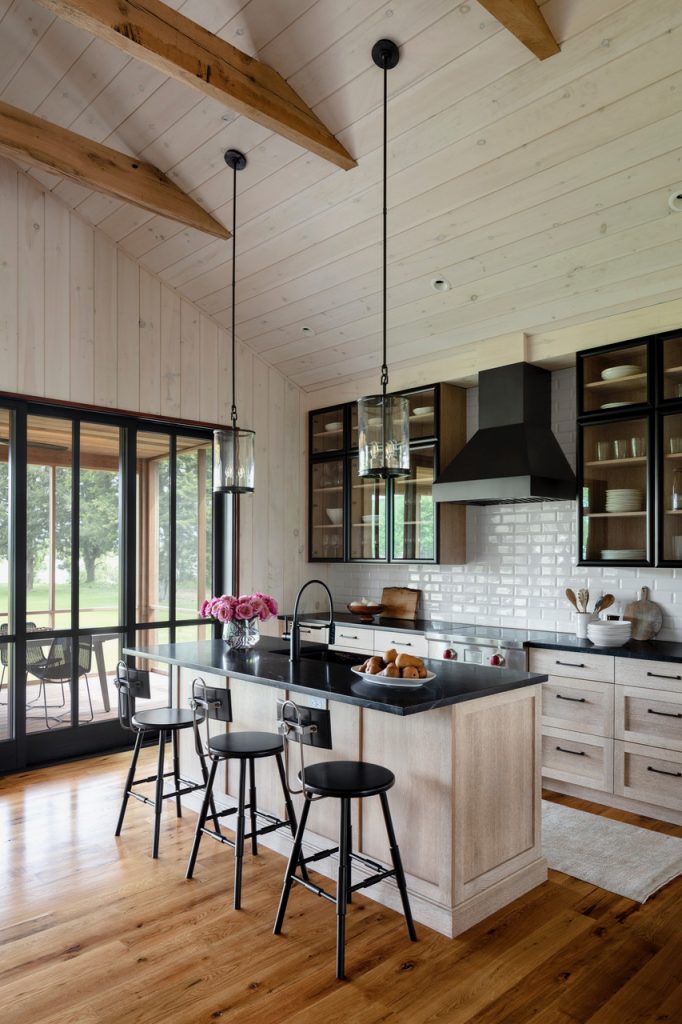
Design by Laura Hodges Studio. Photography by Jennifer Hughes.
Cabinet Upgrades:
Many of Sara Swabb’s clients turn to her for assistance with cosmetic updates including cabinetry revamps. Oftentimes, they are eager to paint kitchen cabinets a new color and will work with Swabb to identify a shade and professional painter who can get the job done. Clients are also eager to update their kitchen cabinet hardware, says Swabb, the founder of Storie Collective in Washington, DC.
Catonsville-based Laura Hodges is also a pro at making cabinet updates. “In a new home, our clients will often want to change the cabinetry, especially if the layout and functionality aren’t a good fit for their family,” explains the founder of Laura Hodges Studio. She will sometimes also retrofit existing cabinets with custom wooden inserts to improve their functionality.
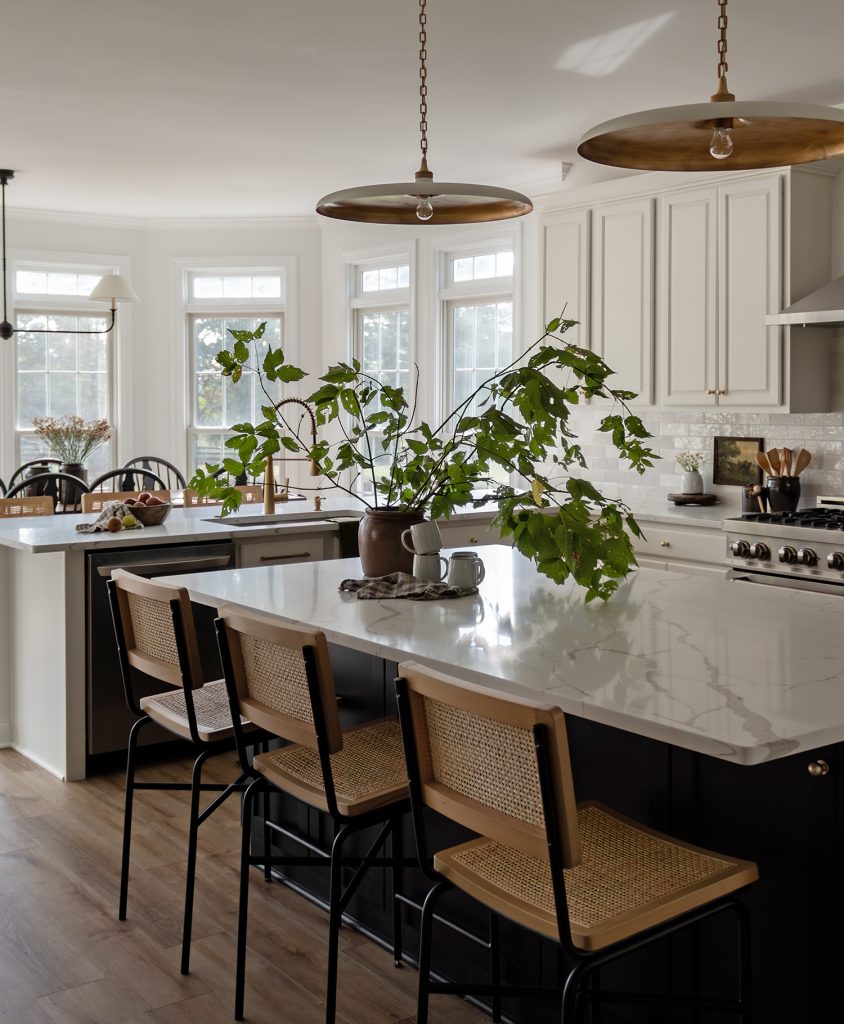
Design and photography by Kevin Billings.
Warming up the Space:
Kevin Billings, the founder of Dexter & Plaid in Leesburg, works with many clients who crave brighter, warmer cooking spaces. “Many of my clients do not want the stark white kitchen and prefer something that feels warmer, more inviting, and just less sterile,” he says. Sometimes, this means updating the cabinetry, but it may also involve weaving organic elements into the kitchen, he shares. “The easiest way is through wood elements, like in shelving or beams,” Dexter says. “Just adding these natural materials can really tone down any sterile or cold feeling a kitchen may have.” Billings will also bring unlacquered brass, which will patina nicely over time, into the mix with a new faucet or type of cabinet hardware.
Lighting Changes:
Swabb also works with clients who crave new kitchen lighting. Projects may include “swapping out pendants for a fresh selection or transitioning from recessed lights to small flush mounts,” the designer says.

Sarah Lyon is a New York City-based freelance writer, originally from Bethesda, MD. She contributes to a number of national design and lifestyle publications like Architectural Digest, Apartment Therapy, MyDomaine, the Washington Post, and more. Sarah also works with designers to help them style spaces for photo shoots. Find more shelfies on her Instagram page, @sarahlyon9
Don’t miss a post! Get the latest local guides and neighborhood news straight to your inbox!
Is That Condo You’re Eyeing (or Selling) on a Lending Naughty List?

Stricter lending guidelines for condominium sales mean some properties may not be eligible for certain financing.
Underwriting a residential mortgage loan involves a detailed review of the prospective borrower’s financial picture. It also involves a review of the property to be pledged as collateral for the loan. In the case of loans for condominiums, that review extends beyond the information included in a property’s appraisal report.
Most lenders choose to make sure the entire condominium project is approved by the U.S. Department of Housing and Urban Development (HUD) for FHA loans and the Department of Veteran Affairs for VA loans. In the case of conventional loans, both Fannie Mae and Freddie Mac loans require completed condo questionnaires and are obliged to check the Fannie Mae Condo Project Manager (CPM) system to determine whether a loan in a condo project is eligible for sale to Fannie or Freddie. Depending on the responses provided in the condo questionnaire, the lender may then require additional documentation from the condominium association.
The collapse of the Champlain Towers Condo building in Surfside Florida in 2021 has prompted many condo projects to undertake engineering studies of their structures and the lending industry to ascertain whether a condo project presents collateral risk. This increased scrutiny has led to a considerable number of condo projects being listed as “unavailable” within the CPM system.
My recent review of the “unavailable” condo project list for the District of Columbia revealed 30% of projects were on the list because critical repairs are needed and/or the project has significant deferred maintenance. As more condo projects undertake engineering reviews of their structures and facilities, it is likely more projects will be listed as “unavailable” and therefore ineligible for conventional financing until those identified deficiencies are corrected.
The inability to obtain financing for a unit in a condo project is problematic for both purchasers and sellers. Condominium Associations and management companies should be proactive in understanding the requirements of the mortgage industry in order to avoid being deemed ineligible. When a project does obtain the status of “unavailable,” those condominium associations should be equally proactive in making corrections and communicating with Fannie Mae in order to be removed from the unavailable list as quickly as possible.
Please reach out to me or my colleagues at Atlantic Coast Mortgage for more information about condominium loans and how to find the right lending program for your needs.

Brian Bonnet
SVP, Sr. Loan Officer, NMLS: 224811
Atlantic Coast Mortgage, NMLS: 643114
O: (703) 766-6702 | M: (703) 304-0188
Notice: This is an advertisement and is not a commitment to lend. Contact a loan officer today to explore the financing options specific to each borrower.
Don’t miss a post! Get the latest local guides and neighborhood news straight to your inbox!
Exploring The Right Retirement Move For You

Whatever lifestyle you want to lead in your Golden Years, there’s a way home.
As we age, our housing needs and preferences evolve. For many seniors, part of that evolution involves choosing the right retirement community that can significantly impact quality of life, access to care, and overall well-being.
Retirees are a significant demographic with wide-ranging financial resources, and retirement living is as varied as the residents they serve. Last week we looked at the option of aging in place, and we’ll now review options for those ready to leave home maintenance responsibilities behind. It takes planning and research to find the right kind of property and community to ensure the lifestyle you’re envisioning so we asked a few of our Associates who work with seniors about what to consider when making a retirement move.
The Downlow on Downsizing & Starting the Search
They say you can’t take it with you… but would you really want to even if you could? Downsizing can be an emotional, cumbersome, and time-consuming process but it can also be deeply satisfying and a little preparation will go a long way. Our agents advise the same thing when it comes to preparing for retirement living: start downsizing and start early.
Debbie Miller, an Arlington Realtor® and Certified Senior Advisor, has written Doing The Right Thing: Simple Solutions, Essential Tips & Helpful Resources for Assisting Aging Loved Ones, a guide for finding “right-sized” living, and was featured in the “The Next Chapter” Senior Care Transitions Podcast and advises clients on managing the process from beginning to end.
“It’s important to bring in help as early as possible before someone makes those decisions for you,” Debbie said. “It can take up to a year to do the research on finding the right community, time to prepare your home for listing, and time to make the move.”
Peter Crouch of Crouch Realty Group has extensive experience guiding clients through retirement moves – he was awarded the National Association of Realtors® Senior Real Estate Specialist® (SRES) Outstanding Service Award in 2018 for his expertise – and echoes Debbie’s advice. “It’s a huge learning curve. Some of these folks haven’t moved in 40+ years so it’s going to take time and assistance to work through the process.”
Realtor® Martha Floyd of McEnearney’s McLean office has worked with many clients who have made the move to retirement housing and offers these tips:
- Identify the space you’re moving into to determine which furniture will make the most sense in the new layout.
- Consult with your agent about resources and vendors – like Ararity, a local downsizing company – focused on who can take items for consignment, donations, and even for junk.
- Employ the Four Sort Method. Get four large boxes labeled Keep, Donate, Sell, and Trash/Recycle.
Martha suggests retirees work with a family member or their trusted advisor (often their real estate agent) to determine the criteria most important to ensure an easy transition to a new home. “Pay attention to the different pay structures at retirement communities,” she advises. “What is the monthly fee, what does it cover? What amenities are available? Are there different levels of care provided? How close to my current home is the new location to the shops and services I currently visit?”
Peter noted that while some people might prefer to age in place, a drastic event like a fall can precipitate a move they weren’t prepared for. “You want to be in control of your future,” Peter counsels. “If you make your choices early you will have a better chance at being where you want to be, aging in a comfortable environment with the right care and people to spend quality time with, instead of being isolated.”
Once you’ve determined what will come with you and what type of lifestyle you want, the next step is to determine what kind of community fits your retirement vibe.
Age-Restricted Housing
Age-restricted housing is residential communities that legally limit residency to a majority population of older individuals—typically 80% over a set age, usually with a minimum of 55 years old. We say “legally limit” because under the Fair Housing Act, age is a protected status against discrimination. Therefore, in order to qualify for the 55 or older” housing exemption, a facility or community must satisfy each of the following requirements:
- At least 80 percent of the units must have at least one occupant who is 55 years of age or older; and
- The facility or community must publish and adhere to policies and procedures that demonstrate the intent to operate as “55 or older” housing; and
- The facility or community must comply with HUD’s regulatory requirements for age verification of residents.
Operated through a homeowners or condo association, age-restricted communities offer a variety of amenities to residents that can be as luxurious as gated entries, golf courses, walking trails, dining clubs, and spas to more general offerings like fitness centers, community lounges, and scheduled group activities. As with traditional real estate, the more amenities included the higher the monthly association fee, so budget accordingly!
The stringency of the rules varies based on the individual HOA bylaws and can restrict the ages of visitors and how long they can stay, or if a younger spouse is permitted to stay in the community following the death of their senior partner. Just as with any property purchase, it’s important to read the fine print in a community’s bylaws to ensure the best lifestyle fit.
Assisted Living Communities & Continuing Care Retirement Community (CCRC)
Some 55+ housing include an option to age into assisted living, where residents have their own private apartments or villas but can access help with activities of daily living as needed. These communities often include meal plans and may offer nursing care options. Memory Care Communities specialize in care for cognitive decline and cater to seniors with cognitive impairments, such as Alzheimer’s disease or dementia. These communities provide specialized care and support, focusing on cognitive stimulation, safety, and assistance with daily activities.
“Many folks want the security of all of the options in one place,” Peter shares. “They may be independent now, but want their housing to include all the care options they might eventually need.” For those seniors, a Continuing Care Retirement Community (CCRC), also known as a life plan community, delivers independent living with various lifestyle amenities and access to onsite higher-level care as medical needs progress. Residents may enter these communities as part of the 55+ crowd who live independently in their own units, and as they age will move to smaller units within the community for increased staff assistance as medical situations dictate. The living environments as care progresses could be private or semi-private rooms and include adult day care, memory care, nursing home, and respite services.
Making It a Family Affair
Debbie, who has years of personal experience in helping her own family members move in their golden years, said it takes careful planning and communication to make sure the process doesn’t get overwhelming. “The decision is yours to make but it’s important to rely on those you love and trust to help make it as stress-free as possible.”
And for children or other confidants who are called to assist a senior, remember your role in this milestone move. “Don’t be afraid to ask the questions but understand that your role is to support, not to interfere or control,” Debbie advises.
Remember that it’s normal to expect some bumps along the way, “A lot of this will be emotional,” Debbie cautions, “But if you understand the options available and give yourself the time to make the right decision, the easier it will be to understand the process and manage it the best way for you.”
Many of our Associates specialize in helping clients find their best senior living community. If retirement is your next chapter, let a McEnearney Associates | Middleburg Real Estate | Atoka Properties agent help you make that next move.
Take a look at our website for all of our listings available throughout Washington, D.C., Maryland, and Virginia.
Don’t miss a post! Get the latest local guides and neighborhood news straight to your inbox!
Design Report: The Hottest Interior Gray Paint Color

This week our partners at The Scout Guide give us inspiration on trendy gray paint colors for your home.
For most of this century, gray paint has reigned supreme as the neutral interior color of choice. Embraced for its timeless and versatile nature, from warm organic greiges to darker, steely tones, gray continues to check the box for many design profiles. Here, we’ve tapped two Scouted interior experts to give us the inside scoop on the gray paint colors you should consider when embarking on your next interiors refresh. To find a Scouted interior designer near you, consult The Scout Guide Directory.
1. Anonymous, Sherwin Williams

Interior design by Krystal Dawn Design. Photography by Kimberly Meadowlark.
”Opting for a medium-to-dark gray paint infuses a space with timeless sophistication. This tone exemplifies versatility and creates a refined and elegant ambiance. By color-drenching this home office space with a uniform shade across the ceiling, walls, and trim, a cohesive and subtly moody atmosphere is achieved that enhances the room’s depth and sophistication.“– Krystal Matthews, owner and principal designer of Krystal Dawn Design in Baton Rouge, Louisiana
2. Conservative Gray and Thunder Gray, Sherwin Williams

Interior design by Krystal Dawn Design. Photography by Kimberly Meadowlark.
“Combining shades of gray that complement one another is an excellent way to add warmth, depth, and visual interest to a space. Warm gray tones bring a sense of comfort and enhance the overall atmosphere. In this primary bedroom, Conservative Gray on the walls, Thunder Gray on the ceiling, blend seamlessly to create an organic look.” – Matthews
3. Trout Gray, Benjamin Moore

Interior design by Edit Design Creative. Photography by Rosemary J Photography.
“Trout Gray is an easy choice for us when we are looking for a moody, sophisticated gray. We used this charcoal colored hue in our client’s library, a space where they can both relax after a long day as well as entertain, so we wanted to choose a gray that was multi-purpose. Trout Gray is one of our favorites to create some drama while still keeping the room neutral.” – Erika Peck, principal at Edit Design Creative in Chicago, Illinois
4. Useful Gray, Sherwin Williams

Interior design by Krystal Dawn Design. Photography by Haylei Smith.
“The walls of this space are painted with Useful Gray, a color that features more beige undertones, as opposed to the blue. A warm gray like this one offers a cohesive, inviting look, whereas steely grays can clash with warm tones, making an interior appear cold.” – Matthews
5. Cumulus Cloud, Benjamin Moore

Interior design by Edit Design Creative. Photography by Margaret Rajic Photography.
“The perfect gray for anyone looking for a neutral tone, Cumulus Cloud is a well-rounded gray that is quickly becoming our favorite. This isn’t a gray that goes red, blue, or green, but rather has a slight hint of warmth, which gives it softness. Beautiful in rooms with a lot of natural light, it allows for the subtle color to be the background to your interior. Alternatively for our client’s house, we used this color in the primary bathroom with little natural light and we found it really brightened up the space against the dark tile. Adding this contrast to the room gave the bathroom a spa-like feel.” – Nicole Parke, principal at Edit Design Creative in Chicago, Illinois
Krystal Dawn Design appears in The Scout Guide Baton Rouge. Edit Design Creative appears in The Scout Guide Chicago.
Take a look at our website for all of our listings available throughout Washington, D.C., Maryland, and Virginia.
Don’t miss a post! Get the latest local guides and neighborhood news straight to your inbox!
Senior-Sharing As a Way to Bind Communities Together

There are different options for living out your Golden Years at home with benefits for more than just homeowners.
A first home purchase. Moving to a larger home. A major remodel. Downsizing. And then…
There are as many stages to homeownership as there are stages in life. Major milestones throughout careers, families, and financial circumstances often go hand-in-hand with changes in the type of home required or desired. And for many Baby Boomers and older Gen-Xers, retirement is the next milestone on the horizon.
According to the National Association of Realtors (NAR), the 65-or-older segment now represents an important 15% of the population with numbers growing beyond 20% by 2050, and seniors are the fastest-growing population group in the country. According to a January 2024 report from Senior Housing News, nearly 60% of respondents to a summer 2023 survey by the American Seniors Housing Association (ASHA) said they were considering a move that potentially included transitioning to a senior living community within the next four years. But a total of 92% of respondents agreed or strongly agreed that remaining independent and self-sufficient was important to them, and just under a quarter of respondents said they preferred to live in their own homes.
Aging In Place and Senior-Sharing
For many retirees, moving simply isn’t an option. Whether it’s to retain the equity in a paid-off property; the cost of moving to a new community; leaving a circle of trusted friends, family, doctors, and vendors; the lack of nearby retirement-living options; or a desire to remain living independently, many people choose to stay in their current homes and adapt it to fit their requirements as mobility and accessibility needs change.
Ideally, one-level living offers the safest living floorplan with fewer stairs to navigate, but homes can also be modified with chair lifts (basic lifts cost between $2,000-$5,000) and elevators (cost ranges widely but are generally $20,000-$50,000). While these additions aren’t currently covered by Medicare or most insurance policies, there are grant programs and community groups that can help defray installation costs, including one offered through the Veterans Administration. Homeowners can also check with their local Department of Housing and Urban Development (HUD) office to see what grants are available in their area.
Aging in place is more than just adapting a home, it’s also about knowing you’re connected to your community with a trusted and caring network. The Senior Villages initiative of Washington, DC is a neighborhood-based nonprofit supported by volunteers that “makes it easier for older neighbors to continue living safely, comfortably and actively in their own homes and connected with their neighbors.” Residents can search for Villages in their area and find other resources for helping seniors thrive and get out and about in the community. At Home in Alexandria (AHA) offers a similar volunteer program, connecting seniors with local experts to help with home maintenance, technical assistance, and running errands.
One of the benefits of keeping a larger home in retirement is the option to bring in others to share in the upkeep and costs, whether they be family members, good friends, or renters. Senior-Sharing is growing in popularity, whether it’s with other seniors or intergenerationally where seniors are paired with college students or other young adults.
For example, Montgomery County’s Housing Initiative Program has a home-sharing option that matches senior homeowners and renters to “reduce social isolation, create monthly income for homeowners, and offer new affordable housing options for home seekers.” In some cases, light housekeeping – raking leaves, clearing snow, doing errands, and shared transportation – can be bartered for a reduction in rent. In Virginia, Fairfax County’s 50+ Community Action Plan has many housing initiatives, from adapting homes for accessibility and connecting seniors who want to share their home with other seniors or local residents.
Affordability & Additional Resources
Affordable housing is a challenge, and this is even more acute for would-be and current retirees working with a fixed income, savings, and retirement resources that need to last for an indefinite period. AARP has a great online tool to find subsidized rentals and rent relief programs, connecting seniors with grants and affordable housing options in your area. (In fact, they have an entire section devoted to senior housing resources.) Here are some local resources that provide an overview of housing, lifestyle, and services for our DC, Maryland, Virginia, and West Virginia seniors.
Positive Aging Community – Founded in 1990 to provide individuals, families, and professionals with the most comprehensive listing of every retirement community, assisted living, nursing and rehab center, and home care option in the DC, Northern Virginia, and Suburban Maryland.
Alexandria Housing Crisis Assistance – Information on rental assistance, state funded resources for rent and mortgage relief, housing for seniors and persons with disabilities and the Senior Rent Relief Program.
Arlington County Housing Options and Resources – Resources for at-home retirement living and care, nursing home options, and other health and social services connections.
DC Department of Aging and Community Living – Links to various programs, events, and resources for senior living in The District.
Fairfax County Redevelopment and Housing Authority – Senior Housing Residences – Rental properties and assisted living facilities for people aged 55+ or 62+.
Loudoun County Health and Human Services – Various resources for housing and relief programs.
Maryland Department of Aging Housing Services – A roundup of community housing programs for seniors, CCRCs, and senior living subsidy programs.
West Virginia Bureau of Senior Services – Focus on the changing needs of older West Virginians with programs that promote health, dignity and independence.
Many of our Associates specialize in helping clients find their best senior living community. If retirement is your next chapter, let a McEnearney Associates | Middleburg Real Estate | Atoka Properties agent help you make that next move.
Take a look at our website for all of our listings available throughout Washington, D.C., Maryland, and Virginia.
Don’t miss a post! Get the latest local guides and neighborhood news straight to your inbox!
Designing Your Dream Patio


This week’s blog post is provided by Artscapes Living, giving us inspiration on how to design your dream patio.
A patio is more than just a concrete slab; it’s an extension of your living space where you can relax, entertain, and connect with nature. Installing a patio requires careful design upfront, so here are six tips to help you transform your outdoor area!
1. Choose Suitable Materials
The material you choose sets the tone for your patio. From classic brick and natural stone to low-maintenance concrete and composite decking, the choice of materials is crucial. Consider your budget, desired aesthetic, and local climate when selecting the perfect patio surface. Don’t forget to factor in the maintenance and upkeep of the materials you choose.
2. Design Seating Areas
Invest in high-quality outdoor furniture that matches your patio’s style and offers optimal comfort. Consider a mix of seating options, such as sofas, lounge chairs, and dining sets, to accommodate various activities. Think about how you’ll use the space, and plan for seating arrangements accordingly. For example, if you tend to host a large group of people, choose items that offer many seating options but are also easy to rearrange. On the other hand, if you want a quiet spot to drink your morning coffee or enjoy a good book, opt for more comfortable seats.
3. Incorporate Shade
Whether it’s a pergola, umbrella, or mature trees, shade allows you to enjoy your patio during sunny and rainy days. There are hundreds of options, so choose one that fits into your design but also provides you the benefits you need. For example, some solutions are temporary and enable you to move them as needed while others are more permanent structures that require less set-up time. Some shades offer water resistance and UV protection, and others can add misters or outdoor heaters to enjoy the patio in less-than-ideal temperatures.
4. Add a Touch of Green
A touch of green can transform your patio from a simple outdoor space into a vibrant oasis. Consider planters, hanging baskets, or vertical gardens to add color and life to your outdoor space. Incorporating greenery can also provide more privacy, enhance aesthetics, reduce stress, improve air quality, and increase your property value.
5. Add Water Features
While this option is not a must, many of my clients ask for a water feature as part of their patio design. The soothing sound of water can instantly transform your patio into a tranquil retreat. Explore fountains, ponds, or even small waterfalls to create a focal point and enhance the ambiance.
6. Incorporate Outdoor Lighting
Some of your best patio moments may come at night, which is why outdoor lighting is so important to outdoor design. Consider string lights, lanterns, or spotlights to create a stunning, warm, and inviting nighttime ambiance. I opt for uplighting on stairs and key design features for a more elegant look, as opposed to runway lights or floodlights.

Pragya Mishra is the Founder and Principal of Artscapes, LLC, a Northern Virginia-based landscape architecture firm that specializes in designing outdoor transformations that bring you joy. With 22 years of professional experience, she works closely with each client and her network of top-tier contractors to make each project vision a reality. Follow Artscapes on Instagram @artscapes_living and see examples of past projects on her website, www.artscapesliving.com.
Take a look at our website for all of our listings available throughout Washington, D.C., Maryland, and Virginia.
Don’t miss a post! Get the latest local guides and neighborhood news straight to your inbox!
NAR Changes Impact Lending

For those following the news, many consumers are aware that the National Association of Realtors® (NAR) entered into a settlement agreement with plaintiffs in a lawsuit over how Realtors® are paid. The settlement effectively ended the common practice of home buyer’s agents automatically being paid a cooperating brokerage fee from the amount the seller agreed to pay their listing brokerage. Under new NAR rules, a buyer may now negotiate with a seller to have the seller pay the buyer agency fees, or the buyer may pay the buyer agency fee directly to their agent, or negotiate a combination of the two.
Time will tell what the overall impact of the new compensation practices will be on buyers and sellers, but we do know that some buyers will now be saddled with higher cash requirements for their transactions. Prior to the NAR settlement, the buyer’s agency fee would have been paid by the seller. Although it was always the case, the seller can choose not to cover those fees and the buyer can expect to be responsible for that additional expense.
Traditionally, the total fee to list a property for sale was typically split between the listing brokerage and the buyer’s brokerage. And note that as home sale prices have increased, the percentage of brokerage fees on average have decreased. Now, at whatever level, the fee may now be an additional cost that requires the buyer to bring additional cash to closing.
How will these changes affect a buyer’s purchase power? In July 2024, the median sales price for a single-family home in the Washington Metropolitan Service Area (MSA) was $652,600. A 5% down payment for a first-time homebuyer would be $32,630. Closing costs would be approximately $16,654. The cash outlay by the borrower would total $49,284. If the buyer must now cover the cost of, for example, a 2.5% buyer agency fee, the total cash outlay for the purchase would increase by $16,315 to $65,599. That is a 33% increase in the total cash required. Some potential purchasers will not be able to cover that additional expense.
Again, time will tell how the new compensation practices affect buyers and sellers overall. In the meantime, Realtors®, lenders, and other real estate professionals are working together to ensure buyers and sellers continue to receive clear, accurate, and informed guidance throughout their transactions. Please reach out to me or my colleagues at Atlantic Coast Mortgage to have a conversation about your real estate goals and the best way to achieve them.
Brian Bonnet
SVP, Sr. Loan Officer, NMLS: 224811
Atlantic Coast Mortgage, NMLS: 643114
O: (703) 766-6702 | M: (703) 304-0188
Notice: This is an advertisement and is not a commitment to lend. Contact a loan officer today to explore the financing options specific to each borrower.
Don’t miss a post! Get the latest local guides and neighborhood news straight to your inbox!
The Biggest Landscaping Trends You Can Expect to See This Fall

It’s never too early to start thinking ahead to your fall landscaping. Though it’s only the middle of August, autumn will be here before we know it! To find out what’s trending this season in the landscape world, we spoke with Jordan Clough, associate principal at Richardson & Associates Landscape Architecture in Washington, DC, who shares his insights below.
Traditional Fall-Like Hues
Bring on the festive fall hues. “Fall is a time of bright colors, lean into it with plantings that highlight the season,” Clough says. Don’t stop with just maple trees, get creative when it comes to perennials, too, he suggests. Some of his favorite picks for the season include Amsonia, New England Aster (“a high contrast of gold foliage and purple flowers, and it can be seen in person at the National Arboretum if you are curious”), Witch Alder, Autumn Fern, and Stonecrop Sedum.
Maximalist Design
If you love decorating your indoor space to the max, you’re in luck, because the maximalist aesthetic is having a moment outdoors, too, Clough says. “Add some patterns and color accents with outdoor rugs, outdoor pillows, or a boldly-patterned throw blanket near the fire pit or outdoor fireplace,” he suggests. “With the days getting shorter, lighting will also become important, and with this trend you can accessorize with lanterns or candelabras.”

Photo courtesy of Richardson & Associates Landscape Architecture
Cozy Fire Pits
Make the most of cool nights outdoors with a fire pit or related setup. “I particularly like ‘fire tables,’ which usually have a deep rim or ledge for setting drinks, and can double as a coffee-table type of furnishing when they are not lit,” Clough says. Of course, you’ll want to determine whether you’re seeking a manmade or natural solution in the yard. “When considering a fire feature, gas (natural or propane) offers a clean, easy-start, and practically zero maintenance, but in my opinion nothing beats the smells and sounds of a wood fire,” Clough adds. And, he notes, don’t forget about wood storage—a rack or metal ring, for example, is helpful to store and protect wood.
Off-Season Florals
Coneflower, False Indigo, Black-eyed-Susans, Bee Balm, and other flowers with dark seed-heads can last throughout cooler months, Clough shares. “These add great interest to the garden through the cold months with their contrast against the snow and light grasses, and giving some height and structure to a garden bed,” he says. “These seed heads also provide essential cover and food for our local birds and wildlife.”

Sarah Lyon is a New York City-based freelance writer, originally from Bethesda, MD. She contributes to a number of national design and lifestyle publications like Architectural Digest, Apartment Therapy, MyDomaine, the Washington Post, and more. Sarah also works with designers to help them style spaces for photo shoots. Find more shelfies on her Instagram page, @sarahlyon9
Visit corcoranmce.com to search listings for sale in Washington, D.C., Maryland, Virginia, and West Virginia.
Don’t miss a post! Get the latest local guides and neighborhood news straight to your inbox!

What’s REALE Behind Renewable Home Initiatives?


Real estate agents across our region are working together to educate homeowners about the affordability and benefits of renewables while increasing home values, one property at a time.
In 2022, DC became the second major city in the country after New York City to enact a ban on natural gas in an effort to curb carbon emissions. Emissions from buildings account for 75% of the pollution in DC and residential properties are responsible for 33% of those greenhouse gas emissions, giving homeowners a stake in helping to bring pollution levels down by choosing high-efficiency electric appliances and incorporating renewable energy resources into both home improvements and new construction.
A study released by the National Association of Realtors (NAR) showed that agents report that 45% of their clients are very interested or somewhat interested in sustainability. But where can residents get information about how to take action to reduce their homes’ carbon footprint and get to net zero emissions?
Enter a collective of real estate agents from across the area who are working together to get their clients connected with the initiatives, resources, and funds to help homeowners take concrete steps to fight climate change in their own homes.
James T. Kim and Jane Crosby-Bartnick are two of the agents leading the way as part of REALE (pronounced “Really”), a group of real estate professionals from different brokerages and real estate-related companies who believe “agents, as trusted advisors to homeowners and renters, with strong connections to their communities, can lead the effort to decarbonize our neighborhoods, one healthy home at a time.”
Part of James’ interest in REALE was born out of the Inflation Reduction Act of 2022, which offered citizens a number of tax credits to be used with different renewable sources of energy. Specifically for homeowners, there are credits relating to solar and wind power, energy efficient home improvements, home energy updates, among many others. James realized that many of his clients weren’t aware of the IRA credits and wanted to find ways to connect them with opportunities to put these credits – often worth several thousands of dollars – to work in their homes.
James connected with his McEnearney colleague Jane over the innovative net zero renovation of a 100-year-old home, by one of James’ clients Vanessa Bertelli.. Jane, who has extensive eco-credentials and designations as a LEED Green Associate and TRUE Advisor certified through the U.S. Green Building Council and Green Business Certification, Inc. was very interested in the eco-upgrades of Vanessa’s home. Together, James, Jane and Vanessa co-founded REALE which became one of the initiatives of Electrify DC, a local nonprofit whose mission is to make it easier, faster and more affordable to decarbonize all homes.
“Real estate agents are the real grassroots when it comes to efforts to fight climate change at the local level,” said Vanessa who is Electrify DC’s Executive Director. “Their deep connections with their communities and the trust homeowners and renters put in them make real estate agents key in the necessary electrification of our homes.”
REALE offers collaboration across brokerages, allowing agents to share what they’re hearing in the market about clients’ questions and interests, and where the most education is needed. “We’re the ones guiding renovations. We’re the ones in touch with contractors,” said James. “We can be advisors in how homes can be focused on sustainability and affordability.”
REALE is growing its knowledge base, building a resource hub and connecting with lenders, appraisers, and builders who understand the growing desirability and demand for renewable housing features and how they affect home values. Electrify DC just hosted its inaugural annual Healthy Homes Fair, a free expo and interactive experience for homeowners, renters, home renovation professionals and career seekers to learn about sustainable products and services, increase comfort, and reduce emissions in the DC region.
“Clients see us as a resource and we can show them how to save money, make our homes healthier and add more value to their homes,” Jane adds. “Even if a client isn’t interested in environmentalism, we can help educate them in ways they can help.”
“If you can talk (to homeowners and buyers) about the ways that they can save money, offer a good return on their investment, improve their life and the lives of their kids, it’s worth having that conversation,” Jane said. “It’s not about politics. It’s educational and a real way they can improve their communities.”
REALE expects to grow beyond the DC-region as consumers look for guidance on making their homes more sustainable while increasing value. They continue to work with officials at local, state, and Federal levels to expand partnerships and initiatives aimed at educating the public while also bringing more agents into their ranks to spread the word.
“Agents know the market trends,” James explained. “Not just where those trends are going but how to take economic advantage of smart renovations and tax credits available.”
Reach out to a McEnearney Associates | Middleburg Real Estate | Atoka Properties agent to learn more about how to find or create a home that’s sustainable and healthy for your family and your larger community.
(Dig deeper in The McEnearney Blog: Meet Jane Ellen Saums, another Realtor® who is bringing sustainability knowledge to her clients.)
Take a look at our website for all of our listings available throughout Washington, D.C., Maryland, and Virginia.
Don’t miss a post! Get the latest local guides and neighborhood news straight to your inbox!