 Facebook
 X
X
 Pinterest
 Copy Link
How do I narrow down neighborhoods for my home search?
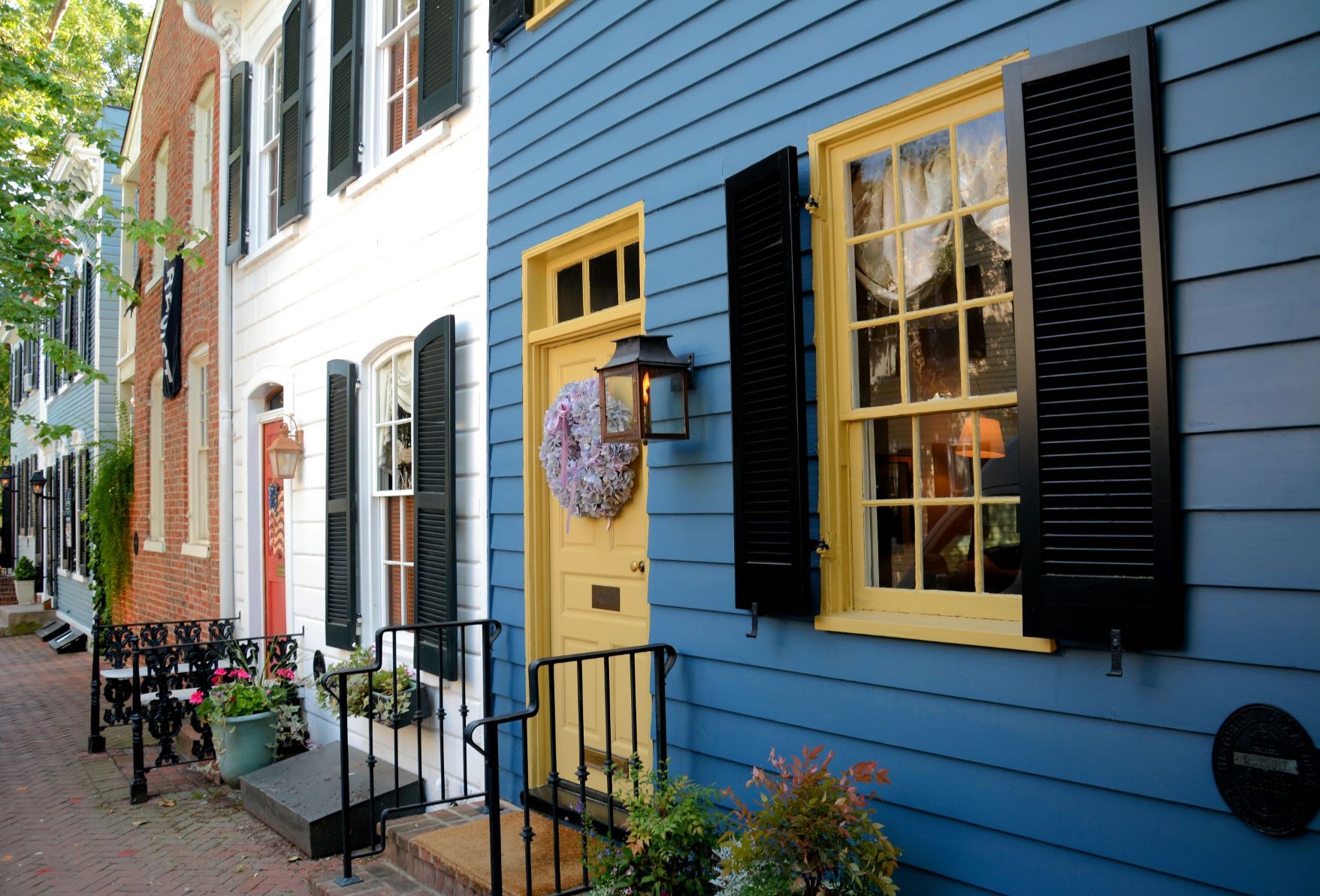
We’re fortunate that we live in an area with three jurisdictions to pick from! But it can be overwhelming when you can envision yourself in a lot of different areas. There are lots of things to consider when picking your next home — not only the home itself, but where that home lies.
Here are a few ideas to help you focus in on the areas that really match what you’re looking for.
First start with the type of environment. Do you favor walkability to attractions or transportation? Would you like to be right in the middle of the city? Do you prefer a smaller pocket neighborhood? Are you looking for a more suburban, tree-lined street? Would a rural property serve you and your needs better? What should the neighborhood sound like — calm or clamorous? What type of property best suits you — detached, condominium, or townhouse?
Next, I recommend focusing on accessibility to things that matter to you. Whether it’s in the middle of the city or suburbia, we all have favorite places and things to do that we’d like to be somewhat near the place we call home. A big way to direct your focus on this question is to think about where you live now. What do you wish your current neighborhood had? Or what would you change?
- How long do you want your commute to be? Are you needing public transportation (bus or Metro)? Do you need to be walking distance to transit or are you ok with driving to it? Does a commute not even matter anymore because you work from home?
- Do you have other places you frequently have to get to? School, airport?
- What about accessibility to restaurants or nightlife?
- Think of those everyday tasks: doctor’s office, vet, grocery store, pharmacy, post office, gas stations.
- Do you have a dog that needs a dog park? Or maybe a yard would be better for your timid pooch?
If you have children or plan to have kids, school districts may be something to consider. Reaching out to the school districts themselves or finding a PTA group on Facebook can be helpful when deciding.
Another factor you may not be immediately thinking of — taxes! There are varying tax rates across the three jurisdictions: state income taxes, property tax rates, car tax in Virginia, etc.
Once you have those lists narrowed down, spend time in those top neighborhoods at all different hours. Go on a Saturday morning walk. Do a date night on a Tuesday evening. Talk to people/neighbors.
Most importantly, think of your daily routine. Go through a day in your life, starting and ending in the neighborhood.
Finally, a lot of what it comes down to is your gut. Does this place feel like home?
If you are looking to start your home search, please give me a call!

As a fifth generation Realtor and the granddaughter of an architect and builder, Sallie has deep roots in real estate. She is passionate for the charm, history, and architecture of Alexandria and its surrounding communities. If you would like more information on selling or buying in today’s complex market, contact Sallie today at 703-798-4666 or visit her website SallieSeiy.com.
Don’t miss a post! Get the latest local guides and neighborhood news straight to your inbox!

Adding Organic Elements to the Home

What’s a home without a bit of texture? Incorporating a variety of materials into your space is critical in order to achieve that collected look that we all crave. Texture can be used within a home in a number of ways: It can add artful flair, make a space appear more welcoming and cozy, and simply allow a room to appear more curated. Ready to get started adding more texture to your own space? We’re here to help you do just that with a few simple tips!

Step 1: Layer, layer, layer
Don’t be afraid to mix and match textures. For example, when it comes to rugs, consider layering a woven Turkish rug from Etsy over a classic jute from Pottery Barn. On your bed, drape a woven throw blanket from Serena and Lily over your linen duvet cover. Pair a cotton lampshade with a terracotta base. The list goes on! Best of all, implementing these tactics will ensure that your space looks unique and well-designed, not as though you stopped into a furniture showroom, picked up everything in sight, and called it a day.

Step 2: Find the right accents
Accent pieces are the perfect time to have some fun with texture. Mediterranean style plant pots and vases are majorly in style right now, and their plaster material will shine in any room. You can easily grab one at Pottery Barn or CB2. Then simply fill it with fresh branches from your yard or stems of eucalyptus for a simple yet sophisticated arrangement. On your bookshelf or coffee table, add a decorative clay bowl or an onyx tray to stash trinkets and bring in new materials. Stores including West Elm, Crate and Barrel, and Anthropologie are great places to shop for these kinds of pieces, or better yet, hit the antique store and find a diamond in the rough there.

Step 3: Think about your walls
When it comes to adding texture to your home, you’ll of course want to give consideration to your walls. Wallpaper, plaster, and molding are an excellent way to add some textural zing. Maybe your style leans traditional—go ahead and install some grasscloth wallpaper in the color of your choosing. If you’re feeling a bit artistic, experiment with Venetian plaster. Or if you crave the look of a classic Parisian apartment, incorporate some picture-frame molding into your space to bring that dreamy French look stateside.
Don’t forget about wall art, either. Hang a sculptural piece or an oversized abstract canvas that will capture visitors’ attention immediately.
Keeping these three tactics in mind will allow you to transform your space with texture in no time. The good thing is that when it comes to texture, there’s really no such thing as too much of it!

Sarah Lyon is a New York City-based freelance writer, originally from Bethesda, MD. She contributes to a number of national design and lifestyle publications like Architectural Digest, Apartment Therapy, MyDomaine, the Washington Post, and more. Sarah also works with designers to help them style spaces for photo shoots. Find more shelfies on her Instagram page, @sarahlyon9
Don’t miss a post! Get the latest local guides and neighborhood news straight to your inbox!
Spring Showers Bring… Stormwater, Bayscapes, and Rain Gardens!

The inevitability of the rainy season is something that most regions are used to. In Alexandria and the rest of the DC-Metro area that rainy season comes in spring. Early spring showers prepare your landscape to thrive throughout the summer months as water percolates deep into the soil. But it’s not all roses and butterflies. The wet season can also mean it’s time to prepare your home and property for stormwater. Through your own proactive and ecologically-friendly stormwater management, you as a homeowner can protect your home from flooding, reduce harmful runoff, and make mother nature happy!
So what exactly is stormwater management? Stormwater management refers to the host of processes, techniques, and management protocols for dealing with stormwater, AKA rainwater that is running along the ground. To the public sector, this generally means big underground infrastructure designed to manage the flow of water to be least disruptive in what has become an increasingly impermeable urban environment. But on the residential side, and as a homeowner, your stormwater management generally refers to various processes that keep rainwater out of your home through a sequence of systems. Starting with your roof, stormwater runs off into gutters, before traveling through downspouts and dispersing into your yard or out to the street. This is where it enters either a body of water or public stormwater pipes. Once on the surface, grading and proper waterproofing along your home’s foundation are important to keep water moving and avoid pooling against your home where it could eventually cause flooding, mildew, and mold.
But the relationship with water does not have to be adversarial. After all, water is a most valuable resource, and in the context of your landscape, your soil’s ability to absorb water is the key factor in whether or not your lawn, trees, flowers, and shrubs survive and thrive. By introducing ecologically-friendly stormwater solutions into your landscape, you can maximize the ability of rainwater to beautify your home, enhance local populations of pollinators and birds, and enhance water quality.
While there are many solutions and variations of solutions to improve the general permeability of your soil, the most cost-effective, budget-friendly technique is conservation landscaping–often referred to as BayScaping in the Chesapeake Bay Watershed. This technique involves the deliberate planting of native plants with high ecological value in areas of your property that experience water and are sensitive to erosion, such as a sloped area. The specialty native plants used in conservation landscaping restore soil health through extensive root structures that help improve soil microbiology and, in turn, help your soil become nutrient-rich and sequester carbon from the air. The improved, more fertile soil is a welcome respite from the excavated backfill that makes up the principal soil medium for many homeowners of recently improved or built homes.
Rain gardens take BayScaping a step further and are an ideal enhancement when the soil conditions are such that water can sufficiently percolate into the soil. Rain gardens are a more labor-intensive enhancement that includes excavation and the introduction of high flow rate soil amendments, such as compost, sand, topsoil, and mulch. These amendments are mixed into a new soil medley that is well suited for developing extensive root structures and absorbing runoff water.

Photo courtesy of Neponset River Watershed Association
In order to absorb as much rain as possible, rain gardens are ideally located in a depressed area of your yard where you can direct a downspout and where the natural slope of the surrounding areas flows. It is also important that rain gardens be at least 10 feet from your foundation, and are in locations that do not otherwise have standing water, which would indicate either a high water table or low percolation rate. Rain gardens are generally designed to hold water for no more than 2 days after a rain event before drying out, which also helps to reduce mosquitoes. On one of the sides of the rain garden, we generally also create a berm and spillway to help retain water and direct its flow if the rainfall is significant. Some of our favorite installations include rain gardens that overflow into beautiful bayscapes.
As root systems and soil microbiology become established, rain gardens can become proficient in naturally treating contaminated runoff from impervious surfaces. As water flows through these areas, nutrients are absorbed and otherwise harmful chemicals are broken down. Simultaneously, butterflies, songbirds, and other beautiful pollinators are attracted to the rain garden, as a small ecological refuge. What’s not to love?!

Graphic courtesy of RiverSmart
There are many different types of native flowers and plant options to choose from when starting your rain garden or BayScape. Once your plants are in the ground, maintenance of your rain garden and BayScape is extremely important to ensure proper function. If you have a new rain garden, plants and flowers should be soaked every few days to help them establish deep root systems and create a dense bed of foliage. To ensure ideal growth, the area may also require pruning, seasonally mulching, and de-weeding of any invasive or competitive ground covers that can take over or out-compete the new native plants. Trash and other debris should also be removed. Monitoring the garden for any signs of erosion or compaction is very important to ensuring the soil medium is able to absorb water as intended. Though this may sound like a lot, it’s not. It’s just a matter of restoring and maintaining balance. Mother nature will do the rest!
If you find that you need help getting started with your rain garden or BayScape, please reach out to us. At TLC, we offer packages for rain garden and BayScape installations where we can complete an installation in a day. We also specialize in other residential stormwater enhancements such as dry-wells, rain barrels, permeable patios and driveways, and more. Please reach out to us with any questions or to learn more about what TLC can do for your landscape, and home! Visit us online at TLC Design to learn more and fill out a consultation form so we can chat or visit.
We wish you a beautiful spring!
Tactical Land Care
Tactical Land Care is net-zero to help protect our world and environment for all of us. We specialize in sustainable construction, conservation landscaping, and stormwater management solutions, including permeable hardscape and rain gardens. By working together, we can maximize the ecological benefit of your property.
Please give us a call at 703-879-7091, or email us at info@tacticallandcare.com, where someone from our TLC team will develop a plan with you to help enhance your yard or property for many years to come.

Patrick Moran, PMP, LSC, HIC, LEED | CEO Tactical Land Care
Patrick utilizes his passion for the outdoors along with his professional skills as a licensed Landscape and Home Improvement contractor in Virginia and Maryland, as well as a Project Management Professional (PMP) and LEED Green Associate. Patrick has a BA from Yale University, where he studied climate change and its impact on society.
Don’t miss a post! Get the latest local guides and neighborhood news straight to your inbox!
The Art of Adding Wall Decor to Your Home

A house isn’t a home without the presence of art. Prints, paintings, framed photographs, and more are so key to achieving a curated, welcoming space that is full of personality. Many homeowners put off installing art for quite some time—putting nail holes into one’s walls can be daunting after all. But the reward of unwinding in a beautiful, art-filled home is certainly worth some risk!

Yet even after tackling art in their main rooms—the living room, primary bedroom, and dining room, for example—homeowners are often left with additional pieces that they wish to display; it’s just unclear where these items should go. Truthfully, there are so many places where art can shine throughout the home, and below are a few of our off-the-beaten path favorites!
The bathroom: Don’t forget to jazz up both your powder room and your everyday primary bath with the addition of some art. Since bathrooms can easily be concealed by shutting the door and you don’t have to worry about choosing pieces that coordinate with specific fabrics and furnishings, this is your time to have a little fun. Think out of the box with a quirky photograph or a sassy portrait. Black and white figure drawings also look beautiful displayed in the bathroom. If you’re not feeling quite so bold and crave a loo that feels nice and spa-like, consider printing out a photo that you took on your travels or choosing an abstract piece rooted in neutrals.

Photo courtesy of Asha Maía Design
The kitchen: The kitchen is a utilitarian space, but it’s unfortunately one that you spent a whole lot of time in throughout the course of the day. And you deserve to be surrounded by aesthetically pleasing artwork as you cook! Rather than leaning into food-themed pieces, which can be a bit overdone, focus on highlighting certain colors that are already at play in this room. Look to your tile backsplash, for example, and hang pieces that complement these hues. Landscape scenes, black and white charcoal drawings, and botanical prints are also having a major moment in kitchens these days.
The home office: The concept of the at-home workspace isn’t going away any time soon! Make yours a place in which you’ll actually want to spend time by jazzing it up with prints that will provide you with inspiration and a sense of calm as you complete your day to day duties. Family photographs are fine, of course, but consider displaying these on your desktop or built-ins so that they do not overwhelm the space. Because Zoom backgrounds are still important, you’ll want to think about what your coworkers will be seeing when you log onto a video call. We suggest choosing an oversized abstract canvas or nature scene to hang behind your desk area; this is a great way to fill an empty wall while remaining office-appropriate. The walls that won’t be shown on camera can definitely have a little more personality, but you won’t want to create a setup that’s too distracting or overstimulating, given that work is your main priority in this room.
Purchasing art online is nice and simple these days, but sometimes, it’s preferable to view a piece in person before inviting it into your home. When it comes to local retailers that offer incredible art pieces, we’re proponents of looking at traditional shops as well as vintage stores. Our favorites include:
Traditional:
Anthropologie (many locations in DC, VA, and MD)
CB2 Tysons Galleria in McLean, VA
Crate & Barrel & CB2 Outlet in Alexandria, VA
Random Harvest (locations in Alexandria, VA, Washington, DC, and Bethesda, MD)
Vintage:
Christ Child Opportunity Shop in Washington, DC
Miss Pixie’s in Washington, DC
Our local partners at The Scout Guide Alexandria and The Scout Guide Hunt Country are also experts at design. For more inspiration check out their websites and social media accounts:
Ronni Logan Interiors & Collections
Sarah Lyon is a New York City-based freelance writer, originally from Bethesda, MD. She contributes to a number of national design and lifestyle publications like Architectural Digest, Apartment Therapy, MyDomaine, the Washington Post, and more. Sarah also works with designers to help them style spaces for photo shoots. Find more shelfies on her Instagram page, @sarahlyon9
Don’t miss a post! Get the latest local guides and neighborhood news straight to your inbox!
Mortgage Financing in a Hyper Competitive Market (Part 1, preparing to make an offer)

Anyone who has been thinking about purchasing a home within the past year has heard over and over how competitive the marketplace is. The severe lack of residential inventory has affected all price points and all types of properties. Rising interest rates may cause some purchasers to exit the process, but the need for housing will have a greater impact on the continued supply/demand equation.
Price and net proceeds are obviously important factors in the seller’s decision-making process, but several other factors related to financing can make the difference between a prospective purchaser being successful or having to find another home and write another contract. As a purchaser there are several things you can do related to financing which can make you more attractive to sellers.
First, you must be preliminarily approved for your financing. Your offer will not be considered without that preliminary approval. Additionally, you should choose a local lender. Seasoned listing agents have all had transactions which settled late or did not happen at all because a big-box lender or Skippy’s mortgage.com failed. They may get the job done 90% of the time, but that means they do not 10% of the time. Local lenders and their reputations are often known to the listing agent and local lenders will use locally-based appraisers. Local appraisers tend to know the nuances of neighborhoods and are more likely to generate quality appraisals. With multiple offers on the table, listing agents are likely to recommend to the seller that they ratify the contract which proposes financing through a local lender.
Next, talk with your lender about whether you can waive your financing and appraisal contingencies. It is not wise for some purchasers to waive the financing contingency, but other purchasers are virtually assured of loan approval, as long as they don’t walk in and tell their bosses to pound sand. Have a frank conversation with your lender about the risk (or lack thereof) of waiving the financing contingency. Many contracts are ratified with no financing contingency. Regarding waiving the appraisal contingency, it comes down to the purchaser’s ability to finance at a higher loan-to-value or their willingness and ability to come up with additional down payment funds if the property does not appraise at the contract sales price. Again, a conversation with the lender is critical, and again most contracts in our market are currently being ratified without appraisal contingencies.
Get your lender all the supporting documentation they will need to make the final underwriting decision before you start looking for property. You will likely need to update some of the documents, but you want to be ready to settle very quickly after contract ratification. You want a preliminary approval with loan specifics which line up with your offer. A vague “pre-qualification” does not put you in the best position. Not all sellers will want to settle quickly, but you don’t know which one’s will want to settle quickly, and you don’t want to lose to another prospective purchaser who proposes to do so. Generally, sellers want their funds as soon as possible and the best lenders can settle in three weeks or less from the time of ratification. Proposing a quick settlement may make yours the winning offer.
In the next installment we will address ways to purchase the next home before selling the current home.
[divider height=”30″ style=”default” line=”default” themecolor=”1″]

Brian Bonnet | Senior Loan Officer
Atlantic Coast Mortgage, LLC
e: bbonnet@acmllc.com | t: 703-766-6702
A lifelong resident of Northern Virginia, Brian brings twenty-five years of lending experience to the group. After graduating from The Citadel and serving as a Naval Officer, Brian transitioned to the United States Senate Veteran’s Affairs Committee where he served as a Professional Staff Member and had the responsibility of overseeing the VA Loan Guaranty program. After leaving Capitol Hill and the political world, Brian entered the mortgage banking industry. Keeping abreast of the myriad changes in the lending industry over the years has given Brian a unique perspective and the ability to successfully serve his clients regardless of the current market conditions. With his extensive knowledge about the VA and its loan guaranty program, Brian is widely recognized as a specialist in VA financing. He enjoys sharing his knowledge and experience with others and is certified to teach Financing Continuing Education in Virginia, DC, and Maryland.
[divider height=”30″ style=”default” line=”default” themecolor=”1″]
Don’t miss a post! Get the latest market updates and neighborhood news straight to your inbox!
How will I know?

When searching for “the one”, so many have the same question. To quote the late, great Whitney Houston — “How will I know?”
In fact, buying a home is a lot like falling in love and can sometimes last a lot longer!
You will also find that friends and family may want to weigh in. Sometimes their advice can be helpful, but sometimes not. Just because they think you absolutely must live inside the beltway, or should have a big yard, doesn’t mean it’s so. So, how do you filter out the good intentions and find the right home for you?
Trust your gut: Just like when you meet someone new, if something feels fishy it probably is. Unlike dating, it isn’t rude to ask invasive questions! Don’t be afraid to ask. If someone does not want to answer your questions, that could be a bad sign. Maybe it’s just a sign of a noncommunicative agent, but it shouldn’t be difficult for you to find out ages of systems, roof, etc.
Take opinions with a grain of salt: Of course, you have an inner circle who you share everything with and their opinions can be crucial. But take their advice with a grain of salt. They won’t have to live with your decision in the same way that you will. If something feels off, listen to that feeling. Sometimes your loved ones won’t see the diamond in the rough the same way that you can, so take that with a grain of salt as well.
Beware of catfish! Pictures online can only show so much. We all know how photos can be edited these days, and so much can be added or subtracted. Blemishes and scars may be things that you can forgive a partner for covering up, but you usually need to know the story if there are issues in the home.
Outside beauty is not necessarily reflective of inner beauty! Shiny and new can hide a ton of flaws. Even if the pictures very accurately depict how gorgeous a home is, there is due diligence to ensure that the inner beauty is there as well. Just like people, there are ways that we can discover the inner beauty of a home. You just have to know how to look.
Don’t force it: There are plenty of fish in the sea! Of course, especially in this market, searching for a home can feel just as hopeless as finding a nice, single partner in the D.C. area. Sometimes it can take a while. However, the one IS out there! Like every relationship, you will likely need to make just a few compromises, but if it’s true love it won’t feel difficult to know which compromises to make.
Reality TV is the thief of joy: Ok, I know that old adage is “Comparison is the thief of joy,” but let’s be frank here. House hunting on TV is realistic in the same way that The Bachelor is realistic. Of course, being in it for the right reasons is important, but that’s about where the similarities end. You can get cute ideas for a date night or a new backsplash on shows, but don’t get carried away thinking that their journey is real.
It’s your journey! And every journey is different. Your Realtor is key in making your dream a reality. They will help you to decide if what seems too good to be true, is actually the right home for you. Your Realtor is your closest adviser, and will help to protect you from heartbreak, so that love becomes real!
Home is where the heart is!

Hope Peele is a licensed real estate agent with McEnearney Associates, Inc. in Alexandria, Virginia. She grew up in Old Town and currently lives in Del Ray. As a partner with The Peele Group, Hope is dedicated to guiding her clients successfully through the many faceted process of buying or selling a home. Contact Hope at 703-244-6115.
Don’t miss a post! Get the latest local guides and neighborhood news straight to your inbox!
Dispelling the Myths About Cooperatives

One of the most misunderstood aspects of residential real estate involves cooperatives. Most members of the public, and honestly many real estate agents, do not truly understand what a cooperative is and how it differs from a condominium or a traditional fee simple property.
Let’s start with talking about what a cooperative actually is and how it is different from other property types. When you purchase a condominium you are buying real property (the specific unit) and an ownership share in the common elements of the building. Your specific unit will come with its own tax identification number and your ownership share in the common elements will be based on the overall size of your unit. When you purchase a cooperative, you are technically not buying real property but rather shares of stock in a corporation. The unit that you are purchasing and your ownership share in the common elements is given to you in the form of stock in the corporation. A cooperative does not have individual tax identification numbers for each unit and in fact property taxes are handled differently which is something we will talk about a little later on.
Throughout my career I have sold dozens of cooperatives to my buyer clients and listed just as many for my sellers, and the same myths about them would come up each and every time. Educating clients on the pros and cons of buying a cooperative became an important part of the process. So, let’s discuss some of the common myths about cooperatives.
Myth #1 – The monthly fees are always higher.
Well this is typically true but there is a very good reason for it. As we discussed earlier, cooperatives do not have individual tax identification numbers. Because of this, the building receives one tax bill for the entire property and that bill is divided up among the unit owners which could be lower than a similar condominium. The tax amount each owner will pay is based on their ownership share and that amount is part of the monthly fee. So while the payments are typically higher with a cooperative it is because your property taxes are included.
Myth #2 – There are not many coops left in our area.
While it is true that very few of the new buildings are cooperatives, there are still many remaining in our area, especially in Washington, DC. While we may not have as many as a place like New York City, the first co-ops started here in the early 1920s and have a solid presence in our region. If you have ever looked at units in the city, especially in Northwest DC, odds are you came across a cooperative in your search. While there are some co-ops in Maryland and Virginia, they are few and far between.
Myth #3 – When it comes to resale, cooperatives are harder to sell.
I can understand why someone might think that however there is no statistical data to back up this claim. Co-ops certainly have additional steps to go through in the buying process but how fast they sell are typically in line with similar condominiums.
Myth #4 – It’s more difficult to get a loan for a cooperative.
Most cooperatives do have preferred lenders (recognition agreement) that they require a prospective purchaser to use for any type of financing and some do have a minimum down payment requirement. It’s important to ask the listing agent which lenders are recognized by the cooperative association and are allowed to lend in the building. The good news is that more and more lending institutions are offering co-op financing so there is a chance you can continue to work with your current lender.
Myth #5 – Cooperatives are more strict with their rules and regulations.
Over the years I have seen a few co-op associations that had additional rules and regulations but nothing that I would say were overly restrictive. One area where cooperatives do often differ from condominiums is with their rental policy. Many co-ops will limit the total number of units that can be rented at any one point in time. In addition, they may limit the amount of time one unit can be rented out. If the ability to rent out the unit at some point is important to you as a buyer, it is important to ask the owner or their agent if they are aware of any rental restrictions. Also, if you are looking to purchase a unit solely as an investment, a cooperative may not be for you.
Myth #6 – Co-ops always have extra fees that you have to pay.
What people are referring to is what’s typically called an underlying or blanket mortgage. This is a loan that the association has taken out to do work on the common elements of the building like the roof or elevators. Like the property taxes, the amount an individual unit owner will be responsible for will be based on their percentage of ownership share. If there is an existing underlying mortgage, a purchaser would subtract that amount from the loan they are receiving as you will assume this amount as a second mortgage and will take over the monthly payments. While this may seem daunting, it’s very common for a condominium to take on a special assessment for the same reason. Additional costs outside of the monthly fees can happen with either a co-op or a condo, the only difference is the process in which a unit owner makes the payments.
Myth #7 – There is a chance I might be rejected by the co-op board.
One significant difference between a cooperative and a condominium is that before you can take ownership of a co-op you do need to be approved by the board. The original reason for this approval process was so that the association could control who lived in their building so the interview process could be very rigorous. Today, the interview process tends to be much more relaxed and casual. Typically as long as you have the financial means to stay current on your mortgage and monthly fees, and agree to abide by the rules and regulations you will be approved. Each new owner will go through an interview process before settlement and will need to be approved before they can close on the unit.
There are certainly differences between cooperatives and condominiums that one should know and understand before they start their search for a new home. As with any type of housing there are pros and cons to each. Many of the classic, early 20th century buildings in Washington, DC are cooperatives and people have been living in them happily for almost one hundred years. It is important to work with an experienced agent who knows the difference between the two types of housing, the specific questions you need to ask and can guide you through your search.

Andy Hill is Executive Vice President and Managing Broker for the Washington, DC and Maryland offices of McEnearney Associates.
Don’t miss a post! Get the latest local guides and neighborhood news straight to your inbox!
Is a 20% down payment really necessary?

Buyers often think they need to make a 20% down payment on their new home, but is it really necessary? Although there are significant advantages that kick in at the 20% threshold, a large down payment may not be necessary or appropriate for all buyers, depending on their circumstances.
Here are some of the factors to consider in deciding what size down payment is right for you.
The first thing to emphasize is that there is nothing mandatory about a large down payment. For a conventional mortgage, lenders generally require only 3% down, although that number can rise for borrowers with lower credit scores or higher debt-to-income ratios.
Nevertheless, for most home buyers, there are real benefits to hitting that 20% mark. Most significantly, it results in a lower interest rate, and the monthly interest payment savings really add up over the long life of a mortgage. Also, a 20% down payment exempts the borrower from having to pay for PMI (private mortgage insurance), which usually costs between 0.05% and 1% of the loan balance per year. So, for a $500,000 mortgage, the PMI could be as much as $5,000 per year, or an extra $420 per monthly mortgage payment, for a minimal down payment. (Note however that the PMI requirement automatically terminates when the mortgage balance reaches 78% of the original purchase price, so, unlike a higher interest rate, PMI is not an extra expense over the entire life of the loan.)
Finally, the ability to make a 20% down payment often makes your offer more attractive to the seller relative to other bidders, because the seller may conclude that the purchase is more likely to successfully close.
Nevertheless, a buyer’s individual circumstances may weigh against a 20% down payment. Especially for younger or first-time buyers, it could take many years to save up enough cash to hit the 20% threshold, which could significantly delay buying a home during a period in which interest rates and market prices could be rising steadily. For such buyers, it may make perfect sense to purchase a home sooner rather than later and strike while home prices and interest rates are relatively low.
Even for a buyer who has the down payment funds available in cash, a large down payment can leave fewer family resources available for life’s unexpected expenses (including the inevitable home repair expenses). Finally, although it seems like a remote possibility in the current market climate, a large down payment exposes a buyer to more risk if the home dramatically declines in value.
A savvy Realtor in partnership with an experienced loan officer can help a buyer with strategies to make a smaller down payment while still avoiding some of the costs. For instance, a buyer may be able to make a 5% down payment, take out a second “piggyback” mortgage for 15% of the purchase price, and combine the two to hit the 20% threshold.
Experienced loan consultants have other creative ways to lessen the pain of PMI. For instance, Silverstein told me that, because Caliber services its own loans, it can finance the entire cost of PMI as a one-time premium, folding it into the monthly mortgage payment, spreading it over 30 years, and thus dramatically lowering the monthly PMI payment.
The decision about how large of a down payment to make can be as individual as your choice of a home! Let the Jean Beatty Group work with you to find what works best for your unique circumstances.

Jean Beatty is a licensed real estate agent in VA, MD, and DC with McEnearney Associates Realtors® in McLean, VA. If you would like more information on selling or buying in today’s complex market, contact Jean at 301-641-4149 or visit her website JeanBeatty.com.
Don’t miss a post! Get the latest local guides and neighborhood news straight to your inbox!
Real estate jargon. Just what are you talking about?

Real estate agents use a lot of industry specific lingo. To the new home buyer, it may sound like we’re speaking a different language. It’s not unusual to have a client say, “what does that mean?”
I get it. If I was in your office, I probably wouldn’t have any idea what you were talking about either. A part of my job as a real estate agent is to make sure you understand all the vocabulary. If you are venturing into the home buying or selling process here are a few terms and acronyms that are helpful to know.
CMA: Comparative Market Analysis
We create a CMA by looking at recently sold properties and properties that are currently under contract which resemble the home you want to sell or buy. Similarity is key. We look at properties that are in the same or comparable neighborhood, have approximately the same square footage, number of beds and baths, and are in the same condition.
Contingency
A contingency imposes a condition or action of the transaction that must be met. Typical contingencies include financing, appraisal, home sale and home condition inspection. Each has a completion timeframe. In the current market, buyers are attempting to have as few contingencies as possible in order to have a more favorable offer.
EMD: Earnest Money Deposit
An earnest money deposit (EMD) is a deposit made by a buyer to an intermediary, typically the settlement company, to show his or her seriousness to follow through with the transaction. It represents the buyer’s good faith to purchase a home. The money sits in an escrow account until closing. At that time the money is applied to the buyer’s down payment and closing costs.
Escalation
An escalation addendum is added to a residential sales contract to automatically increase the offer price by a specific amount over a competing offer until it reaches the maximum price that the buyer is willing to pay for the property. This is only triggered if the seller receives other bona fide offers to purchase the property with terms acceptable to the seller. It can be a useful tool in this market.
MLS: Multiple Listing Service
An MLS is an organization that creates a private database to collect and distribute information about homes listed for sale by its members. Membership is not open to the public but is open to real estate brokers and agents who pay a fee for the service. Each MLS is local or regional. As of the publishing of this article, there is not an MLS that covers the entire country.
Pre-Offer Inspection or “Walk and Talk”
This refers to a modified inspection with the buyer as the note taker. It takes about an hour and can cost from $250 to $600 depending on the property. Doing a pre-offer “walk and talk” can help to avoid having a home inspection contingency. This makes the offer more favorable and will let you know of any issues with the home.
Pre-Qualified vs. Pre-Approved
Pre-qualification is based on information that the borrower submits to the lender. The borrower provides the bank information to show their overall financial picture including income, debts and assets. The lender reviews everything and gives an estimate of how much the borrower can expect to receive and there is usually no cost involved.
Pre-Approval requires the applicant to complete an official mortgage application and supply the lender with all the necessary documentation to perform an extensive financial background and credit check. The pre-approval will require an estimate of down payment. Some lenders charge an application fee. In turn, the lender will offer pre-approval up to a specific loan amount.
PMI: Private Mortgage Insurance
PMI is usually required when you have a conventional loan with a down payment of less than 20 percent of the home’s purchase price. It protects the lender, not you, against losses if you stop making payments or default on your mortgage. PMI typically costs 0.25% to 2% of your loan amount per year depending on the loan amount, down payment, loan term and credit score.
PITI: Principal, Interest, Taxes, and Insurance
PITI is the term used to express the total monthly mortgage payment. It includes the principal loan amount, loan interest, property tax, and the homeowner’s insurance and private mortgage insurance premiums. Lenders will estimate the PITI for you prior to qualifying you for a mortgage. It helps the buyer and lender verify affordability.
In the current real estate market, buyers need to act quickly with a prepared and compelling offer. There are lots of steps, on top of price, that can be taken to make your offer more favorable. Interested in buying or selling this year? Call me. I have the strategies and tools to help.

Darlene Duffett is a licensed real estate agent in Virginia with McEnearney Associates Realtors® in Old Town, Alexandria. If you would like more information on selling or buying in today’s complex market, contact Darlene at 703-969-9015, dduffett@mcenearney.com or visit her website DarleneDuffettRealEstate.com.
Don’t miss a post! Get the latest local guides and neighborhood news straight to your inbox!
Love It or List It?

Whether or not you’ve seen the TV show, the “LOVE IT OR LIST IT?” question is one familiar to many. Once upon a time, that question was somewhat straightforward, but now with many supply chain constraints and limited housing inventory, it’s more complicated. Let’s break down the two options.
LOVE IT
What if you love your house, your neighborhood, your commute, but have outgrown the space? Perhaps there aren’t enough bedrooms, you need more home office space, or the kitchen is smaller than you would like. If you “LOVE IT,” you might consider a renovation instead of a move. So, how to evaluate…?
Part of the decision will depend on liquidity. Let’s say you have equity in your house, but no cash on hand. With interest rates low, refinancing could be a great way to access funds for the remodel. You can leverage your equity and renovate your home so that you can live in it for next 30 years. If you can afford the increased mortgage payments, this is a viable option to consider.
To do it right, I highly recommend hiring an architect. Depending on how expensive a renovation you’re considering, an architect’s fees could run $10,000-$15,000 or more. It’s not always necessary, but if you’re doing any sort of an addition or significant room change(s), plans will be required for the necessary permitting. Also, an architect can help you find the optimal use of space and can create more value than you might create with your own design… it’s what they do!
I can draw on recent experience to share an example of the process. We recently hired an architect for a relatively simple 20′ x 19′ family room addition. We started the process in November 2020 and received the necessary approvals one year later in November 2021. It does not take anywhere near that long for most people, but we are in a Protected Resource Area (RPA) and have a flood plain easement as well as a sewer easement running through our yard.
In addition to support from our architect and contractor, we also had to hire lawyers to attain a Deed of Vacation of Easement. It was definitely more involved, and more costly than we had anticipated, but we went through with it in order to build out.
After 12 months of effort and finally getting the permit approved, we thought we had gotten through the hard part. We were wrong. In the same month (November 2021), we ordered our windows and doors for the addition. We knew supply chain issues were creating delays, and anticipated a 3-4 month lead time, and so we expected the windows to arrive late February 2022. Wrong again.
In the first week of March, we learned that the revised arrival date for the windows would be… December. That’s right, December 2022, 13 months after we approved the order. In this case, shortage in aluminum was impacting lead times, and our supplier punted many smaller contracts to the end of the year to fulfill larger dollar orders. You can read more about that here if of interest.
So here we are present day: our addition is framed on newly poured concrete, with Tyvek construction wrap flapping in the wind for the foreseeable future. (We are currently working on alternate solutions — I’ll keep you posted!)
Our case is unique, but not entirely uncommon. Supply chain issues are thwarting many a remodeler. It’s not uncommon to hear delays for appliances of many months, if not a year. You may already be aware of the rollercoaster of lumber prices. Contractors everywhere are advising of increased prices looming. And that’s not to mention labor constraints! Contractors are struggling to find skilled, reliable workers, and this, too, is slowing the renovation process down.
So where does that leave us in our evaluation? It’s hard to truly understand what your fixed price for a renovation will be when you start. Smart builders always suggest you add at least 10% for overages, but presently, I suggest a little more.
So maybe it’s better to LIST IT?
This takes patience as well but selling the home shouldn’t be the challenge. With extremely tight inventory and many buyers, a home that shows well and is priced right should fly off the market, maybe even garnering multiple offers. However, if you’re staying in the market, that of course leads you to needing to find a home to buy.
There are countless articles about the challenges of buying in today’s market: Multiple offers, waiving contingencies, offers being accepted sight unseen, cash with the ability to close in a week… I’ve written about it recently myself! Without repeating that analysis, I’ll simply reiterate that we don’t see the market slowing any time soon.
LOVE IT OR LIST IT?
Well, as you can see, it depends on where you want to spend your energy, your money and your time. In my experience, if the question is on your mind, it’s worth sitting down with a knowledgeable real estate agent and an experienced contractor to weigh your options and determine what’s right for you.

Rebecca McCullough has built a successful real estate business in Alexandria and Northern Virginia by providing excellent service to her clients. If you would like more information on selling or buying in today’s complex market, contact Rebecca today at 571-384-0941 or visit her website RebeccaMcCullough.com.
Don’t miss a post! Get the latest local guides and neighborhood news straight to your inbox!