 Facebook
 X
X
 Pinterest
 Copy Link
What Are The Most Common Seller Questions?
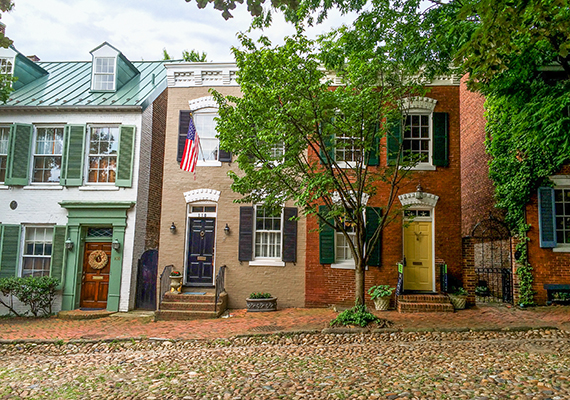

Question: When is the best time to sell?
Answer: If you are considering selling for the first time, you may find yourself debating, when is the best time to do so?
In Northern Virginia, the number of homes on the market at the end of May 2020 was down 31.3% compared to the end of May 2019. For roughly the last 5-7 years we have experienced a seller’s market, but now more than ever, we are in need of inventory for buyers in the D.C. Metro area. Demand for housing proves to be strong as we enter the second half of the year.
As long as interest rates remain historically low and consumer confidence is high, we should expect to see these trends continue. If you are considering selling, now is a great time to reach out to a professional real estate agent to discuss your options. We’d be thrilled to interview for the job!
Question: Should I make updates prior to selling?
Answer: If you are considering beginning a major renovation, stop. Renovations can be costly and time-consuming. However, homes that are positioned well in terms of price and condition will tend to move faster with an accepted offer upon hitting the market.
First impressions are important. We always recommend hiring a professional photographer for marketing materials. If you own a condo in a high-rise building, preparing for the market may be as simple as neutralizing paint colors and decluttering your closets. While a single-family home may want to spruce up its curb appeal with new shrubbery, mulch, and freshly cleaned windows. It would be wise to consult with a professional, free of charge, before making any moves.
Question: What is my home value?
Answer: It is important as a seller to remember that memories and emotional feelings of attachment toward a property are not seen as valuable to a buyer. If you want to meet with a realtor to discuss your home’s value, begin collecting any and all documentation you have in advance of that meeting.
Examples of documentation are as follows: age of systems, maintenance records, service contracts, and a list of upgrades. Providing these details upfront will help give a buyer peace of mind knowing the home had a great caretaker and add value in their eyes.
If a buyer is using financing to purchase your home, they will likely need an appraisal inspection as a condition of their loan approval. In order to gain an estimate of what a buyer may be willing to pay for your home and an estimate of the appraisal value, you will want to review the home sales that have closed most recently and are the most similar to your property.

Whether renting or buying, always consult with your local real estate agent for advice. We’d love to help you with the process! Contact one our team members today — Jillian Keck Hogan, Kristina Eells and Adrianna Vallario.
What Can I Do To Make My Home More Attractive to Millennial Buyers?
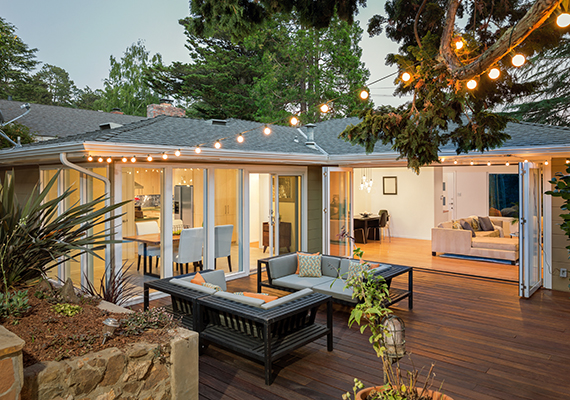
Question: As a seller, what can I do to make my home more attractive to millennial buyers?
Answer: Millennials, those born between 1977-1994, make up the second-largest sector (24.2%) of the population in the United States. There are 78.8 million millennials in the U.S., and in 2020 they accounted for 38% of all homebuyers, a percentage that is only increasing. Some are buying their first homes, but others are now ready to move into a larger home in which to raise their family.
To maximize a property’s appeal, sellers should be tuned-in to what millennials are looking for and highlight or update those features before listing to reduce the number of days that the home is on the market and yield a higher sale price.
So, what exactly are millennials looking for in a home? What features will increase the competition among this sector of buyers? Millennials, especially in the D.C. Metro market, lead busy lives and want a move-in ready property that has already been updated. They desire and seek out homes with a design that provides easy flow between spaces, high-end and trendy finishes, and smart technology.
Kitchens and baths top the list of rooms that should showcase popular, on-trend finishes and design. Creating the coveted “open-concept” is the most dramatic design modification a seller can make to attract today’s buyer. Removing walls between the kitchen and living or dining rooms allow for greater connectivity. A large kitchen island or wide-counter peninsula that allows for better sightlines, additional workspace and bar-stool seating is preferred by buyers over separate defined rooms.
Stainless steel appliances continue to be extremely popular, as well as stone or quartz countertops in light, neutral tones. Millennials are drawn to grey or white cabinetry in the kitchen, with sophisticated, clean lines. Solid hardwood flooring throughout the main level also provides the warmth, easy maintenance and visual appeal that today’s buyers want.
Sleek design trends that create a spa-like atmosphere are what millennials look for in the bathrooms. Large, walk-in showers with rainfall showerheads, free-standing soaking tubs, and natural stone finishes are all great choices in a bathroom redo. On-trend lighting and bathroom fixtures will quickly and easily improve a bath in the way that millennial buyers will love.
As technology continues to develop, the home itself has become “smarter.” Sellers should consider installing tech-forward options such as a video doorbell, an electronic smart lock for the front door, and thermostats or light bulbs that are controlled with the push of a cell phone button or voice command.
Due to COVID-19, the home office and personal outdoor space have also become vitally important. The current work from home situation could become a long-term reality for millennials. Sellers can increase their home’s appeal by showcasing dedicated office space and areas for home-schooling.
But, when the workday is finished, millennials want to be able to escape to an outdoor oasis, whether that be deck space, a screened-in porch, or a well-manicured backyard. Sellers would be wise to spruce up landscaping and outdoor spaces to showcase the potential.

Kathy Hassett and Chris Perry, Realtors® with McEnearney Associates in Old Town, have the experience and knowledge to guide their clients through the home buying process successfully and protect their clients’ interests throughout the transaction. Contact Chris Perry at 703-286-1204 or Kathy Hassett at 703-863-1546 today for assistance in your next real estate purchase or sale.
Renting vs. Buying – Which One’s Right for You?
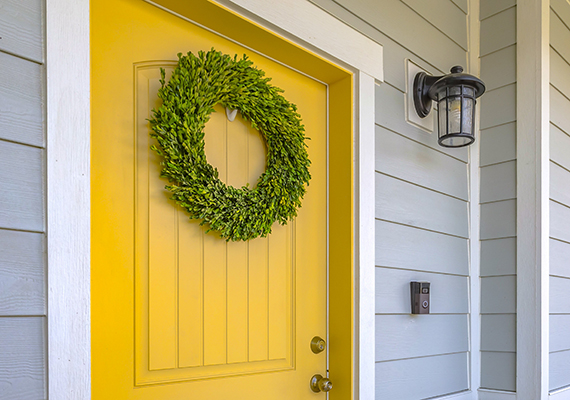
The topic of real estate and homeowners seems to constantly be a subject of discussion, especially in the midst of the coronavirus pandemic as we find ourselves in our homes more than ever and realizing if our current accommodations are working for our new normals of serving as offices and classrooms.
The purchase of a house is the largest transaction most people will ever make. Such a big and expensive decision can feel like drinking from a fire hose in terms of the amount of information available. Where do you even start? When is transitioning from renting to buying a good decision? And how much does it really cost? Here are six things to consider when evaluating if jumping into the real estate market as a buyer makes sense for you.
1. Job and Professional Plans

First things first: How long will you be in the area? Think about your current role and employer. Do you like what you’re doing and where you’re working? Do you see yourself growing professionally and advancing, or are you considering making a jump to a different company or perhaps a different industry altogether? Even if you don’t plan on being in the DMV for years to come, buying might still be a good option because you can rent out your property if you decide to move. That way, you can (hopefully) have your mortgage payments covered by the renters, while you continue to build equity and will have taken advantage of the currently low-interest rates in obtaining the loan.
2. Personal Plans
Next, let’s dive into personal lives. Do you want a home that fits your lifestyle today or what it might be five years from now? Does the location of your immediate or extended family play a role in where you buy a home? Do you have a significant other or plans for growing your family? Will the school districts play a role in where you buy? Will you need a bedroom and full bathroom on the main level for aging parents, siblings, or other relatives who might be moving in with you? All of these questions can impact the style, size, and location of the home you seek.
3. Finances
Now let’s talk comfort levels. What you can afford to spend may not be the same as what you want to spend on a monthly basis. Ask yourself how much you are comfortable spending monthly. Do you want to spend more, less or about the same for a mortgage? Consider how much you’re earning versus spending on monthly debts (student loans, credit card or car payments), contributing to savings or retirement accounts, or personal expenses (television subscriptions, gym memberships, eating out, etc.). Write out a budget of your recurring expenses and which ones you might be able to eliminate to pay off so you have more money to direct elsewhere. It’s important to recognize that there are also additional costs that come with homeownership that renters don’t have to account for, such as home repairs and maintenance, HOA/condo fees and property taxes. Be sure to figure these into your budgets in considering how much house you can afford.
4. Time
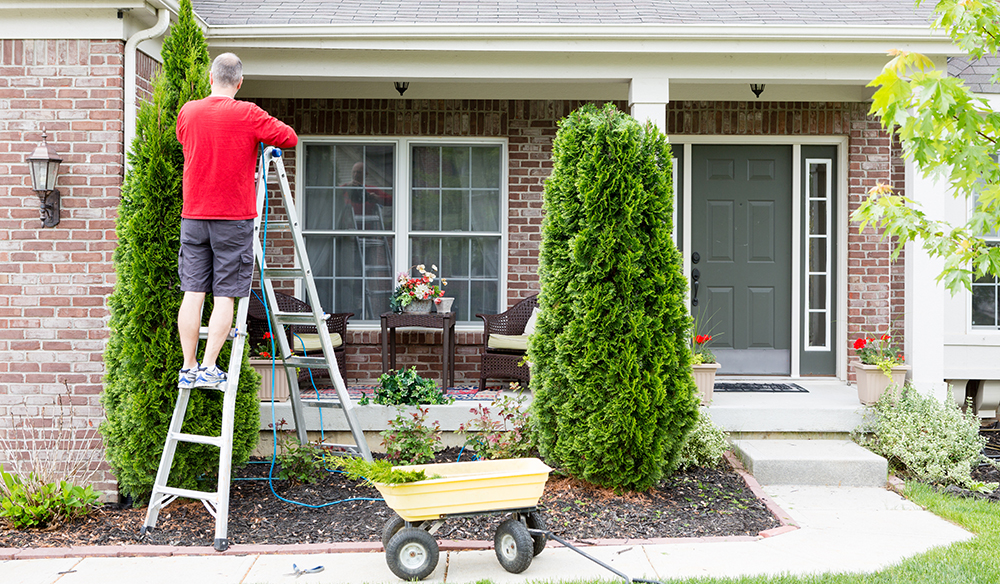
What does your schedule look like today? Homeownership comes with responsibilities, as you are now the on-call maintenance department and held accountable for the largest investment you own. Do you have the time to dedicate to keeping up with a home? Many expensive issues that arise with homes can be prevented with regular maintenance. If you don’t have the skills or knowledge to work on your house, do you have the extra money to hire someone to help or finances to purchase maintenance contracts?
5. Credit Score
Ah, the all-important credit score. Your credit is the biggest factor in determining the interest rate a loan officer will give you when applying for a loan. Credit scores and interest rates are inversely related: the higher your score, the lower the rate you’ll get. An “excellent” credit score of 740 or higher will get you the lowest rates. If your score is less than excellent, improving it isn’t impossible, but it takes time. Your loan officer can run “what if” scenarios for you, and provide insight as to what your interest rate might be if you pay off (or at least, pay down) debts and improve your credit score.
6. Cash on hand
You will need to bring cash to the table to purchase a home. No, you do not need to have 20 percent of the purchase price, as many believe; depending on which loan program you use, the minimum amount you’ll need is 3 percent of the purchase price — the exception being VA loans for members of the military, which allow qualified buyers to put zero money down. You’ll also need money for the Earnest Money Deposit (EMD), inspections, and closing costs — plus some left over for reserves. Let’s go through those one at a time:
- EMD — This is the amount of money that accompanies your offer that shows your level of seriousness. While there’s no legal requirement, customary practices for buyers in Northern Virginia is 2 to 3 percent of the purchase price, or $10,000 to $15,000 on a $500,000 purchase, or 5 percent in Washington, D.C. ($25,000 on the same $500,000) purchase. This is the money you should expect to forfeit should you wish to get out of the contract, but have no contingency (or “out”) to do so.
- Inspections — Many buyers wish to have a home, radon, and pest inspections conducted prior to purchasing a home. Home inspections are usually based on the size of the home but can range anywhere from $450 to $650, or more, depending on the company. Radon inspections, which test for the presence of radon gas, are usually around $200, and pest inspections are typically less than $100.
- Closing costs — Closing costs are dependent upon which state and county you buy-in, and can vary greatly. These costs include the local county and state taxes for recording the deed and transferring the property (both based on the sales price of the home), plus the costs of conducting the closing, obtaining the loan, appraisal, credit report, and flood certificate, among others. We typically estimate closing costs to be between 2 to 3 percent of the purchase price.
- Reserves — You cannot use all of the cash you have on hand to purchase a home; you’ll need to show the lender that you have at least two months of expenses in reserves.
Buying a home is a big decision, and there’s a lot to consider and evaluate. Need some guidance? Reach out to your favorite McEnearney Associate, and we’ll help guide you, whether that’s buying now, or renting and saving for a future purchase.
[divider height=”30″ style=”default” line=”default” themecolor=”1″]
Don’t miss a post! Get the latest in real estate and neighborhood news straight to your inbox!

What’s in a Number? ‘Value’ vs. ‘Price’ When Selling a Home
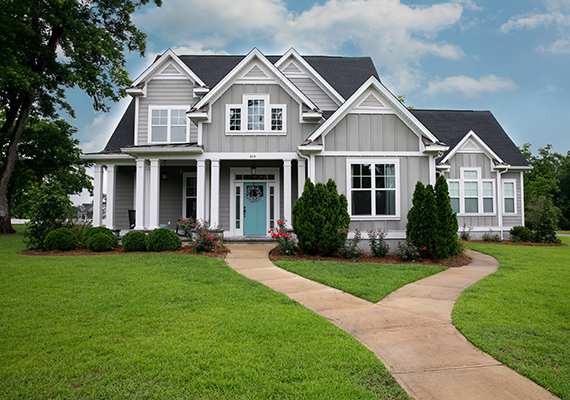
What’s in a number? A lot of thought and careful analysis! Determining a list price (which ultimately leads to a market/sold price) for selling a property and determining its value are not the same. Let me explain – hang in there, this is a little bit of a bumpy ride…
Determining list price is a strategy – after thoughtful analysis of the value proposition of a particular home, seller motivations and the state of the market, a seller might decide on a specific list price in order to drive a particular end result. List price offers a strategy for arriving at the market price – or the most probable price at which a home will ultimately sell. After analyzing the value (and maybe the competition), market price is the amount a “ready, willing and able” buyer will pay and a seller will accept. Determining property value means taking a careful look at the benefits a particular property offers, its condition, updates and improvements and specific location. It requires a keen look at how a property compares to others within its marketplace.
Consider a home that backs to I-66 or the VRE tracks – it will not have the same perceived value as a very similar counterpart three blocks deeper into the neighborhood and as a result may be priced lower. What about the family going through a crisis that has a motivation to sell quickly, to get out of a particular hardship? Their list price strategy may be to price low to get the home to sell swiftly or to entice a bidding war, luring a buyer to buy without a home inspection or maybe even an appraisal.
Conversely, what about the retired admiral who is so used to keeping his or her surroundings “ship shape,” that the exterior paint is perfect, there’s not a blade of grass out of place nor a pesky shutter askew – every update that can be done is done and it’s the gem of the neighborhood. This home offers lots of value for its list price, reflective of the level of updates and maintenance. It may yield a new high water mark for the neighborhood because the value is perceived to be so high.
A wise real estate agent once shared this bit of wisdom: Buyers need to see the value for the price they are paying – and, if they don’t see that value, in order to sell (and not sit), something must change… The list price (what a seller is asking) and the perceived value (what a buyer is getting for the price) need to be congruent. If they are not, a downward price adjustment may be necessary and/or some action to remedy the perceived lack of value (such as updating the kitchen appliances, replacing the HVAC system or installing a new roof).
Even in this market, where inventory is so tight, buyers expect certain value for the price… They may want freshly painted “griege” walls, shiplap and a new open kitchen (thank you, Chip and Joanna!). These items represent value in their minds, and that value drives the price.
For instance, I recently listed a home with no central AC that was also on a fairly busy secondary road. The sellers and I decided on a list price $20,000 or so lower than where the comparable sales were to compensate for these negative factors. Our strategy was to offer such a good value for the price, that buyers would connect emotionally with the property, it would be seen as a good deal and the negative factors would be overlooked. And, therefore, the ultimate sale price would be bid up from the original list price. It worked like a charm!
My suggestion when considering price is to look at not only your own motivations as a seller, but also those of a prospective buyer. Carefully analyze your home’s perceived value (based on benefits and drawbacks) and then consider a pricing strategy based on these factors. And, remember, the market is a moving target – sometimes we need to re-calibrate our strategy. This is where a good agent can provide invaluable insight because nailing your pricing strategy is priceless!

Ann McClure is a licensed real estate agent in Virginia and Maryland with McEnearney Associates, Inc. in McLean, VA. If you would like more information on selling or buying in today’s complex market, contact Ann at 301-367-5098 or visit her website AnnMcClure.com.
I Want to Build My Dream Home. Where Do I Begin?
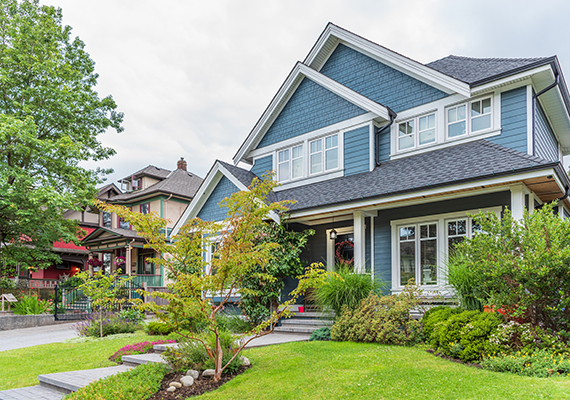
You have exhausted your searches on Zillow, Realtor.com and a myriad of other real estate sites. The same properties show up time and time again, and they don’t quite meet your particular needs. What are you supposed to do?
In these days of low inventory in the real estate market, it might be the right time to build a custom home instead. The process seems daunting, but with the right Realtor to guide you through the steps, it is a lot easier than you would expect.
Building a home is a multi-step process with a variety of different things to consider. Most of the work that you have to do is actually in the first three steps. The first and most important step of the process is finding the right builder. Like other service industries, finding an experienced builder who builds quality homes in a timely manner while meeting your specific needs and budget might seem like finding a needle in a haystack, but remember, you are not alone in this!
A good agent will have their top three builders ready to recommend to you. Real estate agents see a lot of houses. Specifically, they see a lot of NEW houses, so they have had the chance to tour homes built by a multitude of different builders. Don’t be fooled into choosing a builder based solely on his floor plans. Most builders can accommodate your desired floor plan at minimal cost. All builders are not equal, and it is best to consult a real estate professional to assist you. Builder contracts are usually quite complicated, but an excellent agent will have the experience needed to navigate them. After all, this will probably be the largest purchase you ever make and you will hopefully be living in your new home for many years to come.
Once you have chosen your builder, it is time to move on to the second step and find the best lot that will suit your custom build. Every lot is unique and it takes an expert eye to determine whether a lot will work for you and your new home. Pricing lots is not the same as pricing already built homes. Many distinct factors come into play when evaluating a lot’s worth. Even in the same neighborhood, there can be a wide range of prices because of buildability (floodplains and easements) and the lot’s topography.
For example, a home buyer who wants a walkout lower level in their next house should look for a lot with a slight slope. The best slope is a gentle one from the front to the back. Better still is a relatively flat lot with a mild slope to the side. This would allow a walkout main level and a walkout or walk-up lower level, giving you more freedom in the design of your home.
Other factors to consider when choosing your lot would be how the lot sits in the neighborhood. If it is in a valley, you may be dealing with water issues on a regular basis. Your local city or county websites are good resources for information about individual properties. Usually, these websites contain search engines with topographical maps that show whether or not a property is in a floodplain and the steepness of the slope. Virginia is a caveat emptor state, otherwise known as a “buyer beware” state. This means that the responsibility of doing the due diligence about the features and pitfalls of the property falls on you, the home buyer.
The third and last step in your home building equation is choosing the design. Many builders have promulgated their own designs that can be adjusted to suit your needs. A completely custom home, however, requires an architect. Most architects charge by the hour so it is best to find a base design from a website like architectualdesigns.com or homeplans.com and have them alter it for you. You can even check out books with floor plans from the local library! Computer models and floor plans can then be adjusted to meet your exacting standards. Once again, your agent’s recommendation for a builder is key. Excellent builders use outstanding architects.
After those three steps have been accomplished, your builder takes over from there! You will maintain a close relationship with them throughout the rest of the process so that they can determine your preferences for exterior and interior finishes, but they will handle all of the site permitting through the county and contracting work from site prep through the final touches.
Then, when everything has been completed and the occupancy permit has been granted, you will hear the seemingly magical words, “Welcome home to your dream home!”

Jean Beatty is a licensed real estate agent in VA, MD, and DC with McEnearney Associates, Inc in McLean, VA. If you would like more information on selling or buying in today’s complex market, contact Jean at 301-641-4149 or visit her website JeanBeatty.com.
COVID-19’s Impact on The Regions Market – Three Myths & Three Truths


We’re now more than two months into the region’s – and the nation’s – efforts to cope with the COVID-19 pandemic and everyone, in every walk of life, has been impacted in some way. The real estate market is no exception. We believe that an important part of what we do at McEnearney Associates is to provide accurate, timely information to our clients so they can make informed decisions, and we want to offer a candid view of some of the myths and the truths about the state of the market.
Myth #1 – Buyers and sellers are sitting on the sidelines and the real estate market has crashed.
There is no doubt that in the first weeks of the region’s shelter-in-place orders, new listing and contract activity dropped significantly. In the first month, the number of newly ratified contracts fell by 45%, and new listings coming on the market fell by 35%. Yet in the month since then, more buyers and sellers have returned to the market and those declines are approaching 20%. Given the uncertainty we’re all facing, that is truly remarkable. And the buyers that are in the market are serious and are making decisions rapidly when they see value. The average number of days a home is on the market before receiving a contract is a popular market indicator of buyer behavior. This year since mid-March that average was 22 days. During the same time period last year, it was 27 days.
Truth #1 – We’re all in the same storm, but we’re not in the same boat.
The Washington, DC region has fared well compared to some areas of the country where real estate is not considered an “essential business.” Some areas – Philadelphia is one example – have experienced drops in contract activity in excess of 80%. On a more personal level, a homeowner who owns a restaurant and can’t make their next mortgage payment is in a very different vessel than their next-door neighbor who works in cyber-security. It’s important to know all those market metrics about days on market, and sales-price-to-list-price ratios, but one’s individual circumstances matter more.
Myth #2 – Home prices are coming down.
All real estate is local, and there are small pockets where it is likely that prices have softened a bit in the face of lower demand. But the number of available homes on the market has dropped as well, so the relative balance between supply and demand hasn’t changed much from last year’s spring market. Overall, there is absolutely no indication of falling home prices. Homes that went under contract last year between mid-March and mid-May sold on average for 99.6% of their original list price. This year it is exactly the same. Based on what we have seen so far, the pace of price appreciation may be slowing, but prices are not coming down.
Truth #2 – Home prices are holding up well, but…
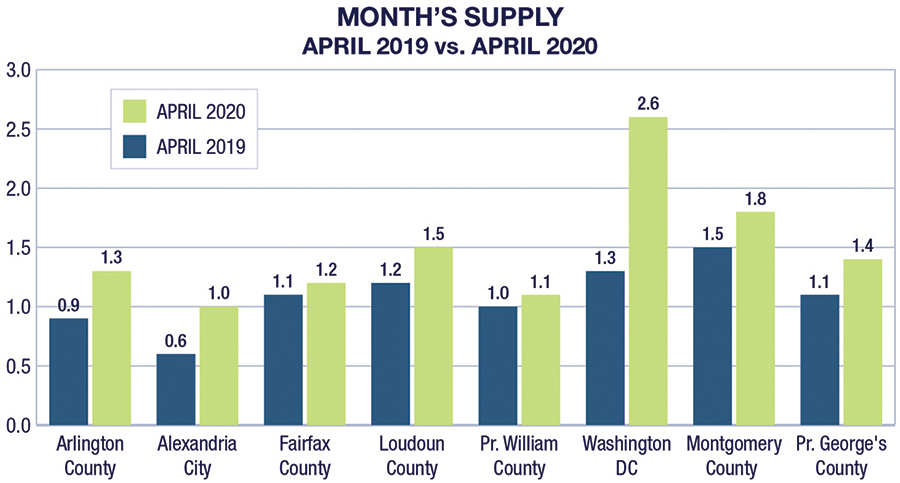
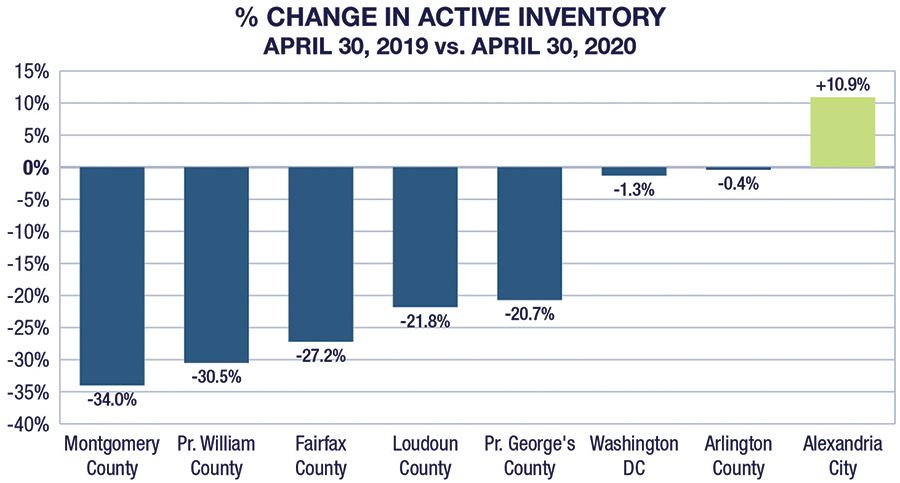
Continuing with the “all real estate is local” theme, active inventory and contract activity vary enormously throughout the region. At the end of April, there were 34% fewer homes on the market in Montgomery County than the previous April, yet in Washington, DC there was almost no change. In the City of Alexandria – still coping with an extraordinary shortage of inventory brought on by the Amazon HQ2 announcement 18 months ago – there were 11% more homes on the market than last April. The velocity and direction of home price movement really comes down to supply and demand, and the accompanying chart shows just how different the various areas of our market are. Washington, DC has twice the supply relative to demand as this time last year, while the suburban markets have not changed much. That makes it a bit more likely that prices in DC are closer to stability while the suburban markets still have some modest upward pressure.
Myth #3 – Mortgage financing is much more challenging.
Financial markets do not react well to uncertainty, and there is plenty of uncertainty to go around. In the first few weeks of COVID-19’s impact, mortgage interest rates fluctuated considerably on a daily – even hourly – basis. Yet in the last month, 30-year fixed rates have stayed right around 3.25%. Those are the lowest rates in history. Buyers with stable employment and the confidence to purchase are able to do so with no more difficulty than last year, and because of the low rates, their money goes further. Yet it is also true that those individuals who have been furloughed aren’t looking to get a mortgage, and if they were, it would be really tough to qualify.
Truth #3 – No one knows which part of the alphabet our recovery will look like.
Are we likely to witness a “V-shaped” recovery, with a rapid return this summer of normal levels of buying and selling activity? Will it look more than a “U,” with a more gradual, prolonged restoration of normalcy? Or will a late summer or early fall reemergence of COVID-19 infections stall the recovery and send the market back down the curve? Anyone who claims to know the answer to those questions with certainty either has a bridge to sell in Brooklyn or is deserving of a Nobel Prize in Economics. We don’t fall into either camp, but we are truly confident that our market is better positioned than most areas of the country – whatever shape the recovery takes. The best that we can do, that our clients can do, is to make those intensely personal decisions, based on one’s own circumstances and the information at hand.
We’re not trying to sugarcoat the reality of the region’s real estate market. We are likely facing an extended period of less real estate activity, and the impact in almost all sectors of economic activity has been and will continue to be significant. Nonetheless, those who have the confidence and stability to be engaged in buying or selling a home should know that the market is alive and – mostly – well.
Sustainable Landscaping’s Yin and Yang: Hardscapes versus Softscapes

As a local real estate leader, McEnearney Associates is invested in more than just helping our clients buy and sell houses. We want our clients to really love and enjoy their homes. We are always happy to refer home-related businesses and contractors who help make your house a home. We are excited to have Patrick Moran, Owner of Tactical Land Care (TLC), contributing to our blog this week with some valuable input whether you are interested in hardscaping, softscaping, or learning the difference.
[divider height=”30″ style=”default” line=”default” themecolor=”1″]
It’s no secret that landscaping is one of the most important factors of your home’s curb appeal. But the benefits of a sustainable landscape don’t end at increases in property value. They can also positively impact the environment around you and improve quality of life. But in order to maximize your impact, value, and improvements, one must understand the hard and soft elements that define a high-quality, sustainable landscape.
For this reason, we are going to dig in on Landscape’s Yin and Yang: Hardscapes versus Softscapes so that you may develop a better understanding of those components, and so that the artistic and technical aspects can be easily implemented into your slice of the world.
First, I’ll define sustainable landscaping as the design, construction, and management practices of an outdoor environment that is optimized to conserve natural resources, maximize the ecological benefit, while also reducing the required labor for upkeep. The most sustainable landscapes achieve these standards by optimizing both halves of landscaping: hardscapes and softscapes.
[divider height=”30″ style=”default” line=”default” themecolor=”1″]
Hardscapes
Hardscapes include the more permanent, non-living components of the landscape that provide foundation and guide structure. This includes patios, walkways, walls, stairways, decks, retaining walls, fences, trellis, and sculptures that are built with long-lasting materials like stone, concrete, wood, and metal. The hardscape can be thought of as the non-changing means by which we interact with the landscape: walkways lead us on intended paths; walls extend or limit our sense of space; and, stairways add levels and depth to our view. Other features like fountains, gazebos, planter boxes, and fences have the potential to further enrich our interaction with the landscape. Incorporating multiple hardscape features into your landscape is well worth the often larger investment, as it provides the bones of your outdoor space and defines it’s designated use as additional living space.
Hardscaping has excellent potential to increase the sustainability of your property, particularly as it relates to stormwater management. Sustainable hardscapes support the proper flow of stormwater runoff away from your home, while also allowing the water to permeate through the hardscape in order to recharge the groundwater soil and ultimately aquifers in many areas. This is possible through the use of open grade aggregate bases and wider joints between pavers or special permeable concrete mixes. At TLC, we follow the Interlocking Concrete Paver Institute (ICPI) Permeable Interlocking Concrete Paver (PICP) standards for our installations, and I recommend that prior to hiring a professional to complete any similar permeable installation, you ensure that members of their team have completed ICPI PICP training.
In addition to recharging the groundwater, permeable surfaces also reduce the water that would otherwise runoff into municipal stormwater systems, which carry road pollution directly into our local waterways where it wreaks havoc on the ecology of the Potomac River and the Chesapeake Bay. Many jurisdictions have adopted programs to encourage these types of installations through Stormwater Utility Fee credits as is the case in Alexandria, or grants for cost-sharing as in the case in Arlington.
[divider height=”30″ style=”default” line=”default” themecolor=”1″]
Softscapes
Softscapes include the softer, horticultural, and other floral components of a landscape. Through softscapes, therein lies the opportunities to provide natural beauty and ecological engagement. Creative softscapes can also emphasize structures while softening and providing vitality.
The softscape can be thought of as the foci and accents we use to create an atmosphere and instill our sense of character into the landscape. We anticipate certain results from our softscape and its natural processes that changes seasonally and day-to-day. Flowers bloom and fade away. Leaves fall to the ground to join the mulch. While, trees continually grow upwards and outwards into the space above us. Incorporating layers of different softscape features into your landscape brings a feeling of life and vitality along with each plant’s individual aesthetic, adding ever-changing, easily-altered interest to your home for years. In short, softscaping includes all living plant components like non-native annuals, perennials, shrubs, grasses and trees, as well as as organic ground covers such as mulch.
Softscapes can drastically alter the sustainability of your property by addressing issues related to soil management, wildlife integration, and pest control. However, the most crucial philosophy in sustainable landscaping is the concept of “right plant, right place.” This is the practice of installing a certain plant in a certain location to receive a more sustainable outcome.This requires being knowledgeable about your plant choices and selecting plants that thrive in pre-existing moisture and light conditions. It also requires that we be cognizant of growth rates and spacing. Examples include installing evergreen trees like white pines or southern magnolias on certain sides of your home, which can provide shade in summer and windbreaks in winter, ultimately reducing energy costs. Likewise, water-loving trees and flowers like river birches and joe pye weed can regulate soil moisture in areas of your property where there is excessive runoff from impervious surfaces. Native flowers such as Black-Eyed Susan can thrive in dry soil, while still attracting pollinators, such as butterflies and bees.
When designing your softscape to anchor your local ecology, incorporate plants native to your region in order to ease resource usage and attract your native wildlife populations. In comparison, much of the flora that is available through common garden centers have been cultivated for their ornamental aesthetics and require irrigation and fertilization to thrive.
Softscapes are also critical because of what they do to the soil. The right softscapes can sequester carbon through the plant roots and resulting soil microbiology. A healthy soil consists of fungi, microbes, worms, and an intricate web of roots that help plants process nutrients and deposit carbon into the soil. By cultivating a permaculture of complementary and companion native plants in the softscape portion of your garden, you can cultivate your own carbon sink.
The best landscapes use both hardscaping and softscaping to achieve the most beautiful, sustainable outcome. Hardscaping offers the bones, foundation, structure, and form that is enhanced, accentuated and beautified by the flora of the softscape. These two aspects of landscaping have the relationship of yin and yang: two halves of a whole, diametrically opposed in nature, working in unison to create something novel. When choosing landscape professionals to take care of your property, choose one that understands both halves of the whole: hardscape versus softscape, aesthetic versus sustainability, art versus science, and yin versus yang.
[divider height=”30″ style=”default” line=”default” themecolor=”1″]
To learn more, we encourage you to explore resources in our local Northern Virginia cooperative extension, as well as online resources from other areas.
University of Maryland Cooperative Extension
Oregon State University Cooperative Extension
City of Norfolk, VA Rainscaping and Permeable Hardscape
Tactical Land Care
Tactical Land Care is net-zero to help protect our world and environment for all of us. We specialize in sustainable construction, conservation landscaping, and stormwater management solutions, including permeable hardscape and rain gardens. By working together, we can maximize the ecological benefit of your property.
Your yard endures a twelve-month cycle and our team at Tactical Land Care stands ready to work with you on all your fall and winter maintenance needs. Please give us a call at 703-879-7091, or email us at info@tacticallandcare.com, where someone from our TLC team will develop a plan with you to help enhance your yard or property for many years to come.

Patrick Moran, PMP, LSC, HIC, LEED | CEO Tactical Land Care
Patrick utilizes his passion for the outdoors along with his professional skills as a licensed Landscape and Home Improvement contractor in Virginia and Maryland, as well as a Project Management Professional (PMP) and LEED Green Associate. Patrick has a BA from Yale University, where he studied climate change and its impact on society.
Don’t miss a post! Get the latest local guides and neighborhood news straight to your inbox!
What Should Seniors Know About Moving During COVID-19?

Question: Everywhere you turn, there are headlines about how devastating this virus has been to people over 60. Mostly in nursing homes, and, to a lesser degree, other “congregate” settings such as assisted living communities and some life care/life plan communities. It is true: statistically, that is where a huge proportion of infections and, sadly, deaths have occurred.
So, what should this age group (I have had my AARP card for over a decade) consider if it is time to downsize?
Answer: When people decide to downsize, it is very often because the home they have lived in for decades has become too big and expensive/time-consuming to maintain. They understand that moving to a smaller home frees them to a large degree from maintenance, and allows more time for travel, entertainment and other activities they may have been looking forward to in retirement.
Trips to see the grandkids, or that trip to the Islands that has been on their bucket list. I did it 3 years ago, and would do it today if I hadn’t.
None of that has changed. Life is continuing to happen. I have younger clients moving this month into the house where they will raise a family. And older folks moving to a condo where they will launch their next phase of life. There are just a few adjustments now.
Circle back to the virus itself. This is a virus that spreads from person-to-person via droplets from coughing, sneezing and simply breathing. Now look at nursing homes and some other senior living communities: they are caring communities where, by their nature, there is a great deal of very personal contact between residents and care-givers. It is hard to imagine a more conducive environment for the spread of COVID-19.
What does not make the headlines is that the vast majority of senior moves are to “privately-owned” properties such as condominiums, or smaller single-family homes with one level. They are not to congregate communities. These privately owned homes still offer all the benefits that downsizing affords in the first place. Plus, they offer the ability for the owner to react to outside circumstances such as COVID-19, just as they would have in their previous property.
So how do you accomplish a move these days? Logistically, moves during COVID-19 are happening with all the recommended precautions: we real estate brokers are handling purchases and sales mostly online using virtual tours, virtual contracts and virtual settlements.
While I have yet to meet a virtual de-clutterer or mover, these folks are all taking the steps necessary to protect clients of all ages. Social distancing, face masks and sanitizing wipes are the new normal, and respecting the wishes of clients is paramount.
We have a great corps of vetted vendors who can help clients through the “5 Steps to a Successful Downsize.” This includes de-cluttering, donating, discarding and the like. Plus, our Signature Service preparation of the house itself: painters, flooring contractors and most of the trades if needed.
As a Seniors Real Estate Specialist (SRES), I understand that moving gets tougher as we get older. And this virus adds an additional complication. But still, life continues to happen. The congregate communities will adjust and will continue to be a very viable option. For most older folks, however, condominiums and one-level houses were and are a great option. We can help you with that downsize, now or in the future. It is never too early to explore and to plan.

Pete Crouch has been a licensed Broker in Alexandria for over two decades. Pete also has a specialty in Mature Moves and he is a Board Member for At Home in Alexandria (AHA) Senior Village. He was the 2018 National Recipient of the “Outstanding Service Award” for work with Senior Communities. Text 703-244-4024 or email PCrouch@McEnearney.com for a copy of his Downsize Alexandria! Booklet about living more simply in Greater Alexandria.
Is Now a Good Time to Start a Career in Real Estate?
Question: Is now a good time to start a career in real estate?
Answer: Real estate has never been a career for those uninterested in hard work, maintaining focus in the midst of chaos, and having an optimistic view of the future. Why else would anyone take on a job where you don’t get paid until the end of the process? This is a career for entrepreneurs looking to build a business over a long period of time with highs and lows along the way.
But there is no doubt that what realtors are facing now is complex and challenging, tying together economic and health crises with a seismic shift in the way we do business.
No one has experienced what we are going through right now, so in some sense all agents are at the same starting point of learning to sell in the midst of a global pandemic. Of course, agents who were selling during the housing crisis of the late 2000s have a better reference level for what it takes to succeed in a challenging market.
But during the Great Recession it took years for our housing industry to recover and a great deal of overhaul in the businesses associated with real estate to reclaim public trust. That is not the case today, and there are signs that the strength of our local housing market prior to the pandemic — buoyed by low inventory and low mortgage rates, two things that have not changed — is keeping us in a positive position.
As local officials designated real estate as an essential service, realtors quickly ramped up to serve the public in the safest and most efficient ways possible. From stocking listings with anti-bacterial supplies to hosting virtual open houses and guiding clients through remote-access settlements, agents have ensured that CDC guidelines on public interactions have been carefully followed. And the results show that sales are still happening at a hopeful pace.
Local stats from throughout the D.C. area, as compiled by McEnearney’s David Howell, Executive Vice President & CIO, shows that for the last several weeks, contract activity still lags behind that of last year, but the previously very wide gap continues to narrow.
For the week of May 10-16, the total number of newly ratified contracts was down just 14.6% compared to the same week last year. To put that into perspective, the previous week was off 19.3%, and that was preceded by weekly drops of 30.9%, 40% and 45%.
Absorption rates for the City of Alexandria — the rate at which properties went under contract or sold in a 30 day period — in April showed a continued seller’s market, with a 47% rate for detached homes up to $1 Million and 33% for homes over $1 Million, 50% rate for townhomes up to $1 Million and 32% for townhomes over $1 Million, and 49% rate for condos and co-ops up to $1 Million (the news was not so great for condos and co-ops over $1 Million with barely any movement in those properties). While we do not expect contract activity to catch up to 2019’s performance anytime soon, the trend is very positive.
What the last two months have made clear is that our homes have never been more important to us than they are today. They have become the center of our universe — our workplace, our schoolroom, our communications center — providing a sanctuary in a time of uncertainty.
Demographics will shift as a result of our time in quarantine that will necessitate a change in housing: families will grow, couples will divorce, working from home will mean less focus on commuting times, multi-generations will come together under one roof. There will be a lot of movement in the housing market and opportunity for savvy agents at every change in that cycle.
Real estate was key to so many things in our lives before the COVID-19 pandemic arrived. It will take professional, knowledgeable and caring realtors to guide buyers, sellers and renters, through the new market ahead.
If before the pandemic you were considering a career in real estate because you wanted to be a part of something essential, not just to our economy but to our social fabric, then now is the perfect time to start.
If you’d like to learn more about how McEnearney Associates is growing, visit us at www.JoinMcEnearney.com.

This week’s Q&A column is written by Karisue Wyson, Director of Recruiting & Agent Support at McEnearney Associates Realtors®, the leading real estate firm in Alexandria. To learn more about this article, contact Karisue at 703-615-0876 or email kwyson@mcenearney.com.
Is It a Home, or an Office, or a Classroom? YES!

When we think of home … maybe we think of shelter or, somewhere we like to entertain family and friends. Perhaps it’s a quiet respite after work or a place to enjoy lazy weekends.
But, never before has it been work, school, the place to host online social gatherings, conduct Zoom meetings, field numerous conference calls, “attend” virtual conferences and workshops. It’s never been the place where you shuffle your workspace to make space for the kids to do schoolwork or “attend” an online lesson.
Never have we had to carve out workspaces, clear dining room tables, and breakfast bars, and work from home so continuously that we experience posture issues, strained eyes, and cabin fever. Until now.
We are all learning new ways to use our homes – whether we have a dedicated office or not. So, what do we do if we don’t have a home office? Where can we carve out some workspace or a place where the kids can do homework and study or where different family members can rotate into the space at different times? How do we find a quiet space to host Zoom meetings? Where can we sit, work, and be inspired to innovate and problem-solve?
I recently interviewed a couple of local business owners who had great ideas.
For instance, Niki VanEch, a talented local interior designer and owner of VanEch Studio and Design offered really smart suggestions for clever workspace solutions. She suggested ideas for utilizing corners, small nooks, and even unused wall space where a narrow profile desk or work surface might be installed.
She had a suggestion for converting a modest closet into an office – and, the coolest feature – it had small roll-away barn doors. So, if you are working and need to walk away to focus on something else, you have this beautiful and artistic design element where you can simply roll your barn doors closed.
Another good idea: Creating space under stairs to a basement that is often just a closet (frequently home to old luggage, boxes, and wayward spiders). By removing that long wall beneath the steps, finding a small desk with some shelving and offering cute and useful accessories, and great lighting – it can be transformed from an under-utilized space into something truly inviting and cozy. It is a thoughtfully designed space where one might enjoy a hot cup of tea while reading, writing, or really digging into a project.
Niki even shared some really clever and smart-looking floating desks that can become beautiful design elements in a room.
But what if you feel cramped – you have employed some good ideas but you just need more places to go? You are sick of your proverbial “four walls.”
Gifted landscape architect Pragya Mishra, owner of Artscapes, would ask you to consider what “rooms” you can create in your outdoor space. Can you create space for inspiration, reading, writing, and even meeting outside?
Pragya has helped people with beautiful patios and decks – she has designed small spaces with Adirondack chairs and firepits on a gravel base or just the simple bench or chair beneath a tree. You can get really clever with outdoor lighting and simple pergolas that have power running to them where a fan can be installed to blow the pesky mosquitoes and gnats away while you avoid pesky family members working inside!
Outside can be a great space for conference calls – no barking dogs, screaming kids, other family members on their own Zoom calls, and bouncing sounds, in general. Yes, sometimes we have to contend with the zealous neighbor who opts to mow his lawn right as you start your conference call, but – there will likely always be something with which to contend and at least this way you get a change of scenery and some fresh air.
Pragya even offered some great solutions for townhouses – so, small yards work, too!
Home – even though how we use it has changed – can actually benefit from some carefully re-thought and re-purposed space. If you would like to learn more from either of these bright professionals about great ideas for your home, please reach out to me – I’m happy to connect you!
Ann McClure is a licensed real estate agent in Virginia and Maryland with McEnearney Associates, Inc. in McLean, VA. If you would like more information on selling or buying in today’s complex market, contact Ann at 301-367-5098 or visit her website AnnMcClure.com.