
 Facebook
 X
X
 Pinterest
 Copy Link
7 Chic Wallpaper Ideas to Spruce Up Your Space

Tired of looking at the same four walls? Today’s wallpaper designs have come a long way from that floral pattern in your parents’ dining room. Plus, the application process has become super easy and quick with peel-and-stick products. Thinking about taking that feature wall one step further? Take a look at our curated ideas for inspiration.
Geometric and graphic patterns

Photo Courtesy Farrow and Ball
The interlocking rectangles are inspired by the encoding machine of the same name “Enigma”, famously deciphered by Alan Turing during the Second World War, according to Farrow and Ball. Its bold pattern and colors make a mesmerizing feature of any wall. Grab this wallpaper to give your workspace or den feature wall a pop of design and color.

Photo Courtesy Chasing Paper
This graphic geometric print entitled “Marlow” by Chasing Paper, available in both peel-and-stick and traditional application, would brighten up any corner or bedroom. It could also create visual interest as the backing of a bookshelf if you wanted to try in on a smaller space before an entire wall.
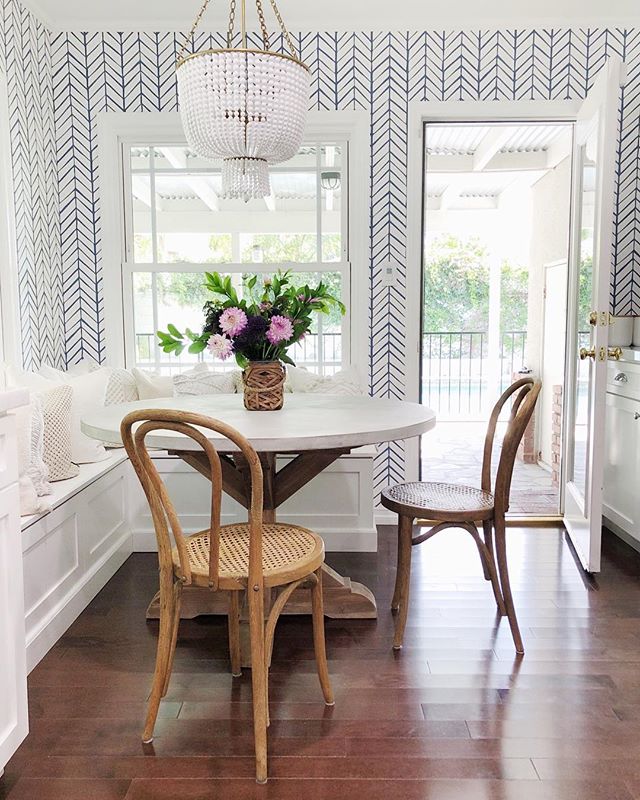
Photo Courtesy Serena and Lily
Inspired by traditional herringbone and chevron patterns, Serena and Lily’s original “Feather” wallpaper design on pure white is well-suited for a beach house or bedroom that needs brightening. The pattern is both classic and modern, and can have a big impact without feeling overwhelming.
Chintzy

Photo Courtesy Graham and Brown
Chintzy is a style featuring bold florals that appear to be climbing your walls like a slat of lattice and is popping up everywhere.
Try Graham & Brown’s “Bloomsbury Neo Mint” design, featuring vibrant intertwining florals as the centerpiece of the wallpaper, accompanied by beautiful butterflies in a serene mint setting — it’s no wonder this design is the company’s “2020 Wallpaper of the Year.” It would quickly freshen up any bathroom or reading nook.
Non-repeating murals

Photo Courtesy Charles Voysay
The watercolors of early 20th century famed English architect and pattern designer Charles Voysay have been meticulously restored into the wallpapers available today by the company bearing the same name. “The River Wallpaper” would be perfectly suited for a study with dark wood and floor-to-ceiling bookshelves.

Photo Courtesy Rifle Paper Co
Inspired by an 18th-century farmhouse in Gascony, France and an antique pattern from York’s archives, Rifle Paper Co.’s “Camont” design features illustrated fig trees, lemon trees, chickens and flowers. It would make a perfect backdrop for your farmhouse-styled kitchen or second home in the country.
Bright, large scale florals

Photo Courtesy Dunelm
Featuring a stunning floral design in a fresh white, this elegant wallpaper is crafted with detailed shading to create a realistic 3D effect. The wallpaper is easily applied by pasting the paper and features a stylish smooth finish. Ideal for a stunning feature wall, this wallpaper makes an eye-catching feature in any room.
Mid-century modern
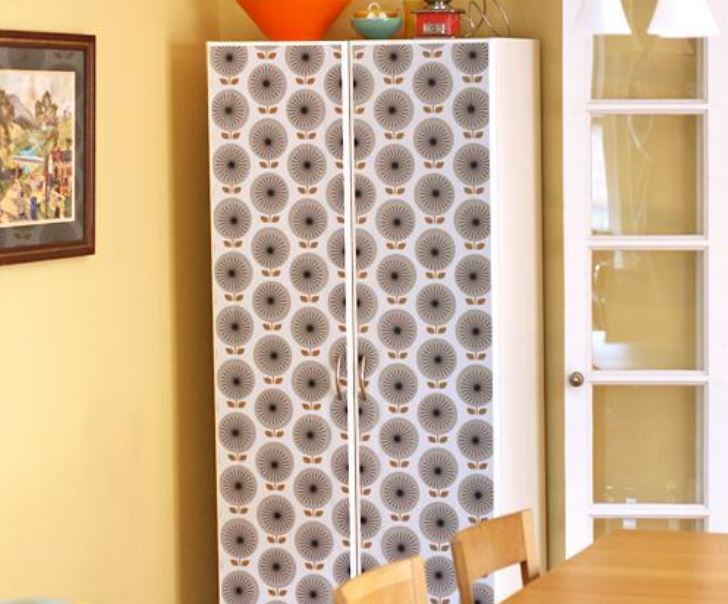
Photo Courtesy Chasing Paper
Chasing Paper’s “Sunburst” crisp and bright print has a cool Scandinavian vibe that would look great above any bar cart, in a butler’s pantry or compliment mid-century modern dining furniture.
Texture-inspired

Photo Courtesy Serena and Lily
Serena and Lily’s organic and refined grasscloth look brings elegance and texture to your walls. Crafted of natural grasses and fibers, it instantly warms any room.
Just for fun

Photo Courtesy Chasing Paper
NYC Matchbook by Chasing Paper is an illustrative print designed by Danielle Kroll. The colorful print features matchbooks from a handful of NYC’s most iconic restaurants.

Photo Courtesy Chasing Paper
Show Your Shelf is part of Chasing Paper’s Penguin Random House x Chasing Paper Collection, designed by Out of Print. Create an instant library in your working from home office or school space that inspires learning.

Photo Courtesy Rifle Paper Co.
Travel the world without leaving home with this grid of illustrated city maps. Featuring iconic landmarks, waterways and streets that celebrate each city’s unique character, reminisce of past travels and places yet seen with this wallpaper by Rifle Paper Co.
[divider height=”30″ style=”default” line=”default” themecolor=”1″]
Don’t miss a post! Get the latest local guides and neighborhood news straight to your inbox!

Has COVID Changed Real Estate Consumer Behavior in the DC Metro Area?


Ripple, Wave or Tsunami – Part I
By David Howell, Chief Information Officer, McEnearney Associates
There has been much national conversation that the COVID-19 pandemic has caused a “flight to the suburbs” as urban dwellers seek more elbow room. Has that happened in the metro Washington, DC market?
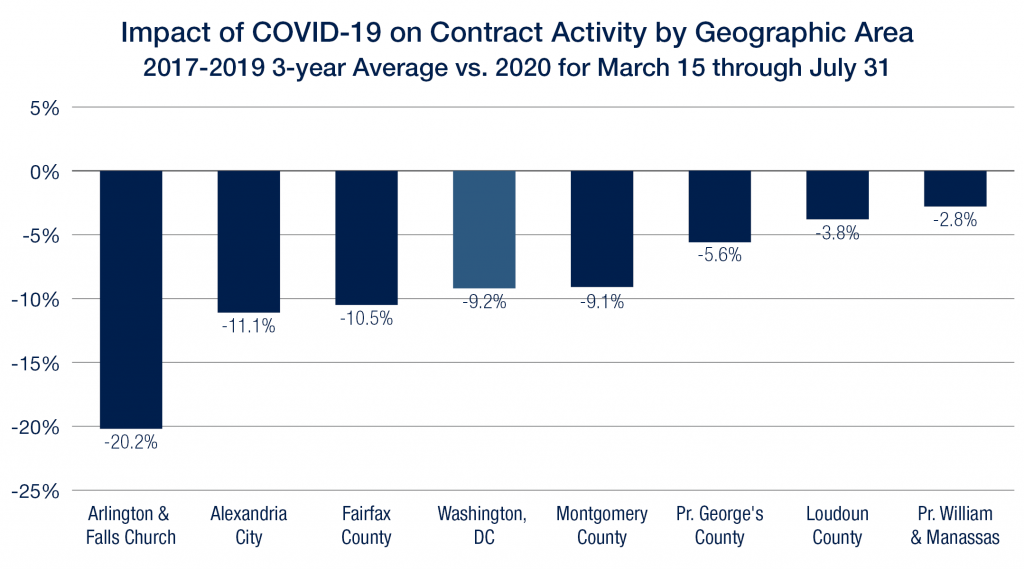
The region began to shut down in mid-March of this year, so we examined new contract activity from March 15 through the end of July for 2020 and compared that to the average activity of the same four-and-a-half-month time period for 2017-2019. As the chart indicates, there is no question that the outer suburban markets have fared better than Washington, DC and the close-in suburbs. Washington, DC contract activity is down a little over 9.2%, and Arlington is off over 20%, while Loudoun and Prince William Counties are only off between 3% and 4%. And in those areas most impacted by COVID, the condo market has been hit even harder. But there is nothing in these numbers to suggest that consumers are fleeing the city in droves. It’s not a tsunami – it’s somewhere between a ripple and a wave.
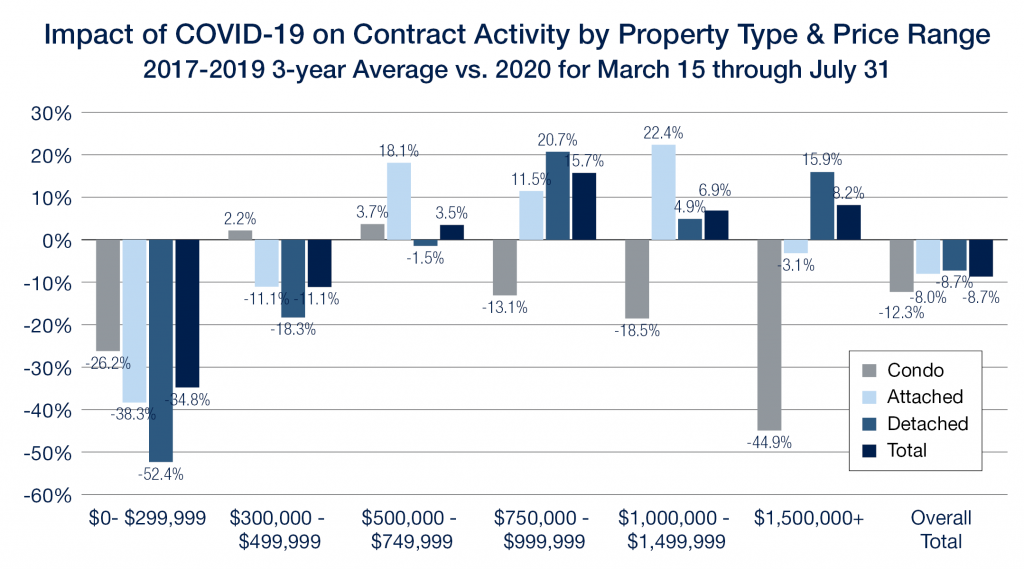
The impact of COVID has also been felt disproportionately at the lower end of the price spectrum. Job losses have been heavily concentrated in the service and hospitality sectors, and entry-level home purchases have been hit pretty hard. While the overall drop in contract activity in the region has been 8.7%, homes priced less than $300,000 have fallen by almost 35%, while activity for homes priced more than $500,000 has actually risen. Total new contract activity for condos is off 12.3%, while attached and detached homes are off 8.0% and 7.3% respectively. This is another indication that there has been some movement away from more dense living conditions, but it hasn’t been massive.
We are very encouraged by the rebound in contract activity since the middle of May, and the region’s real estate market is in far better health than we would have guessed just a few months ago. Yet a rebound and a recovery are not the same things. There is still an enormous amount of uncertainty about the future path of the COVID virus, and it will take a long time to fully replace the jobs lost and to climb out of the deep economic hole that COVID-19 has produced. We have been proud members of the Washington, DC real estate community for 40 years and continue to believe that this is the best place to live and work in the world. We are realistic in knowing that we are a long way from a full recovery, but optimistic that we will recover here better than almost anywhere.
[divider height=”30″ style=”default” line=”default” themecolor=”1″]
Don’t miss a post! Get the latest local guides and neighborhood news straight to your inbox!
Top Five Home Improvements to Enjoy Now That Pay Off Later
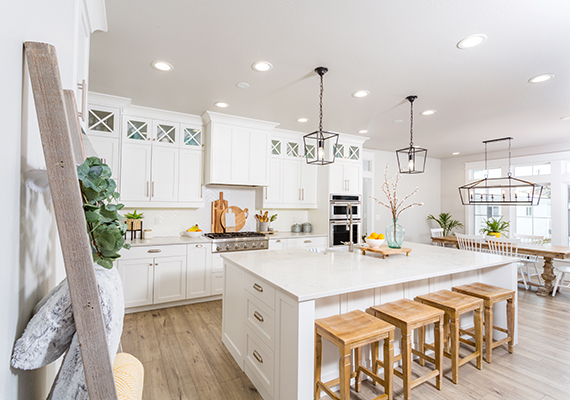

There are certain things that I always recommend to my clients if they are thinking of putting their home on the market in the next five years. Putting some money into updating your home now can make it more appealing to buyers down the line. It will also allow you to enjoy the updates before you finally take the plunge and move.
The following list is my top five recommendations on home improvements.
1. Spruce Up the Kitchen
Most of your time at home is usually spent in the kitchen. Between meals and snacks, the kitchen receives the most foot traffic out of any other room in the home. A full kitchen remodel can be very expensive. As an alternative, you can focus on some key areas. If your cabinets are older, but still in good shape, hire a professional painter to come and repaint them. After they have been repainted, update all the knobs and hardware to a more modern look.
Replace your old countertops with Silestone or quartz. It will bring a fresh look to the kitchen, and they don’t scratch easily, unlike granite.
If the floor is older, either replace it, refinish it, or add something on top. You might want to match the kitchen with the rest of the house. Which brings me to my next point.
2. Replace or Refinish Outdated Flooring
A general rule of thumb is to have hard surface flooring in all of the main areas of your home, especially the living room, dining room, and kitchen as most modern home buyers do not like carpet. You can choose a less expensive option like floating laminate flooring or a more expensive option like engineered or solid hardwood floors depending on your budget.
If you already have hardwoods in your home, and they are refinishable, it might be time to update the color scheme to something more modern. The current trend is to have darker, matte flooring. If you need ideas for colors or simply don’t know where to start, attend an open house at some new builds in your neighborhood and ask them what flooring they used. Model homes usually showcase the current trends, and builders always have a list of materials that they used.
A word of caution, if you are going to replace the flooring in your home, do not mix flooring types. At least not on the same level. The change between different flooring is like a full stop for your brain. It can make a room seem smaller than it actually is.
3. Update the Bathrooms
It is relatively inexpensive to replace the vanities and toilets in your bathrooms. Also, hiring a contractor to re-glaze the tile and bathtub, especially if they are older or an odd color, is a great way to get more use out of what you already have, while making your bathroom seem like new again.
4. Add Recessed Lighting
If your home is older, it might not have as much recessed lighting as more modern builds. Adding recessed lighting to your home will add to the overall mood and functionality of your home. Since it requires working with circuits and electrical wires, I would strongly recommend hiring an electrician. Not only do buyers like well-lit homes, but it will also help with your marketing as light is essential for great photographs. Most home buyers start their search on property websites like Zillow or Realtor.com, and professional photographs help make your home stand out while highlighting the best features to potential buyers.
5. Replace the Roof
If your roof is less than 10 years old, it is a huge selling point for the home. A new roof prevents leaking, water damage, and a host of other problems. I realize that this item can get very pricey, so consider contacting a roofing company to come out and take an assessment. If they find hail damage, they can work with your insurance company to get it replaced for the cost of your deductible.
Looking toward the future and starting now is the key to a smooth, easy home sale later. To get the most out of your home, consider making these improvements today so you have time to enjoy them. If you are thinking about making a move, reach out to me to discuss next steps.

Jean Beatty is a licensed real estate agent in VA, MD, and DC with McEnearney Associates, Inc in McLean, VA. If you would like more information on selling or buying in today’s complex market, contact Jean at 301-641-4149 or visit her website JeanBeatty.com.
Don’t miss a post! Get the latest local guides and neighborhood news straight to your inbox!
Senior Law Day – Should I Stay or Should I Go?


When the punk rock band The Clash put a song with this title on their 1981 album release, they surely never imagined the classic lyric being used in a Senior Housing context.
Senior Services of Alexandria (SSA) along with the Alexandria Bar Association is proceeding with its annual Senior Law Day — only virtually this year. Instead of the usual half-day program, it will be broken into three virtual panel discussions. The overall theme, “Should I Stay or Should I Go,” addresses housing for older folks, financial concerns around housing and care, and estate planning. Experts from these fields will speak on three successive Fridays beginning September 11.
The first panel will address the big picture of housing, from Aging in Place to Downsizing and Home Modifications to Senior Communities — plus the legal documents that go with such options.
The second panel will address financial concerns such as long-term care, Medicare/Medicaid, what the different housing options may include, as well as tax breaks and funding home modifications.
The third panel will cover Estate Planning, from basic documents, powers of attorney and other “agents,” and the impacts of such documents — or lack thereof.
The first panel on September 11, features Rachel Baer, Esquire, to address legal documents related to housing, Heidi Garvis of Caring Considerations to address the costs of home care vs. community care, and myself — Pete Crouch, Seniors Real Estate Specialist at McEnearney Associates, Inc. to speak to housing options.
As for housing options, there are many, many choices to consider as we age. The first is clearly Aging in Place, which, as the name implies, means staying put in your current housing. It does require, however, making a plan for potentially changing health and financial considerations. Houses, condominiums and apartments can be modified to make them more compatible with such considerations over time, and a well-thought-out plan can make all the difference.
We are also very fortunate in our area to have many options for housing. A large number of older Alexandrians have chosen to move to condos and apartments. The idea is to lessen the maintenance burden of single-family dwellings, provide one-level living, and enhance social interaction, among other benefits. In fact, almost half of the members of our local Senior Village — At Home in Alexandria — have downsized to condominiums and are Aging in Place there. Again, financial and estate planning considerations can be crucial.
Another option is our local Senior Communities. These range from Independent Living to Assisted Living to Memory Care to Life Plan Communities (also known as CCRC’s — Continuing Care Retirement Communities). Each has its strengths and its appeal.
I encourage you to register for Senior Law Day(s), so you can learn about all of the topics covered in this article and more. Registering once gives you access to all three panel discussions, starting September 11 from 2-3 p.m. Take in your housing education from the safety of your home! Please join us!
Register here for 2020 Senior Law Day.

Pete Crouch has been a licensed Broker in Alexandria for over two decades. Pete also has a specialty in Mature Moves and he is a Board Member for At Home in Alexandria (AHA) Senior Village. He was the 2018 National Recipient of the “Outstanding Service Award” for work with Senior Communities. Text 703-244-4024 or email PCrouch@McEnearney.com for a copy of his Downsize Alexandria! Booklet about living more simply in Greater Alexandria.
Don’t miss a post! Get the latest local guides and neighborhood news straight to your inbox!
The Best Things to Do Labor Day Weekend in Washington, DC, Maryland, and Virginia
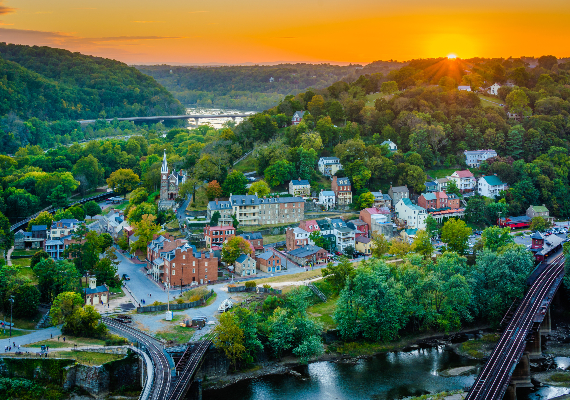
Labor Day 2020 is sure to be different for many of us, even if we are able to partake in some of our favorite annual celebrations. We’ve found some great ways for you to enjoy your long weekend, whether that’s right in the comfort of your own backyard, in the splendor of our local national and state parks, or with some socially distant fun.
*please reference individual sites for specifics on operations during COVID-19.
Chill Out by the Water
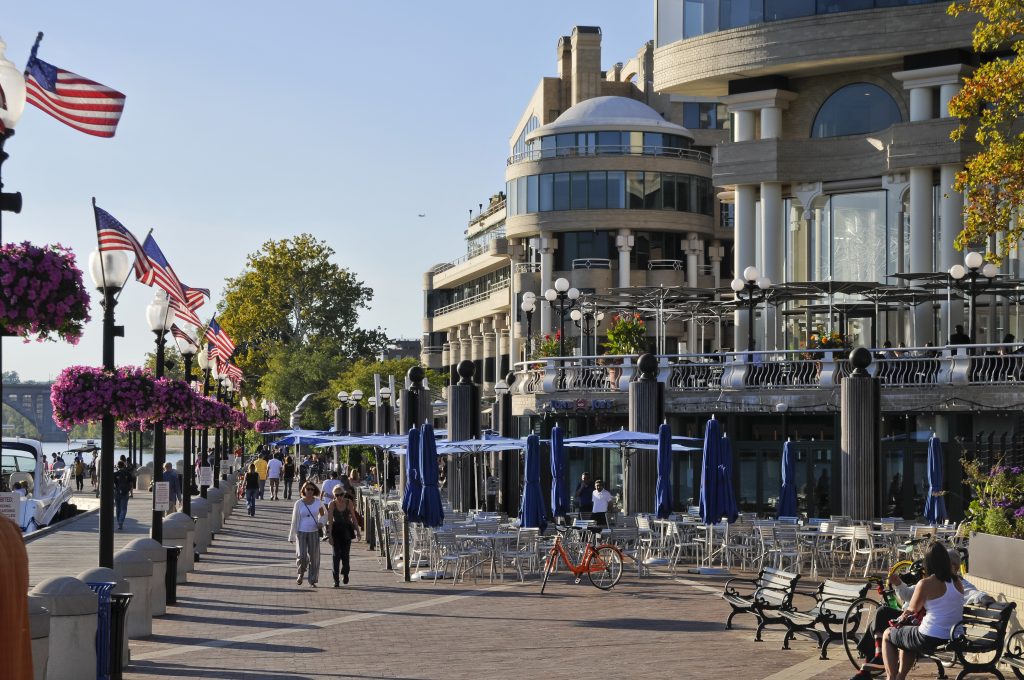
Why not take a little extra time and cool off from the summer heat? Take a look at our curated list of beaches, lakes, and rivers near Washington DC, where you can pack a picnic, rent some water toys, or kick off your shoes and enjoy your day at the shore.
Go for a stroll and grab some local grub from one of our nearby boardwalks. Living in the DC metro area provides ample nearby waterfront walks including DC Wharf, Yards Park, Washington Harbour in Georgetown, National Harbor, Baltimore Inner Harbor, and Downtown Annapolis. Rent all your favorite water toys including kayaks, paddleboards, and paddleboats from the Key Bridge Boathouse, Tidal Basin Paddleboats, Mason Neck State Park, or Burke Lake Park.
Go for a Stroll
Say farewell to summer with a stroll through any of our public gardens and parks. In DC you can choose from the National Arboretum, Hirshhorn Museum Sculpture Garden, Meridian Hill Park, National Mall and the Enid A Haupt Garden, Kenilworth Park & Aquatic Gardens.
Take a day and enjoy the great outdoors at any of the hundreds of trails in Shenandoah National Park or the George Washington and Jefferson National Forest in Virginia. If a longer trip is on your wishlist, then be sure to check out Massanutten – it’s just as wonderful without the snow and ice of winter!
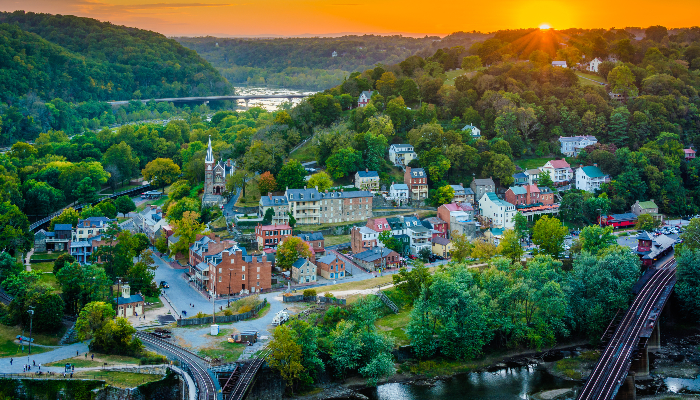
In Maryland, Great Falls National Park and Piscataway Park offer unique trails and incredible views of Virginia, you can even spot Mount Vernon from Piscataway Park. Harpers Ferry, offers the best of all worlds, historical sites, great hiking trails, and waterfront activities.
Meander at a Museum

There are multiple museums now open to the public with new social distancing protocls in place. Around DC, you can now visit the National Zoo, Artechouse, and the International Spy Museum, among others. The Mansion on O is even hosting a special Labor Day self-guided tour in partnership with District Pit BBQ. Head out to the National Air and Space Museum Udvar-Hazy Center or Mount Vernon in Virginia for a trip the whole family is sure to enjoy.
Cheer on the Nationals

Missing the ball games’ concessions and brews? Many vendors at Nationals Park are offering takeout from their main dining locations. What better way to cheer on the Nats than with some local faire and the game on right from the comfort of your couch? Make a whole weekend out of it as the Nats defend their World Series title:
9/4 Friday vs Braves at 4:10 PM
9/5 Saturday vs Braves at 7:10 PM
9/6 Sunday vs Braves at 1:10 PM
9/7 Monday vs Rays at 6:05 PM
Celebrate in Your Backyard

With a little creativity, you can create your own beer garden or outdoor dining space. If you don’t feel like grilling, stop by your favorite restaurant for some traditional Labor Day eats. We might recommend some of our favorite seafood restaurants. If you’re more keen to go out an soak up the last bit of summer outside, many restaurants and breweries throughout DC, Maryland, and Virginia have found creative ways to continue to serve safely and help us enjoy the beautiful summer season. Running Hare Vineyard in Maryland is even hosting a special Labor Day fireworks display on September 4th at 9 PM
Outdoor Fitness

Host an outdoor fitness session with your friends or attend a Labor Day outdoor workout. Partake in a Silent Circuit or Warrior Workout in Maryland, or head to Yoga and Mimosas in Virginia for a fun way to stay fit this weekend. Remember to check with your local fitness studio to see if they are offering online classes. So move your weekend routine from indoor to outdoor and invite some friends or family over!
[divider height=”30″ style=”default” line=”default” themecolor=”1″]
Don’t miss a post! Get the latest local guides and neighborhood news straight to your inbox!
Using Bridge Financing to Purchase a Home Without Selling First


Ask any real estate agent doing business in the D.C. metropolitan area, and they will tell you it is almost impossible to make a competitive offer to purchase a home if you must sell your existing home first. Contract offers contingent upon the sale of an existing home are often dismissed right out of the gate. And why wouldn’t they be?
If a seller has multiple offers to purchase, at or above asking price, and some of the offers are not contingent upon the sale of any other property, the seller would generally not give much — or any — consideration to a contract offer which is contingent. So how do buyers position themselves to purchase without first selling? Bridge financing may be the answer. Many lenders do not provide bridge loans, but some of us do.
Bridge financing is any type of borrowing that allows the purchaser to buy before selling. It could be a home equity line of credit on the existing home, a traditional short-term bridge loan secured by the existing property (or the new property), or temporary loans secured by each property.
It can even be financing provided by Great Uncle Fred. The type of bridge financing sought, to some degree, depends upon the borrower’s needs. The first thing consumers should understand is that while some people qualify for bridge financing, many do not.
Bridge financing is generally needed to provide the cash to meet the down payment and closing cost requirement associated with the purchase of the new home; the remaining financing is provided in the form of a traditional permanent mortgage loan. In some instances, purchasers plan to hold no financing associated with the new home, but the funds which would allow them to pay cash for their new home are tied up as equity in their existing property.
Bridge financing, more often than not, is the means of tapping into the existing property equity to generate the cash needed for the new home. So significant equity in the existing home is the first thing the borrower needs to qualify for a bridge loan. The maximum combined loan-to-value (CLTV) allowed under most institutional bridge loans is between 70% and 80%.
If the existing home has a value of $750,000 and the bridge loan lender will allow a 70% CLTV, the maximum bridge loan would be $525,000. If there is already a mortgage in place on the property, the maximum bridge loan would be the difference between that amount and the $525,000 number. For example, if the existing mortgage had a balance of $300,000, a bridge loan could be obtained in the amount of $225,000. If the purchaser was seeking to buy a new property at a price of $1 million, the bridge loan proceeds would provide the 20% down payment needed with some additional funds left to help cover closing costs.
In some cases, it may make sense to secure the bridge loan with the value of the new home. If, for instance, a purchaser had access to other cash to be used for a down payment and closing costs on the new home, and the desire is to carry no mortgage or even just a small mortgage on the new home, a bridge loan secured by the new home might provide the solution. Upon the sale of the existing home, the borrower would pay off the bridge loan secured by the new home and have no mortgage at all or obtain a new permanent loan in the amount desired.
In addition to needing significant equity in the existing home or other significant cash to purchase the new home, the purchaser must also have the income sufficient to allow them to carry any current mortgage plus the temporary bridge loan and any permanent financing which is being sought for the new home.
There are plenty of homebuyers who have that level of income, but there are certainly many who do not. Most of us cannot afford to carry that level of debt, even for a temporary time period, but many are able, and they are the candidates for bridge financing to help navigate the current real estate home buying market.
As mentioned earlier, many lenders do not provide any type of bridge financing, but some of us do with multiple creative ways to structure the financing. The pandemic required many, if not all of us, to temporarily suspend our bridge loan programs, but as our local economy shows signs of relative stability, some of us are slowly bringing the programs back.
As consumers consider the purchase of a new home and the sale of an existing home, it may be well worth it to them to consult a lender who provides bridge financing.
 Brian Bonnet | Senior Loan Office
Atlantic Coast Mortgage, LLC
e: bbonnet@acmllc.com | t: 703-766-6702
A lifelong resident of Northern Virginia, Brian brings twenty-five years of lending experience to the group. After graduating from The Citadel and serving as a Naval Officer, Brian transitioned to the United States Senate Veteran’s Affairs Committee where he served as a Professional Staff Member and had the responsibility of overseeing the VA Loan Guaranty program. After leaving Capitol Hill and the political world, Brian entered the mortgage banking industry. Keeping abreast of the myriad changes in the lending industry over the years has given Brian a unique perspective and the ability to successfully serve his clients regardless of the current market conditions. With his extensive knowledge about the VA and its loan guaranty program, Brian is widely recognized as a specialist in VA financing. He enjoys sharing his knowledge and experience with others and is certified to teach Financing Continuing Education in Virginia, DC, and Maryland.
Don’t miss a post! Get the latest local guides and neighborhood news straight to your inbox!
Renting – What Happens When Your Ducks Won’t Stay in a Row?

Some of us are planners, and some of us are part-time planners and part-time “Winging-it”-ers.
Even planners have been thrown for a loop by 2020. This past spring/summer has made the most organized people I know distracted and upended by events.
The strategic thinkers in the rental world today are a good example. They are the ones looking ahead and getting “their ducks in a row,” for the next stages of life — a different rental or possibly even an eventual purchase. They have tracked and improved their credit scores, made sure to have a good relationship with their landlords, paid rent on time and kept their pets calm and quiet. What could go wrong for them? They have “The Plan.”
Well, how about the recent rain and wind storms? Flooding in their apartment three times in the last three weeks made M & C’s* apartment uninhabitable and they had to move immediately. Landlord relationship intact? You bet, he even put them up in another property he owned and let them out of the existing lease. With the immediate help of a realtor, a great new place was found, though there was competition for the property.
The flood meant they could take the lease in days, not weeks, so they prevailed, but couldn’t get a mover — during these COVID-19 times, end of the month and packed schedules meant all hands on deck. We had everyone calling everywhere and, at last, found a small company suggested by a big company willing to work on their normally off day of Sunday.
Not so lucky were R & T*, who learned they really did not know each other well. He had stellar credit and was proud of it, but learned that she, shall we say, had a rocky financial profile. True love was being tested when they applied for their rental and they were turned down by the owners based upon her very poor credit.
Those owners were worried about getting into “issues” with non-payment down the line. Lesson learned, R & T changed course and leased a smaller place using only his income and started working to raise her scores. A larger place will have to wait, but, by then, they may be able to purchase because a great loan is based on high scores for both buyers.
Meanwhile, recently recorded leaps of faith — two families rented big townhouse listings in Old Town and Arlington, sight unseen, except for FaceTime. Walking around with my iPhone and relying on professional online photos, these normally cautious people connected from California, went way outside their comfort zones and leased them using our online application system. Whew, luckily, they were delighted when they showed up with their moving trucks.
Finally and briefly, cash-strapped but gainfully-employed potential tenants, held significant, though low-paying jobs, turned down twice for not meeting the magical criteria for a rental, they were stressed. Doing noble work wasn’t enough to get them over the goal line, but they called and we started brainstorming. Lo and behold, they shared that their $35,000 savings account had never noted and was calmly sitting there. It made a huge difference in our try with their next application.
Again, lesson learned, remember to note proven savings in accounts, retirement plans, etc. so the processor or owner can see the whole picture. (Or put that “duck” on the menu!)
Alternatively, as Herman Wouk reminded us in The Caine Mutiny — “When in danger, when in doubt, run in circles, scream and shout!” (Though that won’t get you anywhere, Karen.)

This week’s Q&A column is sponsored and written by Ann Duff of McEnearney Associates Realtors®, the leading real estate firm in Alexandria. To learn more about this article and relevant Alexandria market news, contact Ann at 703-965-8700 or email aduff@mcenearney.com. You may also submit your questions to McEnearney Associates via email for response in future columns.
Your positive advantage for Residential and Commercial properties throughout the area. Experience and Energy, Negotiations and Knowledge — All with a splash of fun! Let’s Get Busy!
Don’t miss a post! Get the latest local guides and neighborhood news straight to your inbox!
How Do I Get Rid of a Backyard Swamp?

We’ve all heard that Washington, D.C. was built on a swamp. And, unless you live under a rock (maybe one that’s been exposed by erosion), you’ve heard that a certain someone was going to “drain the swamp.” But, what do you do when your swampy backyard really needs draining? If backyard mosquito breeding grounds aren’t your thing and worrying about your foundation has been added to the current list of woes (along with what to do with the kids this school year and how to carve out home office space in search of a peaceful existence), maybe I can help.
I want your biggest investment to remain sound and ensure that, unless it’s coming through a faucet, water does not get into your home. Property maintenance goes beyond appearances and a long way toward maintaining your home’s value.
Recently, I’ve been hearing of flooding backyards, and worse, water intruding into homes. That tends to happen this time of year when we get quick-moving storms that dump lots of water in a very short period of time. That water needs dirt and ground to absorb it and if there isn’t any, it becomes an invader. Think about how much blacktop we have in the Metro region.
In fact, I read somewhere, that one of the worst polluters of the Chesapeake Bay is Tysons Corner because of all of the impervious surfaces (pavement, garages, parking lots, etc.). So, how do you know if you have a problem and what can you do if you are experiencing issues?
Look for tell-tale signs of poor drainage around your home: standing water, dreaded mosquitos, erosion, exposed surface roots from trees or maybe roots pushing up driveways, walkways and foundations, surface depressions, an inability to grow grass, a change in water patterns during heavy storms (has your neighbor’s property changed?), rotting wood, or water stains on baseboards.
Don’t let these issues go unchecked. Something must be done to improve the situation before there is foundation damage, water in the home or a myriad of related issues, such as drywall or flooring needing to be replaced, mold, mildew, funky smells, etc.
I recently asked a home inspector what is the biggest issue he sees related to poor drainage. He replied, without hesitation, that the number one issue is a foundation problem. Foundation problems can be VERY expensive, think tens of thousands of dollars.
Finding the cause of the drainage problem will often lead to a fix that is quite simple.
Are gutters and downspouts secure and free of debris? They should evacuate water easily. Blast a drain with a pressure-washer (carefully), or as my Dad used to use, a high-powered leaf blower.
Is water directed away from the house? Downspout extenders may be needed.
How is grading? Does it slope away from the house?
Are any water management systems, like a French drain, inoperable or perhaps failing? Are discharge/evacuation points clear?
Is water run-off coming from unexpected/unnoticed areas?
If the fix isn’t obvious or the issue can’t be identified, it may be time to call a professional. Before settling on an expensive waterproofing system, talk with a drainage/erosion professional (some professionals do everything from grading and landscaping to interior waterproofing systems, but some are very specialized).
As usual, I recommend that you talk with more than one professional to get different viewpoints on possible solutions and costs. Consider trying the least expensive recommended fix first. If that doesn’t work, try another option.
According to landscape architect and “drainage queen,” Pragya Mishra (owner of Artscapes Landscape Design), for more serious problems, an in-ground drainage system may work wonders. These might include a dry creek bed, a very attractive landscaping feature to channel water away. A “rain garden,” is another great option. A professional of her caliber might also look at installing an underground drainage pipe, a drain pipe discharge, a French drain, or a dry well.
As more and more structures are built throughout our region and as our environment changes (drought and/or heavy rains can really affect the landscape and the trees), we will need to be ever more diligent about monitoring our properties to ensure that we address any issues quickly to minimize the impact on our homes.

Ann McClure is a licensed real estate agent in Virginia and Maryland with McEnearney Associates, Inc. in McLean, VA. If you would like more information on selling or buying in today’s complex market, contact Ann at 301-367-5098 or visit her website AnnMcClure.com.
Don’t miss a post! Get the latest local guides and neighborhood news straight to your inbox!
Bungalow, or Cape Cod? What’s the Difference?!
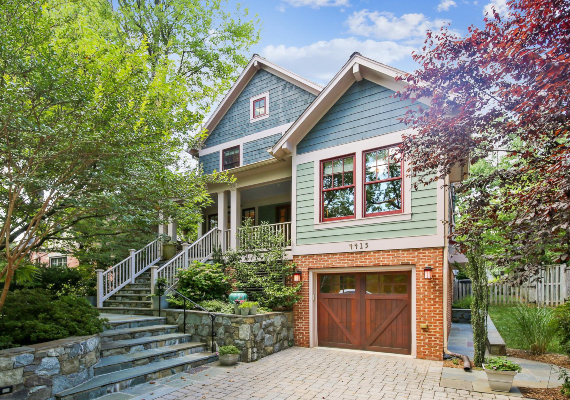
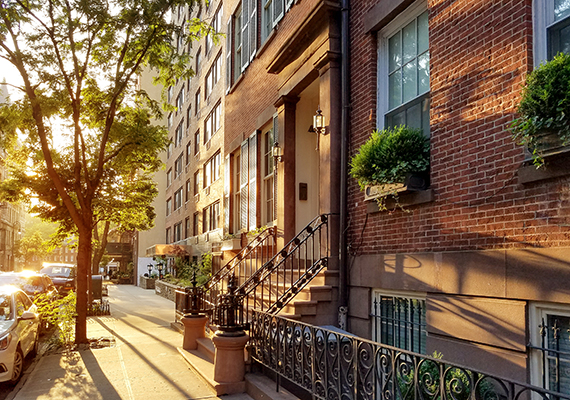
Colonial, split-level, Cape Cod… it’s no surprise that real estate has its own lingo, right down to the style of a home. In an effort to establish a deeper understanding of real estate home styles, in terms of how they’re built and what they seek to represent, McEnearney presents a series of articles to explore these differences. We’ll explain what makes a home a split-level versus a split-foyer, define traditional Colonials and Cape Cods; and learn to appreciate the subtleties of Art Deco and Victorian details. Check out our previous article exploring the variations between Rowhouses and Townhouses.
Second in our series, we seek to better understand the differences between those oh-so-cute bungalow and Cape Cod-style homes.
Bungalows
With its name originating from India where the term “bungalow” meant a small, thatched home, the first bungalow homes made landfall in Philadelphia around 1876 as Americans sought to distinguish themselves from the European influences traditionally seen in Victorian, Queen Anne and antebellum-style homes. In the 1890s, bungalows popped up in San Francisco and made their way down to Southern California before spreading to the midwest in the early 20th century, where they remained popular until the Great Depression. The style had become so popular, in fact, that you could order a bungalow kit from the Sears and Roebuck catalog. In short, bungalows offered low-cost, simple housing for many Americans who were getting by on modest means.
Bungalow-style homes are traditionally one-story with a wood, brick or stone exterior, and a mix of materials carried throughout the structure. The homes often feature a stone chimney, low-profile roof and covered porch in the front or corner. The bedrooms, bathrooms and kitchen are usually laid out around a central living area.
Take a look at these recent McEnearney listings with homes classified as Bungalow:
[smartslider3 slider=”54″]
Cape Cods
Some of the first houses built in the U.S. were Cape Cods. Dating back to the 1600s, Cape Cods were built to protect settlers from the harsh New England winters, with an emphasis on form, rather than function. Originally built as one-story, shingle-sided homes without dormers, this style became increasingly popular during the mid-20th century in the suburbs.
Most of the Cape Cod homes you see today were built after World War II, when thousands of returning soldiers and their young families needed inexpensive housing. The Cape Cod style fit the bill, and it was used to build some of the first major housing developments.
Traditionally designed in a square or rectangle shape, Cape Code-specific features include a large chimney in the center of the first floor to provide warmth for the entire house, a steeply-angled roof with weathered, gray cedar shingles to help the snow slide off quickly and a “captain’s stairway” leading to the second floor.
Take a look at these recent McEnearney listings with homes classified as Cape Cod:
[smartslider3 slider=”55″]
Seeking a Bungalow, Cape Cod or any other style of home? Contact your favorite McEnearney Associate to start your home search today!
[divider height=”30″ style=”default” line=”default” themecolor=”1″]
Don’t miss a post! Get the latest local guides and neighborhood news straight to your inbox!
8 Paint Colors To Freshen Up Your Home


Painting a room’s walls can set the tone for the entire space. Whether you’re starting over and want a clean slate or are preparing your home for the market, a fresh coat of paint can work wonders. Here are a few paint colors McEnearney agents suggested for freshening up your walls:
McCormick Lady Nicole
A light greige (gray-beige, depending on how the light hits it), this McCormick Paint color works great in a bathroom against dark woods and white trim. It gives a hint of color without washing out the walls and would coordinate well with dark grays or greens.
Sherwin Williams City Loft
The new “it” color, City Loft is a greige with a tan undertone. It’s a great choice for hallways, stairways and family rooms that you want to have a neutral feel.
Behr Manhattan Mist
A go-to gray with blue undertones, Behr’s Manhattan Mist would bode well with blues and white trim in bedrooms and dining rooms, without giving an overly-blueish feel.
Benjamin Moore Decorator White
This white with gray undertones color is the perfect selection of an off-white paint suitable for painting crown molding or chair-railing as an accent to grays.
Behr Burnished Clay
Grab this one if you’re seeking a complementary option to darker tans with yellow undertones. While the name may suggest a harsh red, you’ll find Burnished Clay far from it and a rather calming tan instead.
Sherwin Williams Mindful Gray
Sherwin Williams’ Mindful Gray is a light, airy and warm mid-tone gray that will make your molding pop. It’s a very neutral color without any other color undertones. This selection would look great against white cabinets and countertops, beadboard and trim.
Benjamin Moore Swiss Coffee
Part of Benjamin Moore’s Off-White Collection, this very pale-cream color with gray undertones is a solid choice for someone who seeks white walls that aren’t blindingly bright.
Sherwin Williams Nebulous White
For homes that don’t have a lot of natural white, consider Sherwin Williams’ Nebulous White. A warm gray paint, it complements any color around it and gives a very calming effect.
Take a look at our website for all of our listings available throughout Washington, D.C., Maryland, and Virginia.
Don’t miss a post! Get the latest local guides and neighborhood news straight to your inbox!